Omnipresent Sunlight: Doc Savage’s archenemy – Part 6

In the previous article, I began a look back at the 1991-92 Millennium Productions depiction of Doc’s ultimate enemy, John Sunlight.

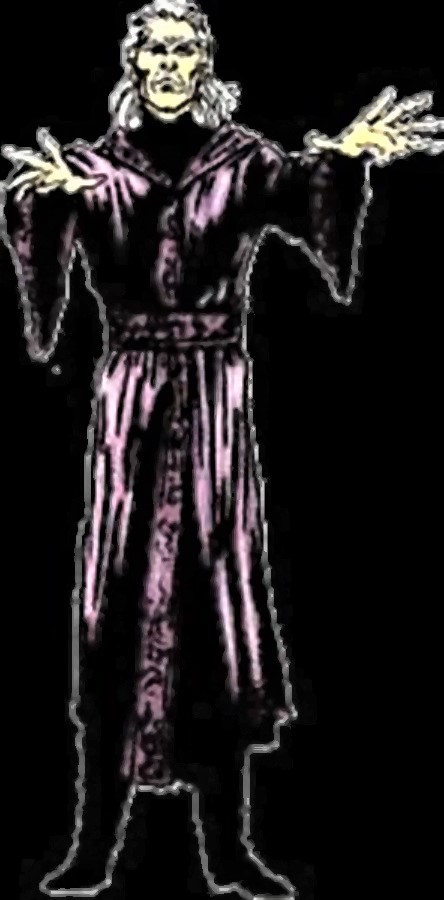
John Sunlight by Darryl Banks

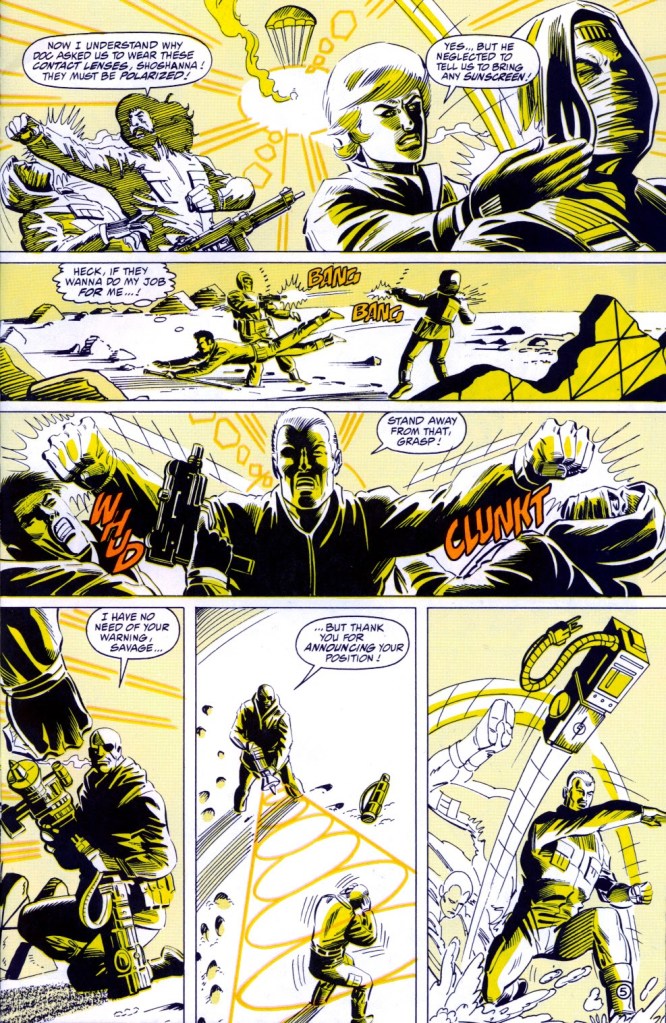
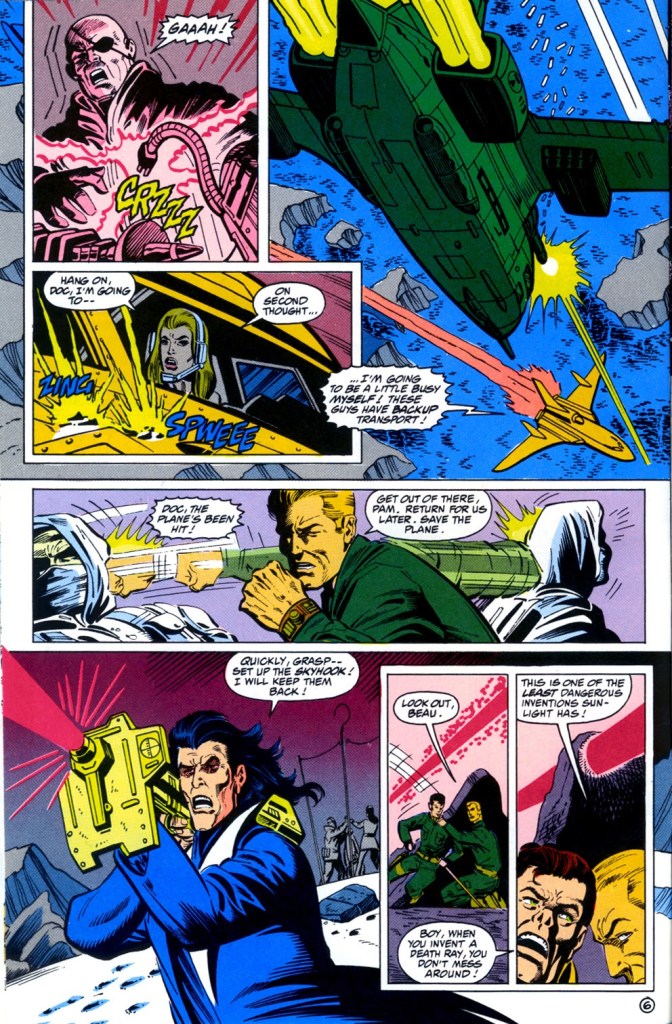
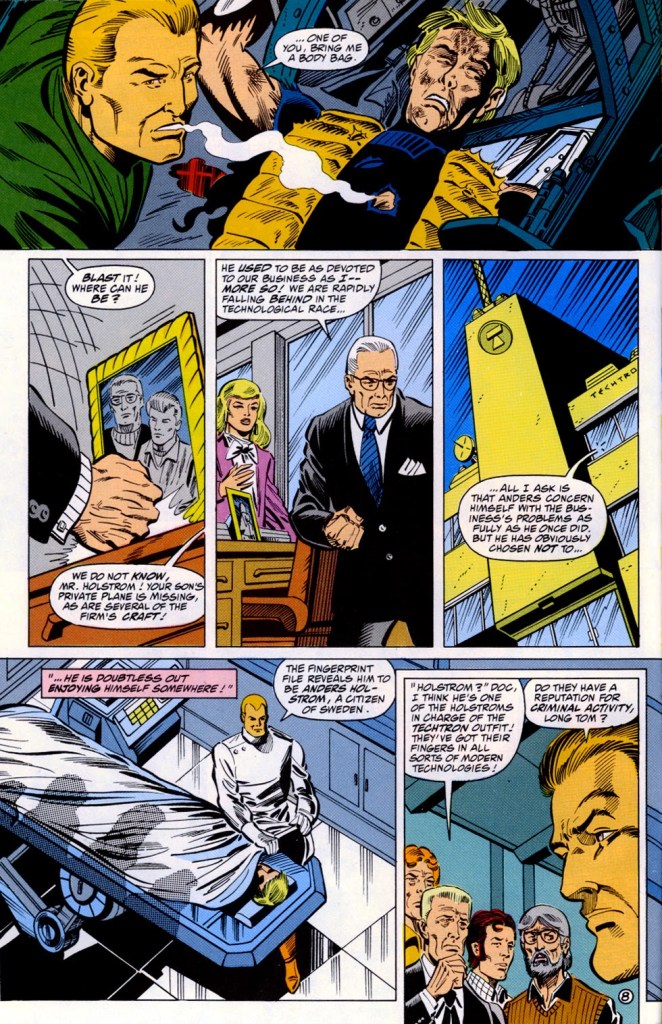
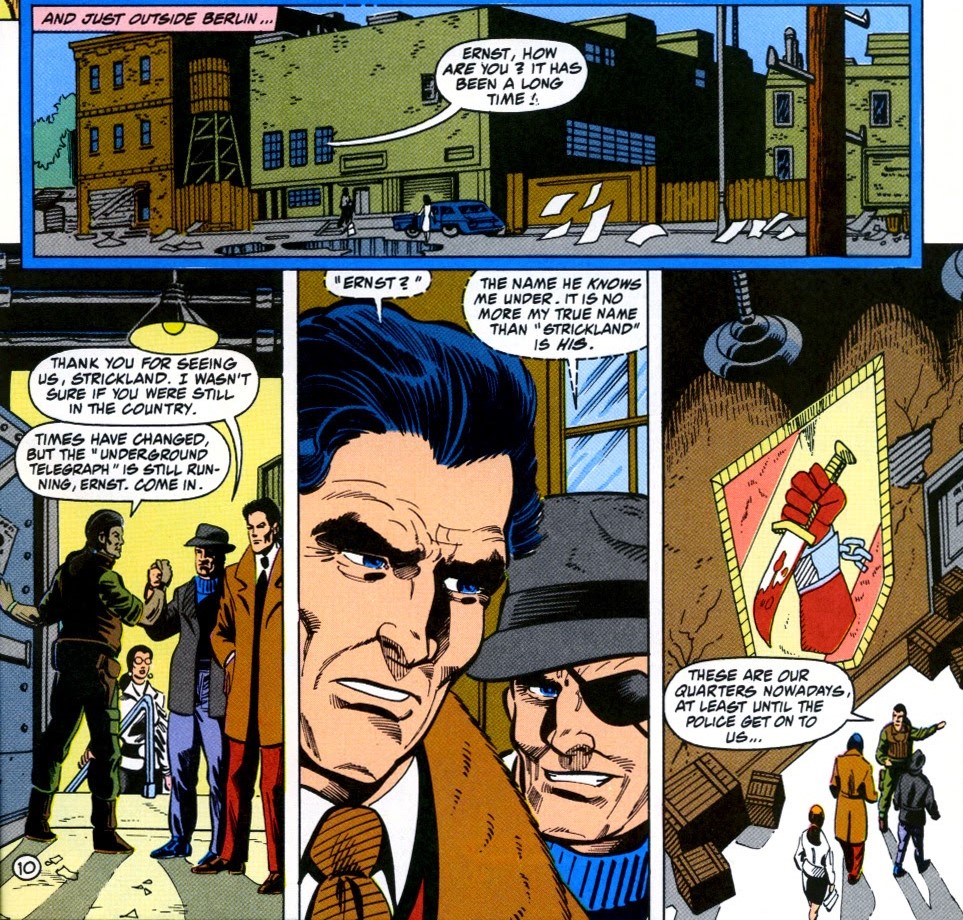
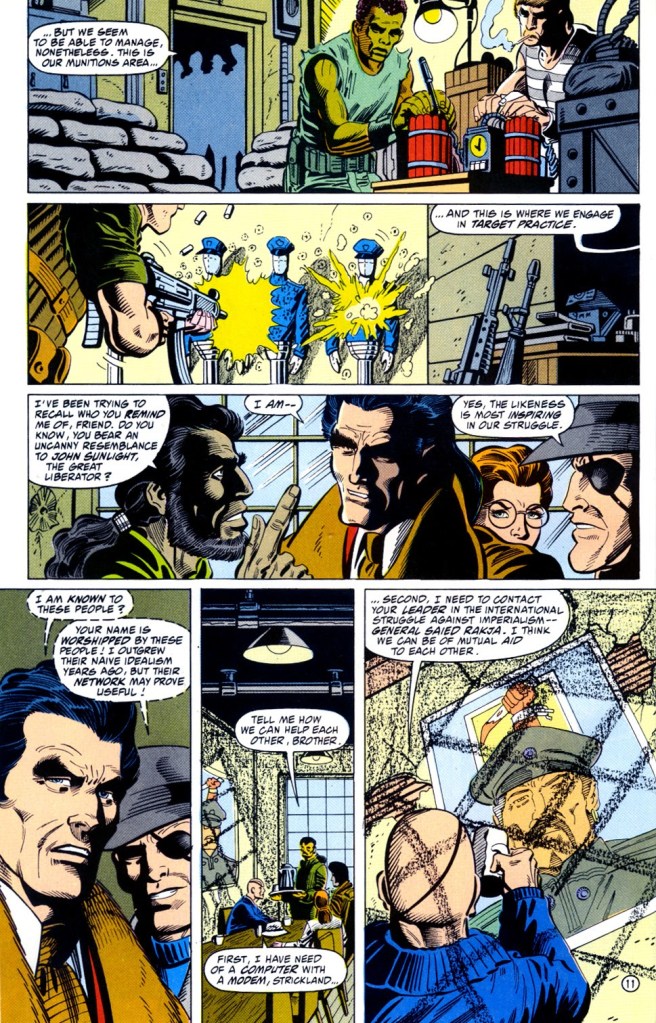
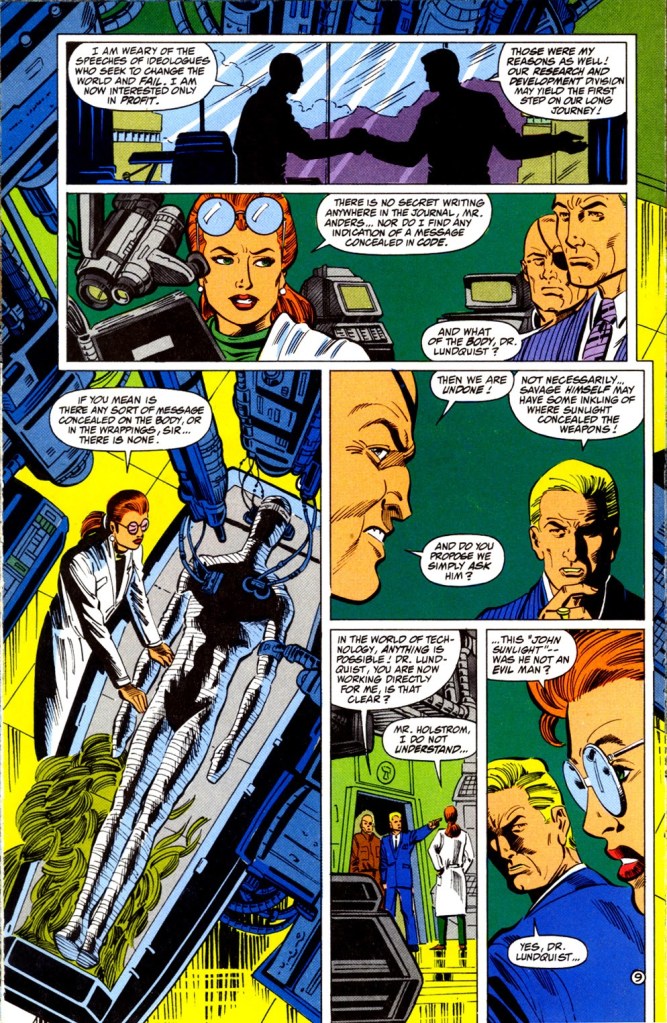
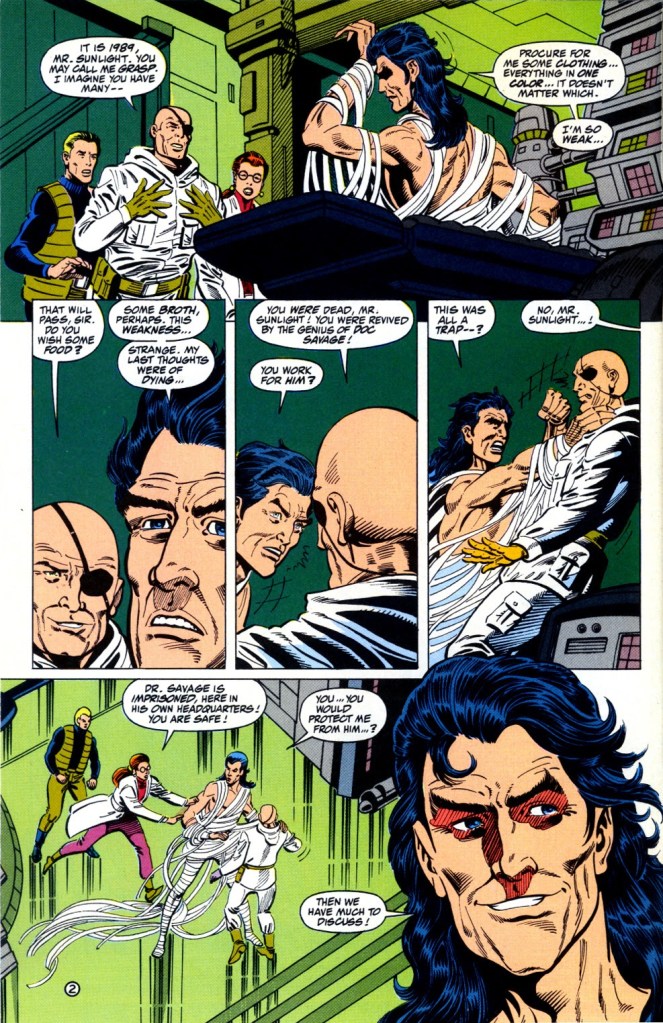
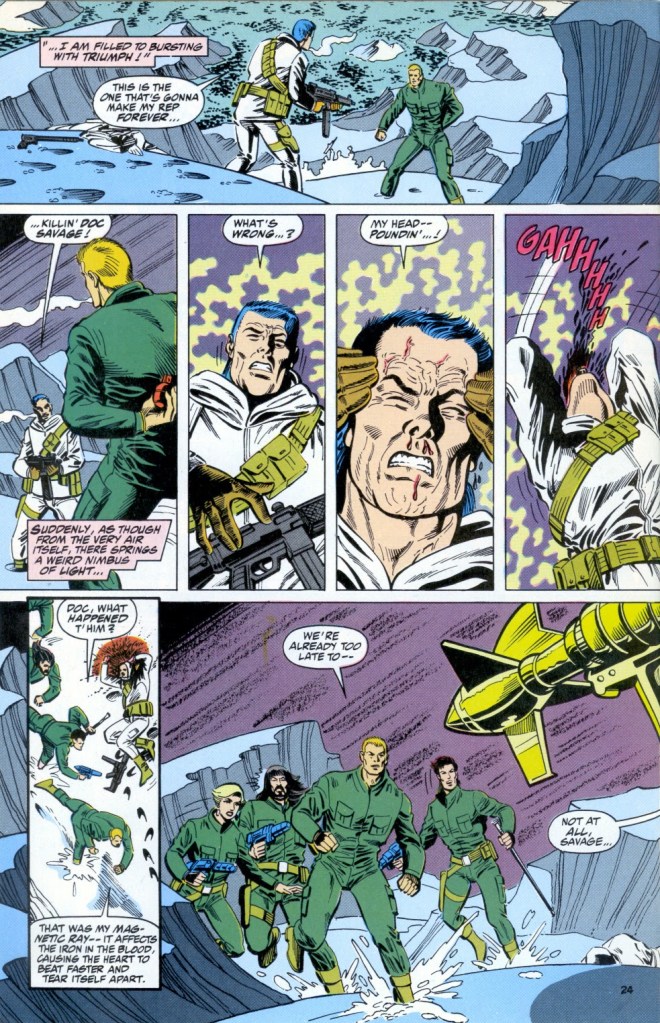
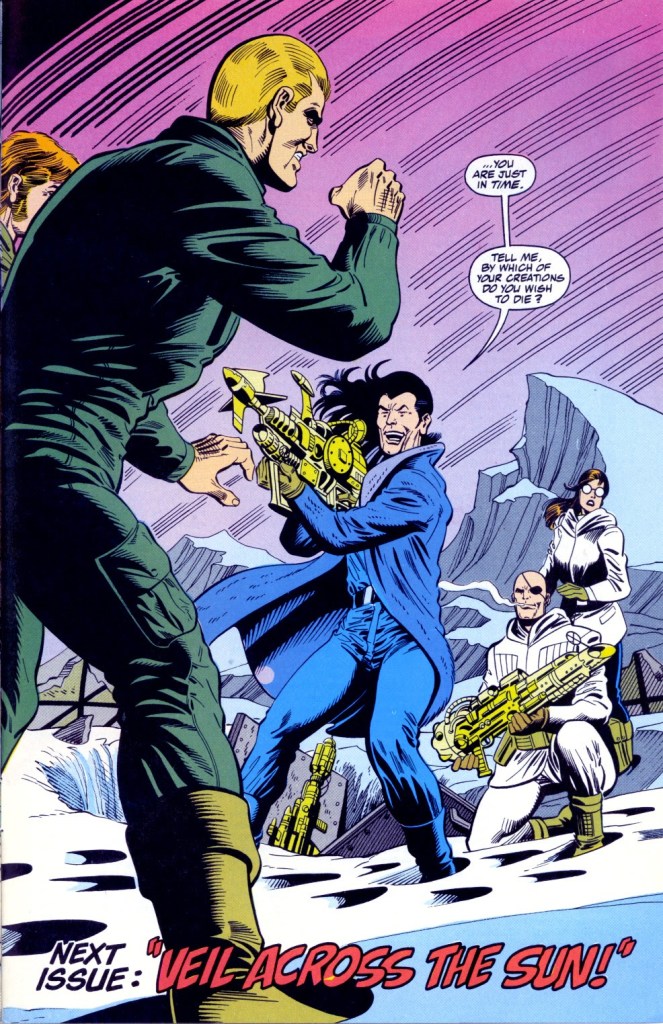
Written by Mark Ellis and drawn by Darryl Banks, Sunlight was the antagonist in an ambitious, complex story called The Monarch of Armageddon. It was a direct sequel to the 1938 pulp novel The Devil Genghis. In the first issue, it was explained how Sunlight survived apparent death at the end of the Lester Dent-authored novel, and set into motion a plot by the arch-villain to dismantle or destroy everything cherished by the Man of Bronze.

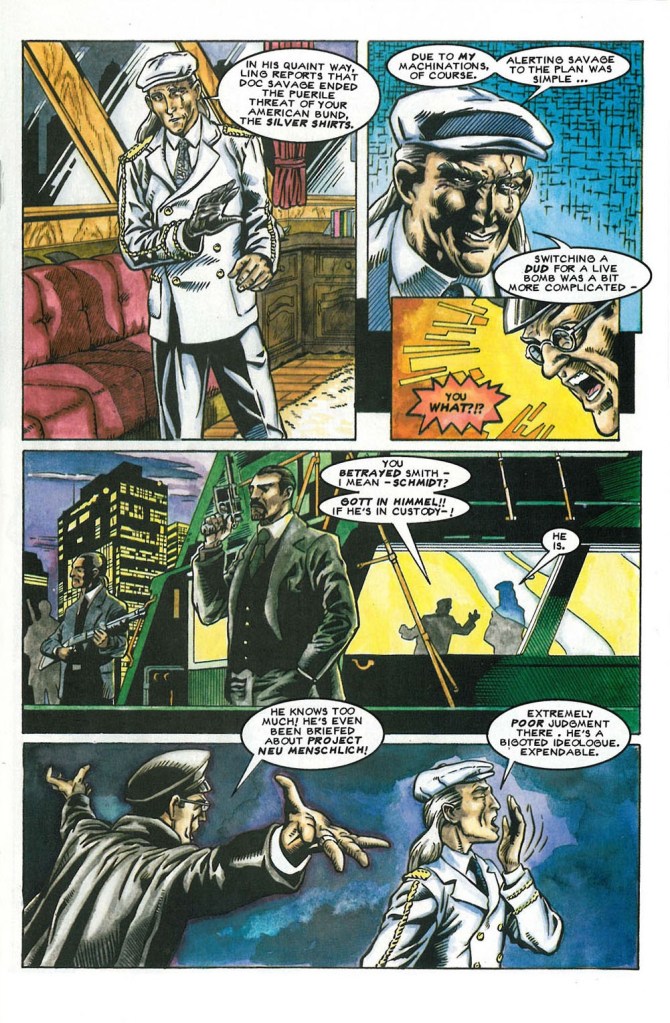
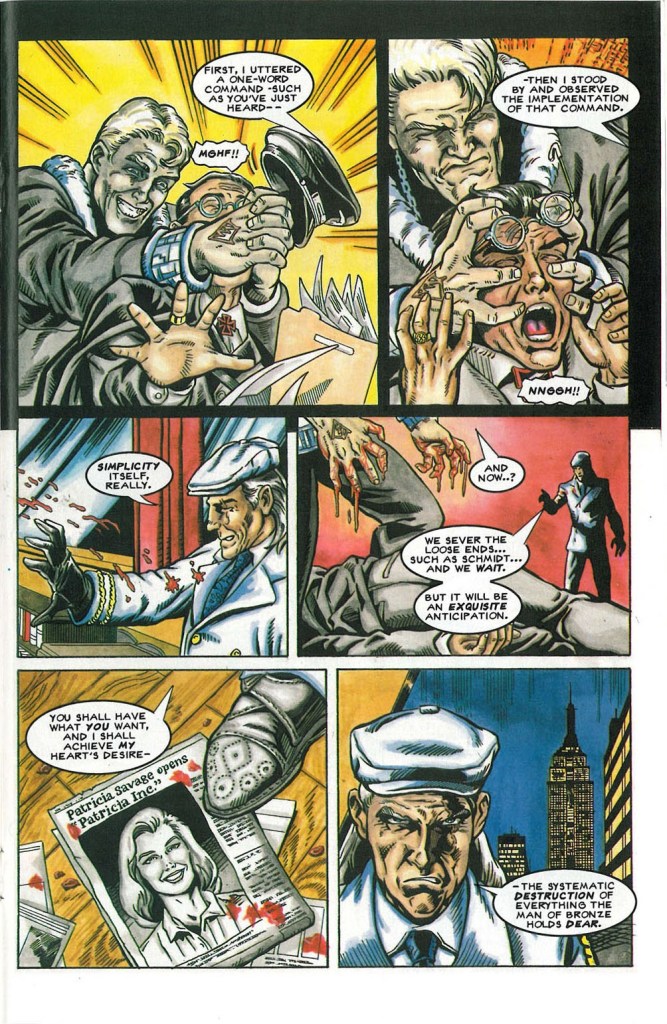
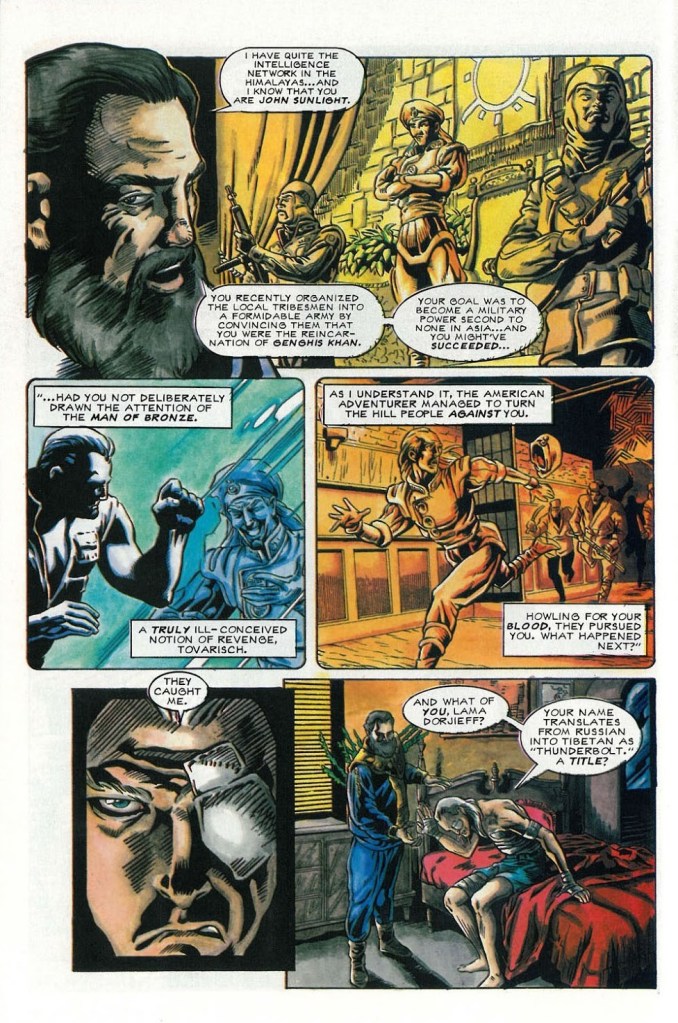
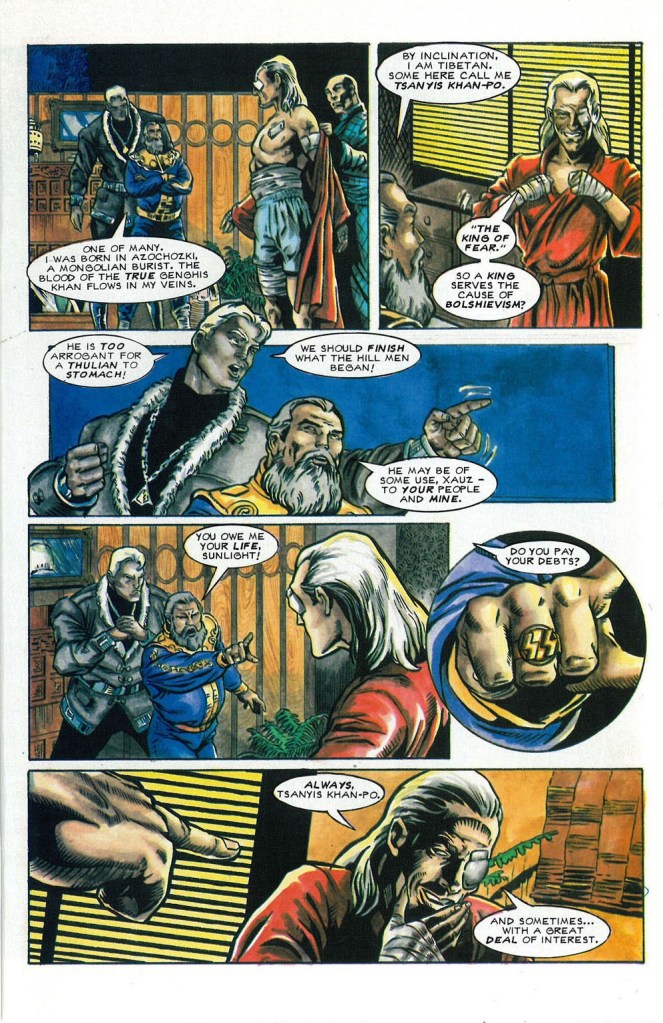
The story continues on a mysterious yacht called Thunderbolt, where the scope of that plot begins to unfold. Sunlight, returned to western civilization, has become involved in Nazi operations (pre-WWII) to disrupt the United States. However, Sunlight actually has very little interest in that goal — as is rapidly shown, he has maneuvered, manipulated, betrayed and murdered just about everyone in the Nazi network.

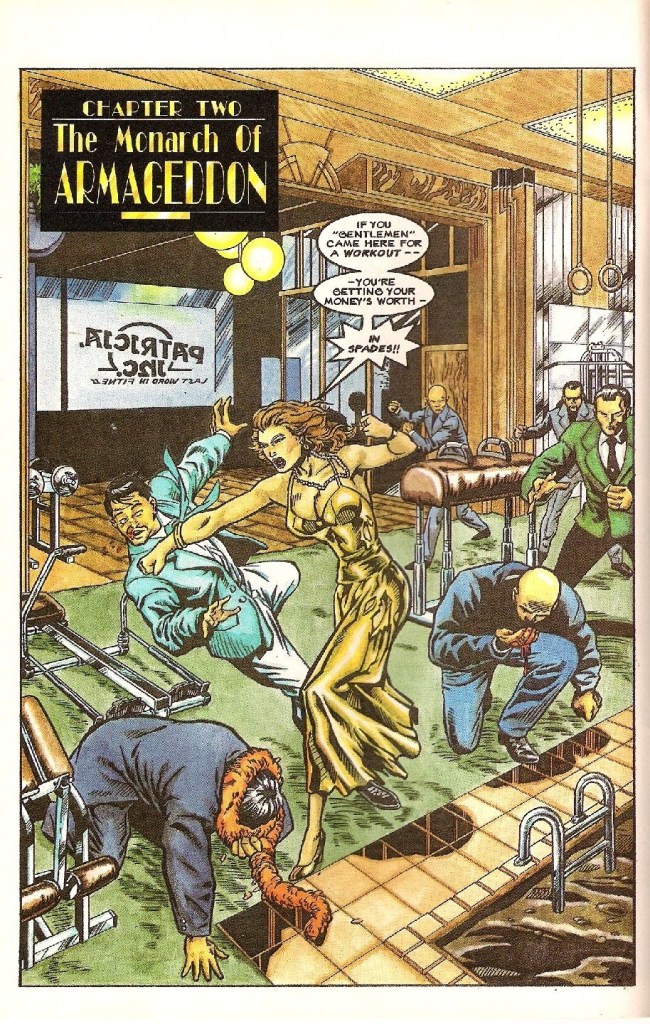
The bloodstained newspaper article at the end of this sequence shows that his next target is none other than Pat Savage. A wild sequence follows, in which Sunlight himself does not appear, but he sends minions to Pat’s salon in Manhattan to attack her. In classic Pat style, she shows she is no easy victim.

Nevertheless she is severely outnumbered and about to be overpowered, when Monk and Ham arrive, and between the three of them, they put the assailants to rout. But Sunlight is far from done menacing Pat and Doc’s aides.

However, for the present the chastened assailants return to report their failure to Sunlight. In a technique right out of the original pulp novel, Sunlight has his failed underlings put in a lightless room, and promises to go to there after a suitable amount of time has passed and “talk to them”. This is not a metaphor…Sunlight actually does bend people to his will by isolation and the power of his voice and personality.

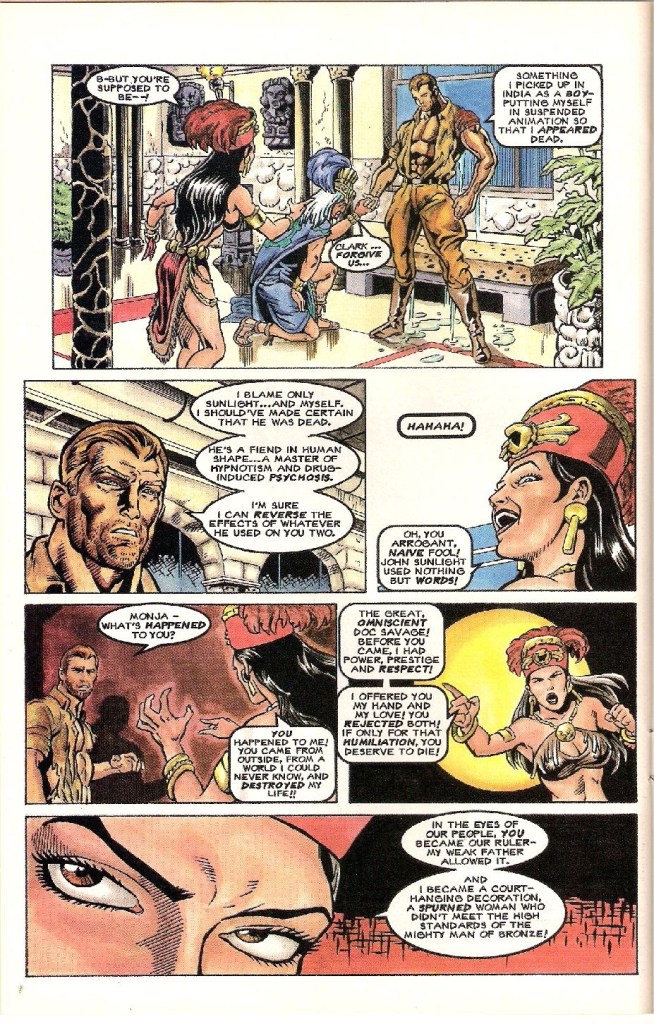
Doc in the meantime, unaware of Sunlight’s machinations, has decided to take a peaceful sojourn in the Central American Valley of the Vanished. He arrives to anything but a peaceful welcome — he is attacked and imprisoned, and then tortured by none other than the character most often linked to Doc Savage as a romantic interest: the Mayan Princess Monja.

Feigning his own death, Doc gets free, and discovers that John Sunlight has been to the Valley before him. Sunlight has used his persuasive powers to turn Monja against Doc. It’s an emotionally harrowing scene, as Monja’s steadfast devotion to Doc has been cruelly undermined — fueled by Doc’s own repeated (if well-intentioned and respectful) spurnings of the Mayan princess.

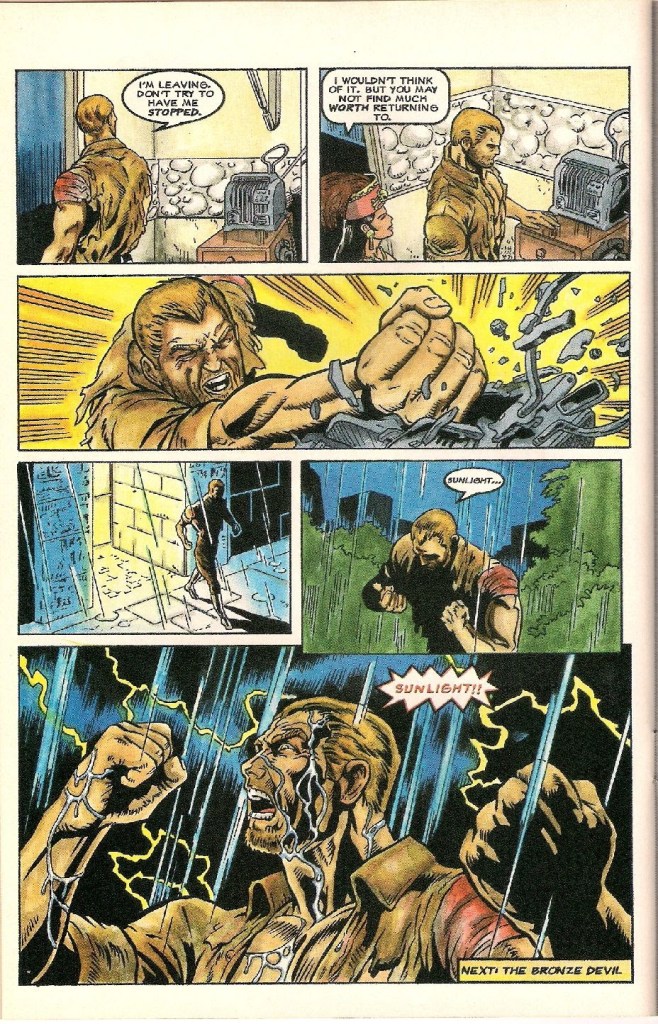
Hints are given about Sunlight’s even more devastating plans to come, and the chapter ends with Doc so distressed he displays rage — Sunlight has delivered some vicious blows, with worse to come.

to be continued…

Omnipresent Sunlight: Doc Savage’s archenemy – Part 5

In the first parts of this article, I explored the pulp magazine roots of the villain John Sunlight in the 1930’s novels Fortress of Solitude and The Devil Genghis, followed by his comic book incarnations, which began fifty years later. Marvel Comics, in the 1970’s, teased a story featuring Sunlight in their black and white Doc Savage Magazine, but the series was cancelled before that story was done. It was in the late 1980’s that DC Comics revived John Sunlight, in a four-part story arc entitled Sunlight Rising. That story was largely adept, faithful to its pulp origins, and highly entertaining. But the best was yet to come.

In late 1991, the rights to publish Doc Savage comics shifted to a maverick independent company, Millennium Publications. Right out of the gate they presented a hugely ambitious four-part story entitled The Monarch of Armageddon. The story would feature some of the most accurate depictions of the Doc Savage world ever done — really, not rivaled in the thirty years since its appearance. Here is the strong cast of creators and management for this tale:
Clear to any knowledgeable Doc Savage fan, the opening page takes place almost immediately after the conclusion of the 1937 novel The Devil Genghis. The character staggering through the clever first-page panel arrangement to collapse in the snow…is John Sunlight.

Author Mark Ellis (who is remarkably prolific to this day — please click on his name to read a listing of his novels and comics) and artist Darryl Banks immediately tapped into the zeitgeist of mainstream Doc Savage, setting the story in Doc’s 1930’s heyday, and making the characters true to their pulp origins.

The rest of the cast appears after a long prologue, and that prologue — which makes a seamless transition from The Devil Genghis — is in itself a master class of pulp writing and visual design.

Across four pages, we are given an indelible portrait of Sunlight’s character — his arrogance (intriguingly shaded by a moment of panic when Sunlight believes he is being confronted by Doc Savage), his incisive intelligence, his anger, his vision, and even his dry, sardonic humor.

By the time Sunlight delivers the last (quintessentially pulp) line of the prologue, there is no doubt that what will follow is going to be a tour-de-force of adventure storytelling.

To be continued…

“Let me strive” – 2021 and adventures in the world of modern pulp

For the last Forbidden Pulp blog of 2021, many words of gratitude.

(Every highlighted name or place below is a link…check out these marvelous people!)

After six years of authorial isolation to create, along with visionary artist Iason Ragnar Bellerophon, the immense modern pulp opus Talos Chronicle, I emerged to engage with the world through doctalos.com and the Forbidden Pulp blog, and it has been an amazing experience indeed.

Nothing in my wildest hopes and expectations came close to the thrilling reality of connecting with the family of fellow creators, readers, and fans that opened up for me across 2021. I opened the Doc Talos website in the Spring, began blogging about all things pulp, and reached out both to old friends from my long career as an author, poet, scriptwriter, actor, publisher and artist — and new friends in the community of pulp fiction enthusiasts.

Among the splendid people who welcomed me were the fanzine publishers: Chuck Welch of The Bronze Gazette, Steve Donoso of The Shadowed Circle, and Jim Main of Pulp Fan. Each graciously accepted articles of mine, covering such diverse topics as the women of Doc Savage’s life, The Shadow’s connection to historical world events, and a celebration of Pat Savage in Marvel Comics.

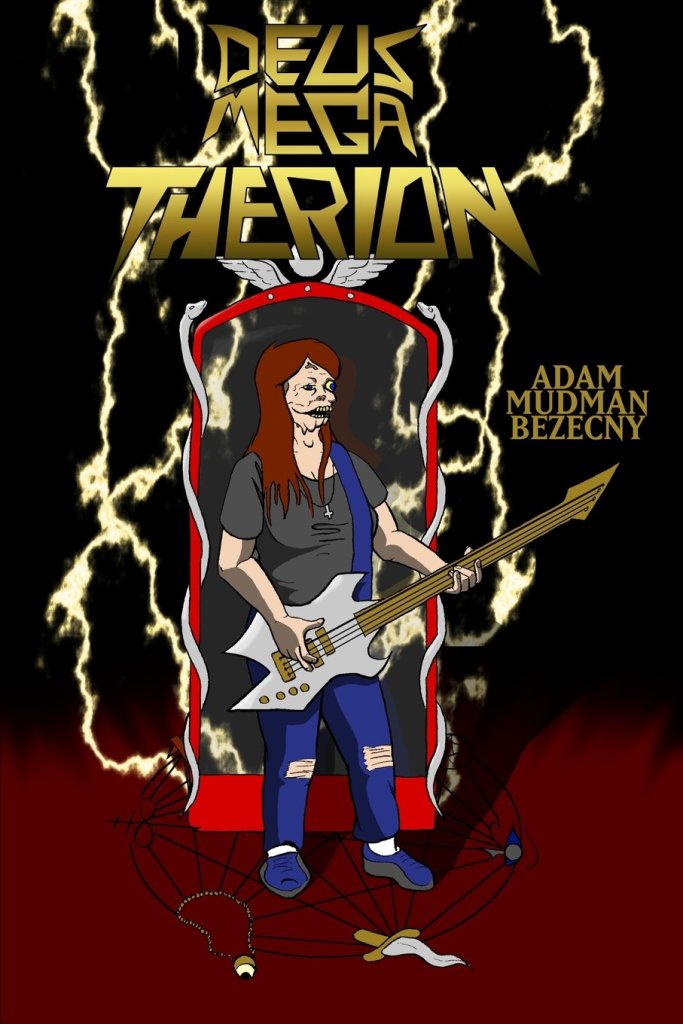
Graciously agreeing to interviews or contributing to blog posts at Forbidden Pulp, were Jeff Deischer (author of the Doc Brazen books), Mark Ellis (author of The Monarch of Armageddon), and Atom Mudman Bezecny, (modern pulp writer extraordinaire).

Throughout the summer, I sponsored a Doc Talos Fan Fiction contest, which resulted in the creation of some truly amazing tales from authors both new to writing and stars in their respective genres. They were collected into a special keepsake paperback and given as a thank you to each superb contributing author.

Opening up a Doc Talos Facebook page, I was welcomed into numerous Doc Savage fan groups and pulp organizations, including the Flearun, The Pulp Adventure League, The Fans of Bronze, and the Doc Savage Super Secret Group. I’ve had tremendous fun making friends in all of them.

Over the course of the year and more than 100 posts in the Forbidden Pulp blog, over 8000 visitors have come to stop by and read, many of them providing fascinating insights and sidelights to the topics.

After the immense creative effort that went into crafting the books of the Talos Chronicle, it’s been so gratifying that readers have found pleasure in them — many wrote wonderful emails and letters of appreciation to me, which touched me beyond adequate description. Once again, deepest gratitude to my creative partner in making those stories a reality, whose talent I stand in awe of: Jason Robert Bell, AKA Iason Ragnar Bellerophon. For six astonishing years (and counting) he has poured heart and soul into the literally hundreds of paintings which fill the works. A truly brilliant man and a great guy to boot…fine artist, comics creator, mystic, body double for God, Jace the Ace from Hyperspace, devoted family man…and a cherished friend.

Creativity among my amazing colleagues and peers has been truly inspiring, including Jeff Deischer’s generosity in allowing me a front row seat to cheer on his crafting of the Doc Brazen stories (and giving me the honor of contributing an Introduction to a new edition of the novel Millennium Bug).

I was also honored to write two novellas for Atom Mudman Bezecny’s Odd Tales of Wonder Publications , both of them inspired by characters and stories from her superb Hero Saga. Both Atom, and Canadian author Andre Vathier, are also creating works within the Doc Talos universe of characters and stories.

Amid all of the creativity, most precious of all have been the friendships that have grown over this past year. Every one of the amazing people whose lives have touched mine in 2021 are precious to me; I’m grateful indeed for the warmth and brilliance I’ve had the opportunity to bask in throughout the year. A special shout-out to Atom and to Alexandre LeVasseur, fellow creative souls in our Conseil du Mal (which strikes fear into the hearts of evildoers everywhere). Both epitomize qualities that I treasure: layering the joys of reading and writing with a sense of personal responsibility toward fostering hope, awareness, dignity and caring.

I’ve seen that spirit all throughout the year not only from these friends, but from so many who have crossed my path. Time and again in the pulp community I’ve witnessed extraordinary acts of caring and support. When creators support one another…when individuals go an extra mile to help out someone going through a tough time in life…that is truly when we shine the brightest. When I began writing in earnest back in the 1970’s, I tacked a quote above my then tool-of-the-trade — a Royal manual typewriter that I bought for 20 bucks at Goodwill — it reads: Be kind, for everyone you meet is fighting a hard battle. Fifty years later, I don’t hammer out manuscripts with ink ribbons and carbon paper any more, but that quote is still tacked above my computer.

The future looks bright indeed. Corny as it might be, I still live my life doing my best to live up to the ideals of the Doc Savage Oath, and it will continue to inspire me in 2022 and beyond.

Happy New Year to all.

Mal Deeley AKA R. Paul Sardanas AKA Doc Talos

Omnipresent Sunlight: Doc Savage’s archenemy – Part Four

In the first installments of this article, I took a look at the pulp roots of Doc Savage’s most celebrated foe, John Sunlight — then began the exploration of his literary return in Doc Savage comics across the decades. The first of those revivals came in the late 80’s/early 90’s DC Comics series, in a four-part story called “Sunlight Rising”.

John Sunlight, by Rod Whigham

Author Mike Barr and artist Rod Whigham unquestionably did their research…the Sunlight of their story carries forward virtually every one of his characteristics from the pulps. The disturbing, “poetic” cast of his features…his penchant for wearing only one color (in the image above the color scheme is incomplete for practical reasons…he is wearing a bulletproof vest)…his long, powerful hands. And on the philosophical side, his ambition to unite the world, abolishing all national borders.

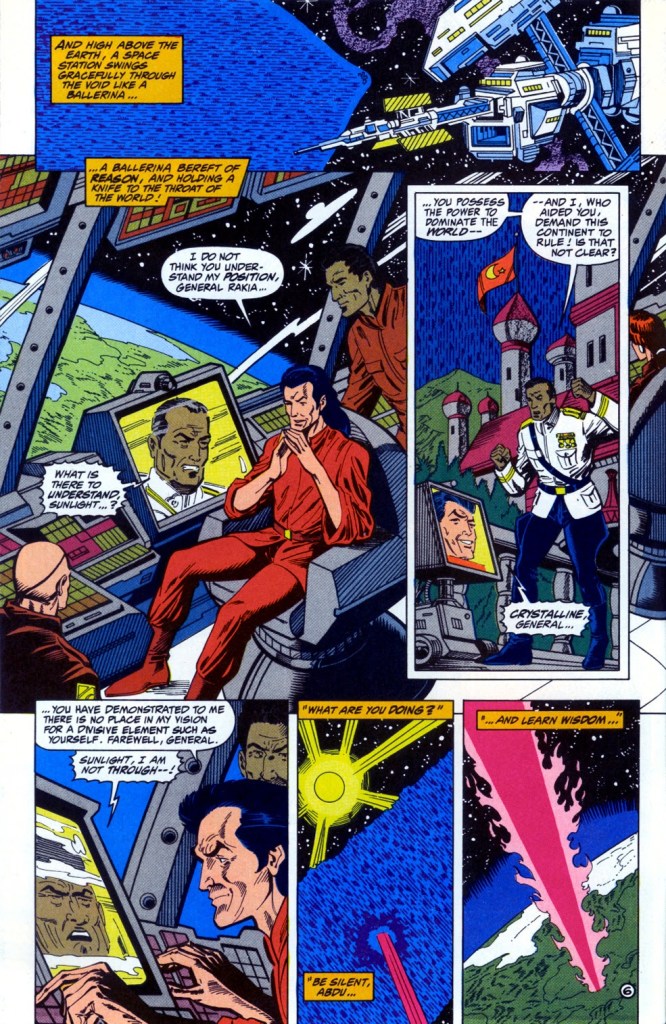
When we left off after the third part of the story, Sunlight had assimilated himself powerfully into the present-day of the time. He had allied with terrorists, manipulated a big tech company to utilize their resources, and made use of space technology (and one of Doc’s deadly devices stolen from the Fortress of Solitude), to establish himself on a space station where he could blackmail the world by blocking out the rays of the sun.

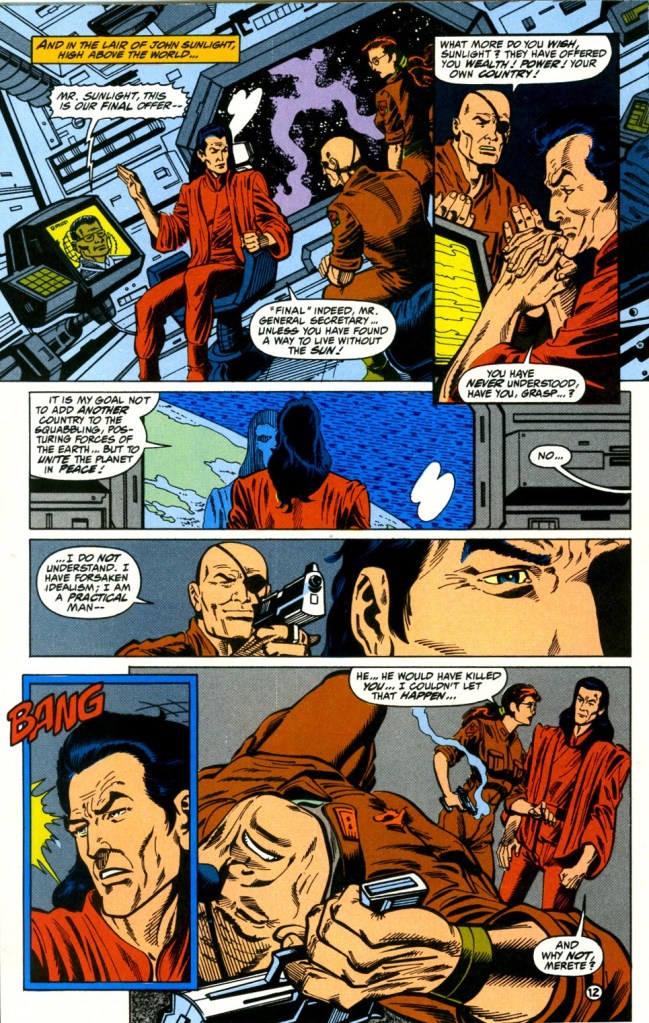
Not all is smooth going, however…one of the first things he does is turn on the terrorist nation that he had allied with, making an example of the power of his weapon by wiping them out. This does not go down well with the country’s representative on the station, and Sunlight is forced to utilize his own relentless and considerable physical strength.

More of his allies turn on him, and he ruthlessly dispatches them as well, leaving him with a cadre of loyal (if dumb) soldiers, and the woman scientist who facilitated his resurrection, who he has — in his own creepy way — romanced into becoming his consort.

One of Sunlight’s demands to the countries of the world was to take Doc Savage prisoner and deliver the Man of Bronze to him, and it seems as if they have capitulated…but in a series of plot machinations (which are a trifle contrived, I’m afraid), Doc and his new, younger aides get aboard the station and start wreaking some havoc with Sunlight’s plans.

In the midst of this, Sunlight’s soldiers (who have been conditioned to obey his every order without question), open fire as soon as they see Doc, not paying the slightest attention to the fact that Sunlight’s scientist accomplice/love interest is right in the line of fire. Doc (also wearing his bulletproof attire) survives the attack, but the scientist does not.

Infuriated, Sunlight slaughters his own men.

Part of the plot involved Sunlight holding a unique “hostage”, the body of Doc’s dead wife Monja (who he had intended to attempt resurrecting), and in the wake of his plans disintegrating Sunlight takes final revenge by ejecting the cryogenic capsule holding Monja’s body into space. Interesting that Sunlight appears to be weeping over his lost companion — apparently in his own way, he really did love the woman.

The climax comes quickly — Doc escapes to the shuttle which his aides are using to flee after setting explosives on the space station to destroy it. Sunlight (apparently) does not escape. Though he is not shown dead…and I strongly suspect that had the DC series gone on for any great length of time, he would have returned for yet another bout with Doc.

All in all, it was a very engaging story. Though it slipped into cliche at times, and fell back on some standard comics/adventure story tropes, it was largely an adept updating of the Doc/Sunlight conflict that had unfolded in the 1930’s.

The DC series went on for another year or so, but was gone before any further appearance of John Sunlight could be engineered. DC lost the license to publish Doc stories shortly afterward.

However, this was far from the end of John Sunlight stories. The license shifted to an independent (and very ambitious) new comics publisher in the 1990’s, Millennium Comics. And their first Doc story, a remarkable, complex tale, turned out be, among its other plot elements, a direct sequel to the two Sunlight pulp stories, Fortress of Solitude and The Devil Genghis.

to be continued…

Sneak preview of Talos stories coming in 2022 and beyond

Though the six core books of the Talos Chronicle and one volume of short stories, art and ephemera are complete (check them out in our Bookstore), that is hardly the end of Doc Talos tales! Here’s a sneak peek at some of the stories in the pipeline for 2022 and beyond.

“Rickie” – a Doc Talos Files book by R. Paul Sardanas

Patricia “Rickie” Talos is spotlighted in the first in the series of Doc Talos Files, which will focus on the lives of specific characters within the Talos Chronicle. Aviatrix, adventuress, businesswoman, Archon Primal Woman…this book by R. Paul Sardanas explores everything from her long affair with James “Doc” Talos and passionate encounters with ape-man/primal man Lord John Grersoun, to her WWII role in the WASPs, to lethal/erotic adventures in the 21st century.

“Beasts” – a Doc Talos Mythos book by Atom Mudman Bezecny

Lord John Grersoun takes center stage in a Doc Talos Mythos tale, Beasts, by Hero Saga author Atom Mudman Bezecny. Atom’s first foray into the Talos universe will dig deep into new insights about the Archon Primal Man.

“We Are Connected by Invisible Links” – a Doc Talos Mythos book

Co-authors André Vathier and R. Paul Sardanas, in a Doc Talos Mythos book, explore the intense lives of outsiders who are drawn into the Talos world of dark passion and deadly adventure. Their story begins at a clandestine performance of Isis and Osiris in Victorian London, and will spark a journey of death and mystery with the French Foreign Legion into Africa.

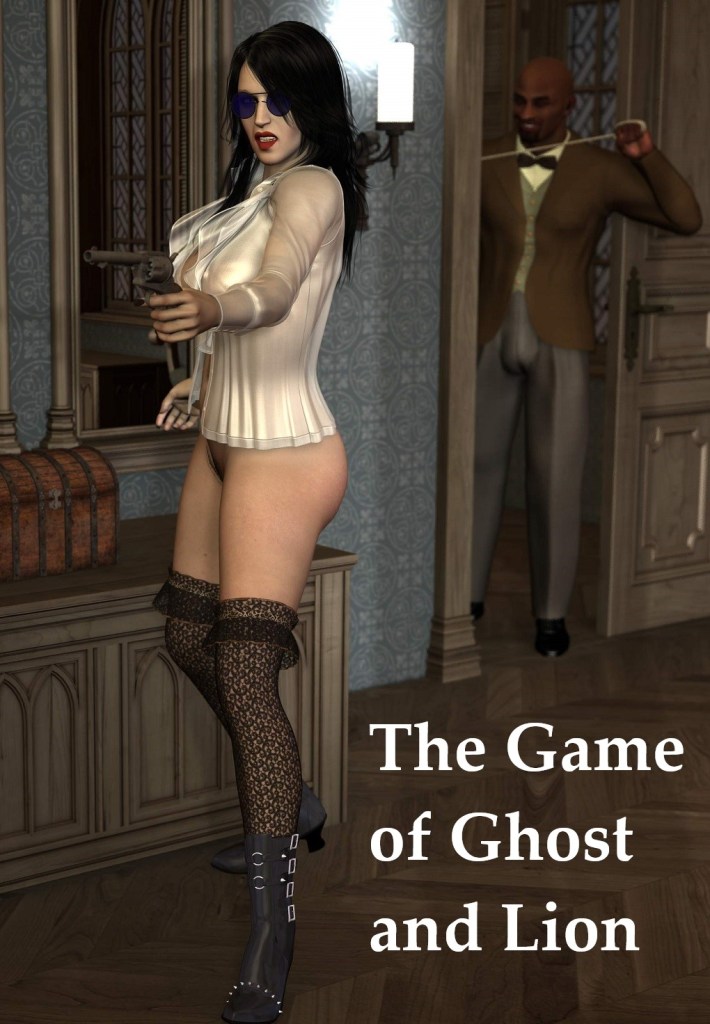
“The Game of Ghost and Lion” – a Doc Talos Illustrated tale

This illustrated novella by R. Paul Sardanas and artist Fugazi will span the entire 19th century, exploring the life and death of the revolutionary Grace X, and her husband Carson Xavier. This is the third in the series of Doc Talos Illustrated tales.

“Wolves” – a Doc Talos Forbidden Pulp novel

In this novel by R. Paul Sardanas and Iason Ragnar Bellerophon, the classic pulp novel Brand of the Werewolf is re-imagined as an intense, nightmarish conflict involving Doc Talos, his uncle Alec Talos and cousin Rickie against terrifying antagonists from the Werewolf Gang.

Updates will appear in our Works in Progress section…check it out for more details and timelines for release for these tales!

Omnipresent Sunlight: Doc Savage’s archenemy – Part 3

In Part 1, I examined the pulp origins of the most ubiquitous villain in the Doc Savage canon, and in Part 2 explored how DC Comics resurrected John Sunlight in the 1980’s. The story of that return, called “Sunlight Rising”, was written by Mike Barr, and illustrated by Rod Whigham. It was a long story, running across four issues of the comic.

Issues #13 and #14 continue this epic conflict. (Cover art is by Adam and Andy Kubert.) An interesting quirk of the DC Comics series was the fact that the covers often showed Doc, not in the pose of strength so often portrayed by James Bama on the iconic paperback covers, but in a position where he is either being humbled or beaten. An odd choice of design, but perhaps emblematic of the times…in the late 1980’s comics were attempting to “humanize” their characters, with the concept of making them more approachable to the more mature audience of readers that was evolving at that time. Certainly, as seen below, the covers of the Doc Savage comic reflected that trend.

DC Comics Doc Savage #13
DC Comics Doc Savage #14

When we left off, Sunlight and Doc had faced off at the site of his now-abandoned pulp-era Fortress of Solitude. In the original pulp story that introduced Sunlight, he had stolen horrific weapons that Doc had cached there (ironically, to keep them away from malevolent characters like Sunlight). Having recovered the weapons, Sunlight was using them against Doc and his aides.

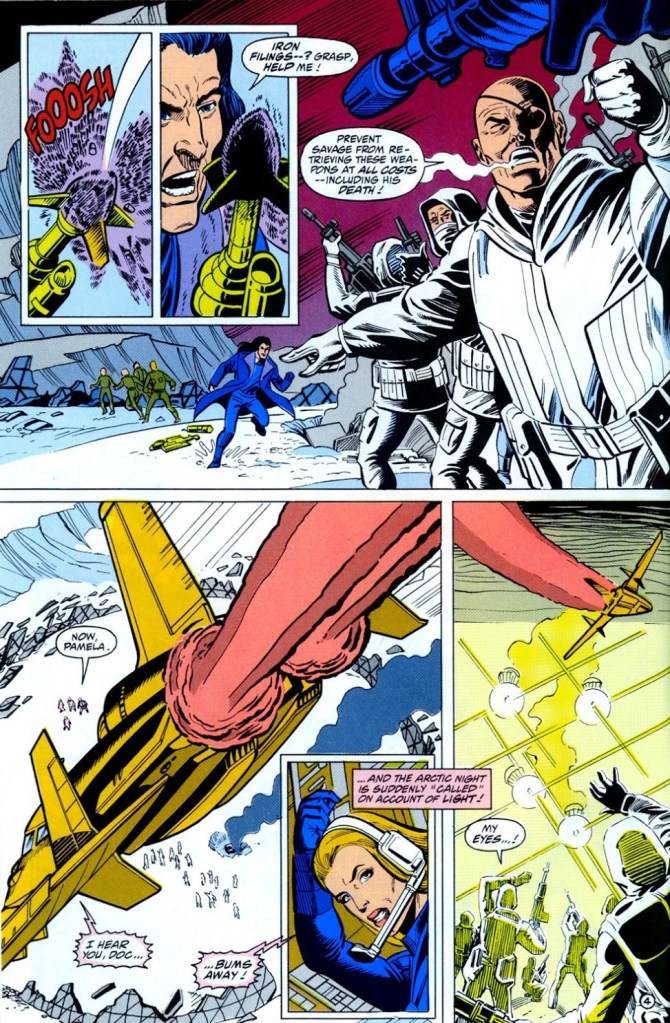
A pitched battle ensues. and it is a pretty rousing fight — well choreographed by Barr and Whigham. Doc’s new team of younger aides also has a strong presence (they include Pat Savage’s granddaughter Pam, an Israeli ex-Mossad soldier named Shoshanna, a former Soviet Army officer named Anton, and a young man from the US South named Beau). The use of a blinding light against Sunlight and his mercenaries is one of many twists on Sunlight’s own name that appear throughout this story…a plot device perhaps used a bit too much by Barr, who apparently could not resist the ironic wordplay.

Sunlight and his minions escape with the weapons using a skyhook to airlift them away. In the midst of the escape, the chief mercenary attempts to persuade Sunlight to abandon the woman scientist who had accompanied them, but he refuses — an interesting development, as he will show a growing attachment to the woman as the story progresses.

Sunlight is considerably more ruthless concerning his male partners…he leaves the tech company exec who had been financing the whole operation behind, quite dead.

The story moves on, with Sunlight being introduced to modern terrorism…an experience he seems to enjoy greatly.

Very soon Sunlight enlists the aid of a rogue terrorist nation (which somewhat mimics Iraq) to get him launched via rocket to a space station where once again a play on his name provides a plot device…he plans to use one of Doc’s “doomsday inventions” to block all sunlight from reaching the Earth. With this as his leverage, he unveils his wish to unite the entire planet in a kind of managed utopia.

In addition to this fascistic idealism, he also wants Doc Savage delivered to him. He cuts quite a figure, wearing his trademark single color in the form of kingly robes…and Doc is in quite a difficult situation.

These comics show an interesting shift in the storytelling styles of the time. The motivations and behaviors of the characters are a little more complex and nuanced than the black-and-white good vs. evil tropes that had been pervasive in the comic book industry for decades, but stories like this appeared to attempt a middle ground between completely adult storytelling and more shallow action and bombast. Some highly sophisticated works had come out of the 80’s (works like Alan Moore’s Watchmen), but comics were still hedging their bets with traditional properties like Doc Savage. It made for a bumpy ride at times, which was amply displayed in the presentation of John Sunlight, who is given a mix of new subtleties to his character as created in the pulps…but not quite a completely mature psychology. It was in some ways a fascinating repeat of a pattern that appeared in the post-WWII pulp magazine, which also tried to walk a line between adolescent and adult story content and characterization.

As the story reaches its climax, this form of mild story-schizophrenia will only grow more pronounced.

To be continued — the conclusion of DC’s “Sunlight Rising”.

Omnipresent Sunlight: Doc Savage’s archenemy – Part 2

In Part 1, we took a look at John Sunlight’s origins in the pulps, as well as the interest in the character generated by his mention in Philip José Farmer’s Doc Savage: His Apocalyptic Life, and the near miss of a Sunlight appearance in the Marvel/Curtis Doc Savage black and white magazine of the ’70’s.

It was finally DC Comics, when they launched an updated Doc Savage comic in the late 80’s, who orchestrated the return of the only villain to have faced Doc twice.

John Sunlight by Rod Whigham

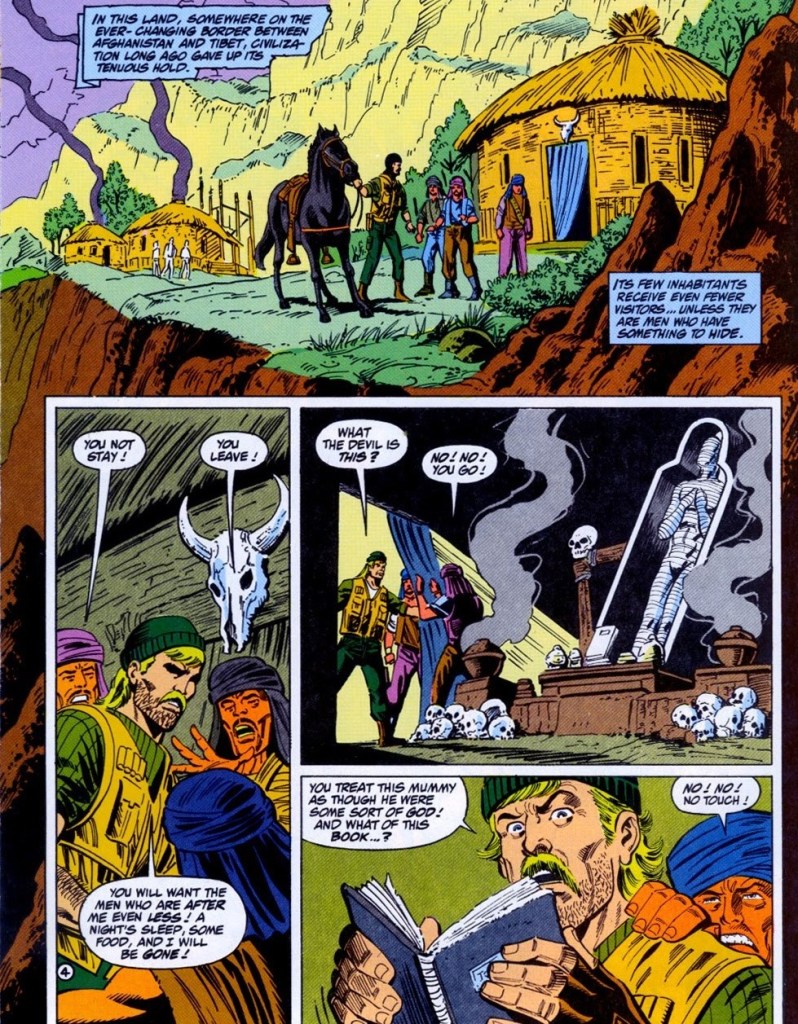
Series author Mike Barr was a pulp aficionado, so he integrated a number of original Doc Savage pulp stories into the framework of his multi-part comics story, “Sunlight Rising”. Those included the original two Sunlight adventures, Fortress of Solitude and The Devil Genghis, and also Resurrection Day. As the story unfolds, it’s seen that Sunlight did indeed, as it appeared in The Devil Genghis, die at the hands of his own followers at the end of the novel. His body was mummified, and in a remote mountain area had been worshiped for decades by natives of the region.

A soldier of fortune discovers the body, murders the villagers to acquire it, and drags it back to civilization. Once there, a different mercenary takes possession, and he has an ambitious plan: to revitalize Sunlight, and have him reveal the location of the apocalyptic weapons Sunlight had stolen from Doc Savage’s Fortress of Solitude in the 1930’s. Needing financing and equipment for the project, he recruits the disaffected son of a 1980’s tech firm CEO.

Despite some reservations, the resources of the tech firm are put at the disposal of the mercenary, who then promptly attacks Doc’s current Fortress (not as well hidden as the old one), takes Doc and his aides prisoner (including both the original aides and new, younger ones created for this series) and hacks the computer for the secret of the “resurrection formula” that Doc used back in the 30’s pulp novel Resurrection Day. The results? John Sunlight lives!

After the end-of issue cliffhanger, we see Sunlight begin the process of learning about the new world of the 1980’s. His personality — as established in the pulps — begins to quickly assert itself. In a trait he displayed in the original novels, he requests clothing all of a single color. Though at first, discovering that Doc’s own technology has been used to revive him, he is distinctly afraid of Doc Savage, and only becomes calm and calculating again when he realizes he’s been resurrected by enemies of Doc.

And discuss they do, as Sunlight’s mind begins to recover fully, and he promptly begins to plant seeds of distrust among his new partners.

In the meantime, Doc escapes from the lockup in his own fortress, and comes very close to capturing the whole group…but is just a fraction too late to do so. Once back at the tech firm, Sunlight (garbed in royal purple), continues to expand his manipulations, preparing to turn all of his allies against one another…except for the woman scientist who performed his resurrection. Seeing her devotion to him (rather than to profit), he is more open about his manipulations when talking with her, and actually chooses her to be a unique sort of consort.

Sunlight, in The Devil Genghis novel, had expressed lofty ambitions beyond those of most “world conquerors”…he actually wants to unite the nations of the world into a kind of utopia. It was an interesting approach to the struggles of the world in the Depression era of the 1930’s, and equally intriguing as it would apply to the world of fifty years later. A kind of despotic idealism, which was intriguing in a pulp villain.

All of the players continue toward the point of confrontation, which turns out to be the “original” Fortress of Solitude, where Sunlight had hidden what in today’s world would be considered weapons of mass destruction. The weapons are horrific (as were their 1930’s counterparts), which is why Doc had sealed them away in his Fortress to begin with — and that too was (and is) an interesting commentary on the practice of nations creating and then stockpiling devastating technologies…a practice which certainly continues to this day.

By now Sunlight has all of his allies ready to turn on each other…and they make a final push — pursued by Doc and his team — to acquire the cache of doomsday weapons.

Another cliffhanger!

So far this story was living up in many ways to the special nature of a third confrontation between Doc and his arch-villain from the pulps. It embraced the history of original stories, adeptly re-focused 1930’s plot devices into the 1980’s, and provided pretty sophisticated character play.

Two issues of “Sunlight Rising” down, and two to go!

To be continued…

Cover reveal for Doc Talos: Wolves

The newest book in the Doc Talos canon is now in galleys, and right on schedule for release early in 2022. Here’s a peek at the cover of Wolves, based on the 1934 novel Brand of the Werewolf. Artwork (and dozens of painted interior illustrations) by the brilliant Iason Ragnar Bellerophon.

Wolves, a story set in 1934, tells the tale of James Talos Jr.’s first meeting with the young woman he believes to be his cousin, Patricia “Rickie” Talos.

Alec Talos, younger brother of Doc’s deceased father, lives in the Canadian Pacific Northwest, and his estate is under siege by a vicious group calling themselves the “Werewolf Gang”. Looking to recruit assistance, Alec, his daughter Rickie, and a Native American couple, Jeremiah Travels-by-Water and Miriam Small Cloud, go south to Seattle, and run afoul not only of gang members, but the gang’s secret leaders, the Gnostic Archons.

In a burst of shocking violence, Alec is killed, and Rickie calls on her famous cousin, Doc Talos, for aid. At the snowbound Canadian Talos estate, these forces clash in a conflict underscored by occult manipulations that will shadow the Talos family for decades to come.

Look for Wolves to appear in deluxe paperback and in PDF download early in the new year!

Omnipresent Sunlight: Doc Savage’s archenemy – Part 1

Much has been made — over many decades — out of the fact that across the original pulp run of Doc Savage magazine, only one villain came back to oppose Doc for a second time. That character, of course, was John Sunlight.

He was certainly a unique and compelling character. In many ways he was crafted by author Lester Dent as a kind of dark mirror to Clark Savage, Jr. He was physically powerful, but less due to muscular development than an ability to channel his will into extreme exertions of his body. Where Doc was handsome in a classically masculine way, Sunlight was described as having the features of a poet. He was merciless to an opposite extreme from Doc’s legendary compassion…and yet had high ideals (one of which was to unite the world and abolish war).

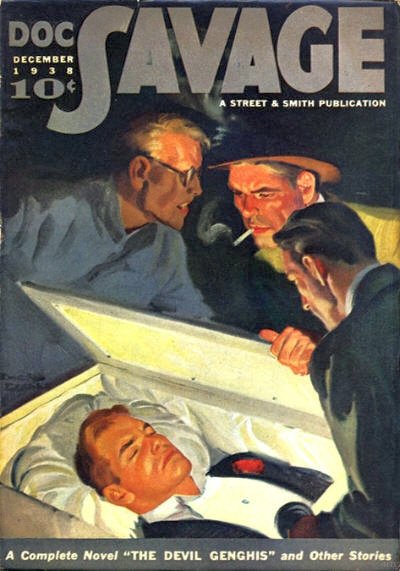
He appeared in the October and December 1938 issues of Doc Savage. Seemingly dead at the end of the first story, Fortress of Solitude, he in fact survived, to reappear in The Devil Genghis…only to die again, this time (apparently) for real.

Doc Savage magazine, October 1938
Doc Savage magazine, December 1938

He would remain dead in Doc Savage literature for fifty-one years, with a couple of teases: Philip José Farmer gave him quite a bit of space in the literary bio Doc Savage, His Apocalyptic Life…and in the mid-1970’s, a letters page in the Marvel/Curtis Doc Savage black and white magazine mentioned that author Doug Moench was developing a Sunlight story, tentatively scheduled to appear in issue #9. The magazine was cancelled after issue #8…if any part of the Marvel Sunlight tale was ever written or drawn, no trace of it has ever surfaced.

My own authorial career had begun in the 1970’s (basically an exercise in collecting rejections)…but in 1986, I undertook a project near and dear to my heart. I endeavored to extend the continuity of the massive Doc Savage literary history to the present day. I had grandiose notions of pitching the concept to Conde Nast/Bantam Books, as the series of paperback re-releases had been sputtering for some years (and the new Will Murray-authored novels of the 1990’s had yet to come).

Thrilled beyond words to be working with the Doc mythos, I composed a single novel, featuring as its villain…John Sunlight. As you will see below, his (apparent) death in 1938 seemed manageable to explain away, and so I did so, setting up a confrontation between two then-octogenarian titans: Doc and Sunlight.

When I completed it, my attempts to interest Conde Nast in the novel, The Day of Black Sunlight, came to a rather predictable zero. As a then-unknown writer, I had no cachet with which to woo such a powerful publishing entity, and they declined to even look at the book.

For the record, Sunlight really dies in the novel…blown to bits (conclusively) by Pat Savage, using a rapidfirer loaded with explosive cartridges (I thought it was high time a more empowered version of Pat kicked some major ass).

In any case, disappointed but undeterred, I began plotting more Doc novels in the present day, only to have DC Comics’ Doc Savage series appear shortly afterward…updating Doc to the present day. With the idea no longer original, I moved on (to return to author the pastiche Doc Talos series a quarter-century later…but that is a whole different subject).

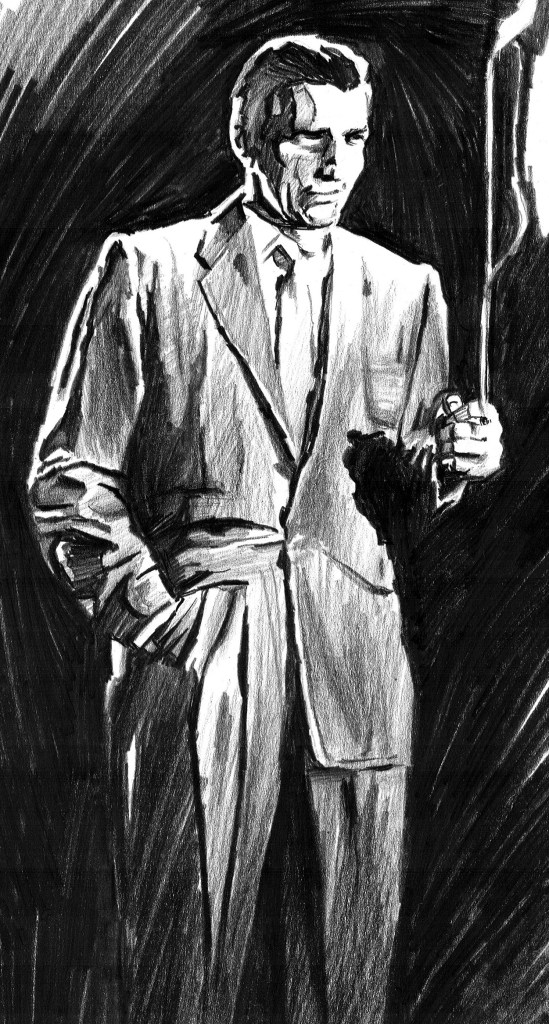
Though I did include a pastiche of Sunlight in a short post-WWII story as part of the Talos Chronicle, depicted here by fine artist David Cuccia, and also Doc Talos co-creator Iason Ragnar Bellerophon.

John Sunlight by David Cuccia
“Sunlight” by Iason Ragnar Bellerophon after David Cuccia

But returning to mainstream publications, by the late 1980’s the Doc Savage DC comic was hitting its stride, tapping into many pulp-story sources for stories, and by issue #11 author Mike Barr made a momentous decision…to resurrect John Sunlight.

The comics industry is notorious for ignoring or substantively altering the histories of adventure characters, but Barr was an aficionado of the pulps, and as I had done in my own attempt at a new Doc novel, actually tried to carry forward the continuity from the two 1938 stories.

The ongoing storyline of the comics series had updated Doc to what was then the present day…1989. So Barr had the same challenges I had faced in The Day of Black Sunlight: to explain how Sunlight had survived the events of The Devil Genghis, and find some engaging means of bringing him back. At the end of the 1938 novel, Sunlight had been cut down by the swords of his own followers, and presumably hacked and torn to bits. The pulp description of the scene portrayed the initial stabbing, but provided no specific, positively identifying views of the dismembered corpse. So in the new story Sunlight Rising, it is shown that Sunlight did in fact die, but his body remained in one piece…and had been mummified by a few loyalists among his followers.

This unique corpus became an object of worship among those followers, but in an area so remote no one outside of that small circle even knew of its existence, until the mummified corpse is stumbled upon by a soldier of fortune.

(Comic artwork by Rod Whigham)

A book kept at the feet of the mummy proves to be no less than the journal of John Sunlight. Realizing what he has found, the soldier of fortune murders Sunlight’s worshipers, and carries away the body.

And so begins an odyssey that will soon bring Clark Savage and John Sunlight into conflict for a third time.

to be continued…

Part 2 – Interview with the superheroine of modern pulp: Atom Mudman Bezecny

Before returning to Atom’s thoughts on pulp adventure, literature and the arts, here she is along with her fabulous array of book and magazine covers…a wonderland of adventure and imagination.

RPS:

Tell me a little about the creation of Odd Tales of Wonder and Odd Tales Productions. We’ve talked a bit about the restrictions and profit-over-art, Mammon-over-revolutionary, sanitized-over-subversive spirit to be found in the publishing mainstream…when did you decide to break free from that and go your own way as an editor and publisher as well as writer?

ATOM:

Odd Tales Productions started out because I realized that there was little stopping me from running my own New Pulp magazine. I wanted to encourage people to come up with pulp scenarios and maybe create serialized universes, in hopes of maybe seeing the rise of a new recurring feature like Doc Savage or other long-lived heroes. But because we were new, we didn’t really attract that sort of crowd. However, the stories we did get to print were all awesome. Odd Tales of Wonder ran for ten issues and we published authors from all different backgrounds.

It was a little intimidating taking on the responsibilities of editing and publishing stories submitted over the Internet, and as any anthology editor will tell you, the road was pretty hard at points. But it was also very fulfilling and made a lot of people happy. Early on, a writer from France named Katherine Avalon took a particular interest in Odd Tales and talked me into letting help edit. Kat has been a great friend, and her bitterly satirical screenplay The Fires of ’16: Reign of Emperor Tromble was one of the first books we ended up publishing.

After the end of the magazine we decided to publish books through Odd Tales Productions, and over the last few years we’ve mostly published our own works. We took on another co-editor, Michael Kobold, who helps mostly behind-the-scenes in helping our novels happen. We’ve been trying various ways to open up submissions again in some ways, but have failed to attract interest; we’re also hoping to reprint a few obscure public domain texts, but the transcription process hasn’t fit into our schedules so far. While Odd Tales has admittedly become a bit more of a selfish enterprise, we’ve also taken this time to develop our “flavor.” Kat and I have built on each other’s works and added to each other’s fictional universes–pretty much all of our work intertwines in some way.

It’s funny because I think a lot of people think the stories we publish through Odd Tales are stories we’ve shopped around and failed to sell. The truth is, the majority of our work over the last few years has been written with Odd Tales specifically in mind. It’s fulfilling to control the design and the publishing process and the marketing, but also we write Odd Tales stories because they fit into what we have built Odd Tales up to be. And while we know that someday we may have to dedicate more of our time to other enterprises, we’re proud of what we’ve created, and hope that our readers enjoy that magic as well.

RPS:

How do you see your own relationship with the family of writers (as well as artists and filmmakers) who are building and enhancing the legacies of pulp fiction? You are an astute and insightful reviewer, and have brought a new spark to obscure characters from the pulp past. Do you see yourself continuing to do so? And it seems as if you have forged positive relationships with some of the older creators mining those seams of literary gold…I know that some creators within that landscape can get very territorial, form alliances and grudges, and no one argues with quite the intensity of erudite fan vs. erudite fan. It feels like you have adeptly kept your focus on joy and fellowship in the pulp-creation world, which is really splendid. Is there a master plan in your thoughts as your career goes on, or is it more of a wild ride that evolves as you go along?

ATOM:

At the end of the day I try to be an approachable person. I don’t know if I always succeed, but I am always looking to make new friends. I think everyone would rather make a friend than an enemy, haha. The pulp community has been very nice and supportive by and large, and I’m really fortunate to have made a ton of really cool friends among the various fans and writers I’ve met. I think we all really enjoy a sense of community because we’re all generally nerdy people with fairly obscure interests. I thrive on making people happy, and if my books and reviews and discourse and whatnot can do that, I feel like I’m doing the right thing. I’ve considered on several occasions moving into different spheres of writing, but it’s really hard to break away, because there’s always something new to discover.

There are drawbacks–all fandoms like to get in stupid fights or defend bad arguments, or even rally around problematic imagery. This is why I never read the comments on posts about Doctor Who or Star Wars. That sort of drama can cause a lot of eye-rolling, but because it contributes nothing to my life I don’t really want to let it take anything away either. The people I spend the most time and energy with are the ones who are very kind and very flexible, and fortunately I think that’s the majority of the community.

So I don’t know if I can quit pulp. In some ways, I feel like I’ve given up my old dream of making my living selling mainstream fiction, but that’s more due to the inevitable collapse of American capitalism more than anything else. Publishing standards have gotten harsher and royalty checks have gotten smaller; you need to be a Twitter superstar to break out as a writer these days, and you have to be willing to work for peanuts. It’s always a balance of wanting to roll up your sleeves and take the risk vs. wanting to just enjoy making your art even if your audience is very small. I have felt genuine despair over the idea of quitting completely, and so if pulp ever did get too stale for me and starts holding me back, then I might drop it, at least partway. So I guess I’m on the wild ride side of things, haha. Which suits me–I’d rather try to adapt than try to brute force something without accepting change. I’m always looking forward to what happens next, even if I don’t always know what that will be.

RPS:

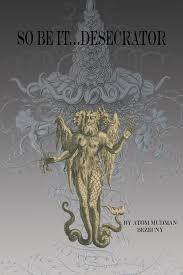
Tell me more about your latest book “So Be It…Desecrator”. You’ve promoted it as a work of dark erotica. Your encapsulation of the book sounds very intense…

There cometh for every breathing soul a time when they must tread upon the sacred—urinate upon it—for the sacred is too often a mask for the profane. And the appropriation of divine nature calls for the rise of a dark and ruthless Avenger… ~Lutum Hominus, 13th Century Monk

FBI agent Rico Benz is saddled with transporting a mysterious amorphous entity which can travel through dimensions–typical luck for him. When things go awry, ripping him from his home and family, he is reborn in a new form. With his new shapeshifting abilities, Rico must fight his way off of an alternate Earth, where a sinister alien force has all but destroyed humanity…

ATOM:

So Be It…Desecrator is my way of exploring rebellion and meaningful resistance. It’s also a hardcore porn where alternate versions of the Avenger, The Shadow, and the Domino Lady all fuck each other. It owes a lot to Philip Farmer’s A Feast Unknown, but I really tried to make this much more than “Feast Unknown with the Avenger.” This is not only in the nature of the plot, which is original, but also in that the title character, the Desecrator/Rico Benz, is sort of a 21st Century  reimagining of Richard Henry Benson rather than a pastiche. Whereas Benson’s paralyzed facial muscles allow him to change his visage to disguise himself, Rico Benz is changed in a much deeper way, so that his whole body is capable of shapeshifting–the event that transformed him also takes him a ruined version of the Earth where the evil Frogs (so named for their amphibian appearance) have taken over. He meets survivors of the Frog invasion, and has sexual encounters with them for various reasons.

He soon learns his shapeshifting makes him very powerful, because being able to change the shape and structure of his body can really let him do anything. Like a lot of my superpowered protagonists, Rico struggles with how to use his great power responsibly. The loss of his family has unhinged him, but through crossing through various taboos, he finds a way to accept what he has become, and use his power for good, becoming a Desecrator of that which evil calls holy. By being transformed into a fluid being, he is freed from social constraints as well as physical restrictions, and he must decide what sort of defiance and Desecration is good and what is evil or banally self-indulgent.

It was fun reimagining one of my favorite pulp heroes for the modern day, on top of writing a large stable of pulp characters in a war-wracked setting, where they’ve all become desperate, or worse, in their struggle to survive and protect what remains of their world. This isn’t an attempt to be grimdark and do bitter versions of characters just for the sake of bitterness. I love the characters and the brightness they tend to represent a bit too much for that. But because this book is a little wilder and a little darker and a little more disturbing than my others, I’ve found a way to work non-spoiler trigger warnings into the book. For people who say that deflates a book which is all about encroaching on taboos, they really don’t understand what I’m trying to do. Respecting PTSD is a rebellion against a status quo which doesn’t respect people with trauma. That’s really the best way I can encapsulate the philosophy of this book. It’s about finding what really deserves to be rebelled against, and challenging common conceptions of such.

RPS:

You took part in the Doc Talos fantic contest this past summer, and created “Silver Legacy”, a story that adeptly balanced the intense adult themes of the Talos stories with a keen sense of family legacy and the presence of a deep moral core within the characters, even when struggling with a paradigm of violence and desire. You are also planning a Lord Grersoun tale for the Talos world, which is wonderfully exciting. Tell me a little more about your other creations that have featured either history or pastiche of The Man of Bronze. 

ATOM:

Doc Savage haunts a lot of my work in one way or another–I like nodding to his world in various ways, like making Lo Lar from The Feathered Octopus a member of the Order of the Madonna from my novella The Divine Mrs. E (which is my fanficish exploration of the hydra-headed universe of the Emmanuelle film “series”). But in particular, readers of my books Return of the Amazing Bulk and Flint Golden and the Thunderstrike Crisis can pick up strong hints of Doc-themed story threads.

I leave the sorting out of those clues to the readers, and may they enjoy the hunt. Flint Golden, along with my books The New Adventures of the Flash Avenger and The Brute!, is part of my ongoing Hero Saga series, and the character of Flint Golden will be a main one all throughout those adventures. So that series in particular will have much Savagery to it. Besides that, I hope at some point to write a literary novel, tentatively titled The Mushroom, which will be strongly inspired by the ghosts of both Doc Savage and Tarzan. It will incorporate a spectral version of my weirdo theory that Richard Wilder, the filmmaker-turned-maniac from J.G. Ballard’s High-Rise, was actually Doc’s grandson.

RPS:

Thanks for coming on to the Forbidden Pulp blog, Atom! Talking with you, it’s impossible to not be excited about the future of pulp fiction here in the 21st Century. And on a personal note, I’m thrilled to have joined you in exploring your multiverse of creations with the upcoming prequel to your Flint Golden and the Thunderstrike Crisis! Your energy and boundless creativity is an absolute inspiration.

Here’s a sneak peek at the cover of The Wife of the Summer Sun: A Flint and Siobhan Golden Story…coming soon from Odd Tales Productions!

And to explore more of Atom’s works, here are links to her Odd Tales of Wonder site, and her Patreon.