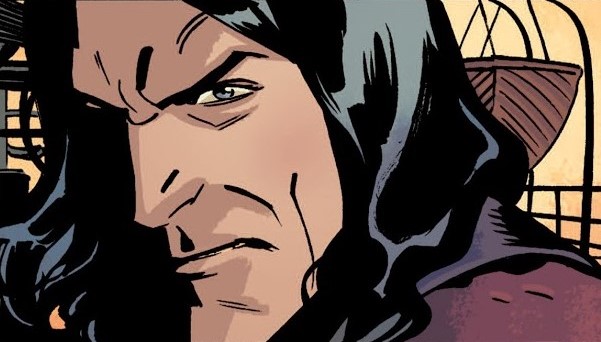
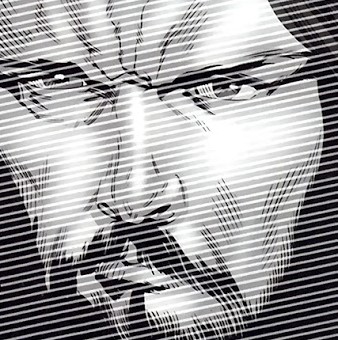
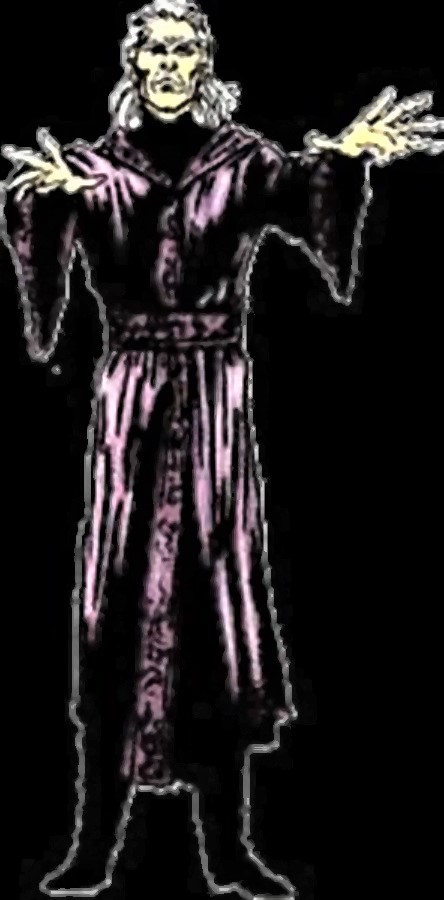
The next appearance of John Sunlight in a comic book story was a very unique one, as it was a pastiche, rather than an “authorized” Doc Savage property. And it was in a series whose original creator, the late great Dave Stevens, was an enthusiastic Doc fan. He created the popular Rocketeer series. Stevens passed away from leukemia in 2008, but in 2012 a new story with his Rocketeer character appeared, called “Cargo of Doom”, by writer Mark Waid, and artist Chris Samnee. It was collected into a trade paperpack by IDW Publishing in 2013. The villain? It was this guy, who looks quite familiar.
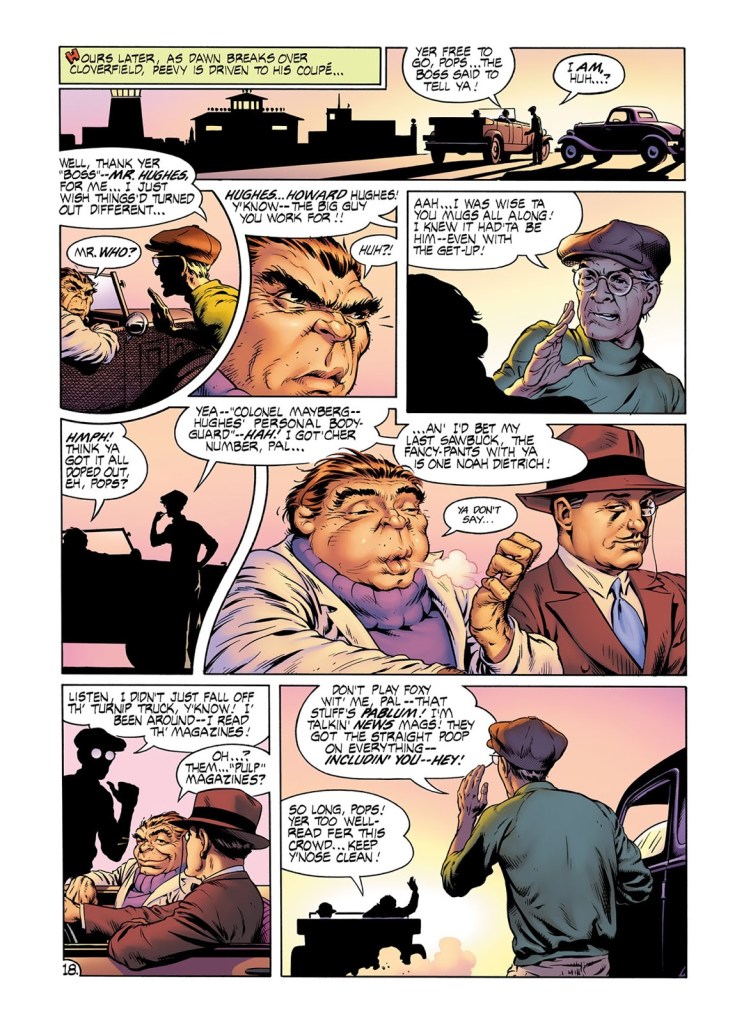
Before exploring the details of the story, a quick look back at why I noted that Rocketeer creator Stevens was a fan of Doc Savage…recognize these two fellows from a fun page in the original run of Rocketeer comics?
Monk and Ham (who are never directly named in the story — Monk is called “Colonel Mayberg”) play a pretty large role in the tale, and it is a delightful rendering of the two classic Doc aides. Also appearing in the story is this guy…
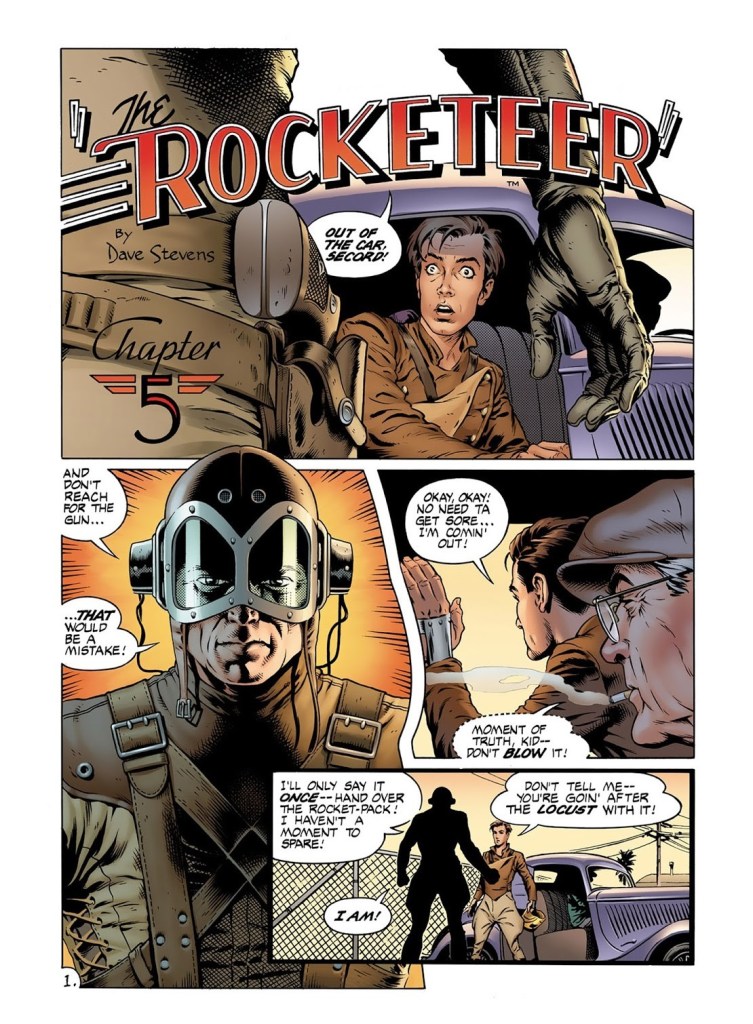
Yes, that’s Doc himself…like Monk and Ham, never referred to by name in the story (the Rocketeer’s colleague, in the page with Monk and Ham, thinks he is Howard Hughes, which gives the two aides a good chuckle)…but of course we know better. Under that futuristic flying helmet is none other than Clark Savage, Jr.
The rocket pack used by Cliff Secord (the Rocketeer) was actually an experimental device stolen from Doc (more or less innocently acquired by Secord). Hmmm…wasn’t there someone else who once stole dangerous experimental devices from Doc Savage?
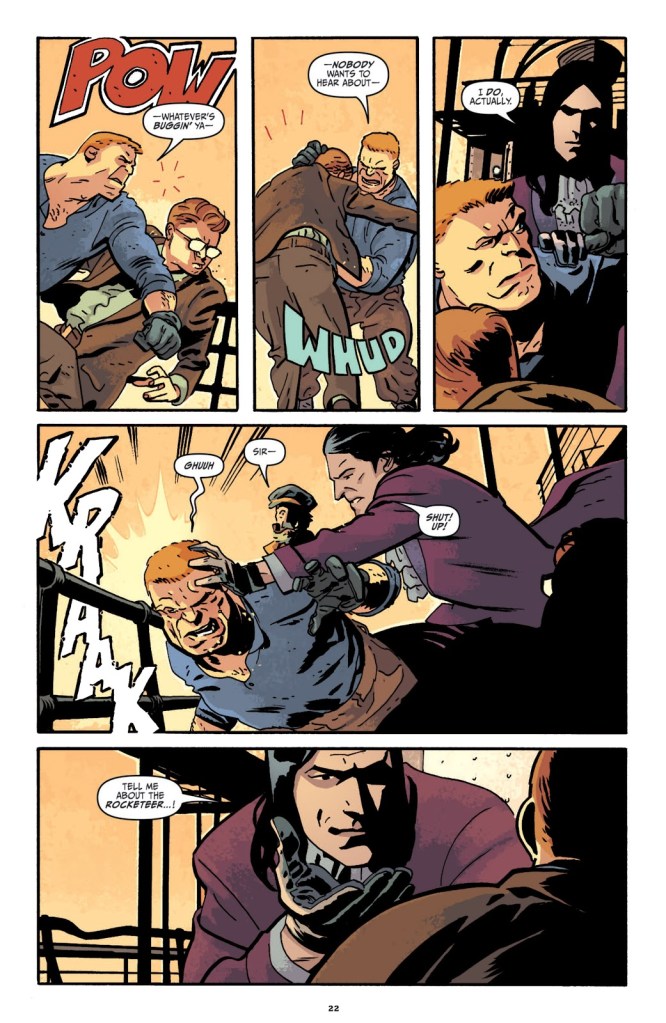
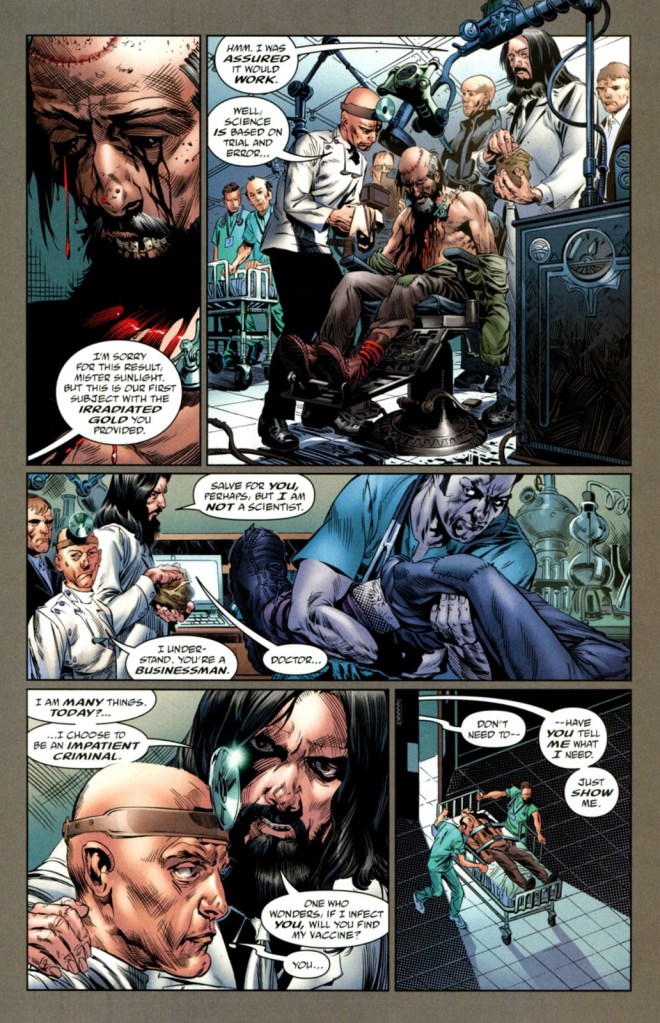
Anyway, returning to Sunlight, he did not appear in any stories by Stevens, but the Waid/Samnee story places him prominently at center stage. As with the earlier Doc Savage characters, he is never directly named (referred to as “the Master”), but from one glance there is no doubt who this is.
The cargo Sunlight has come to inspect is from quite a notable location…Skull Island. That should also ring a bell to followers of 1930’s adventure film.
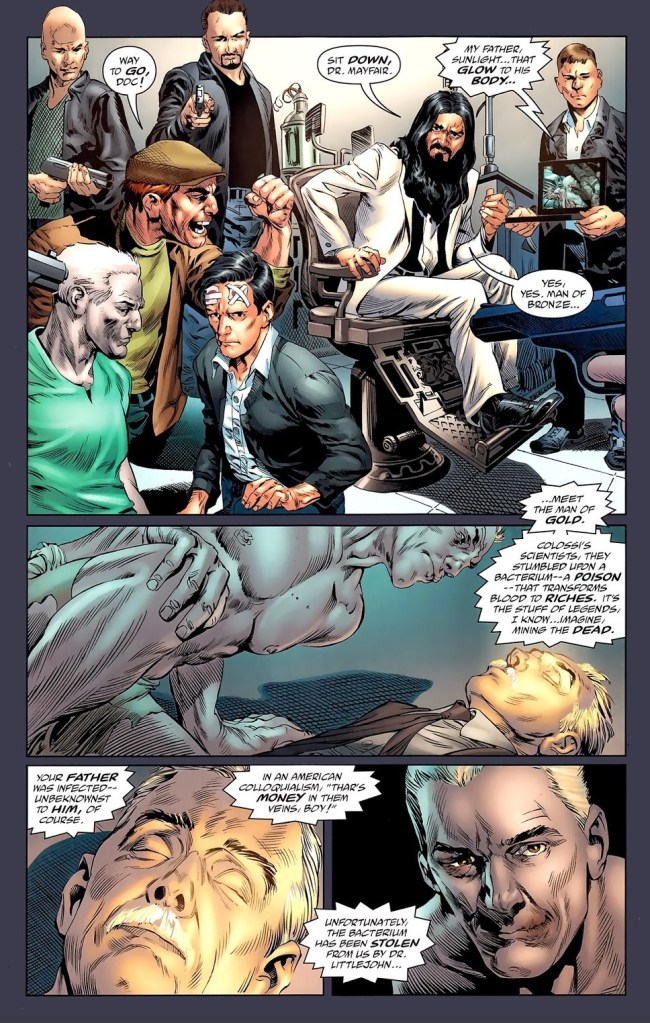
There is mystery and chaos aboard the ship, and as Sunlight takes control of matters, he learns about the Rocketeer, and takes a distinct interest in someone who possesses technology created by Doc.
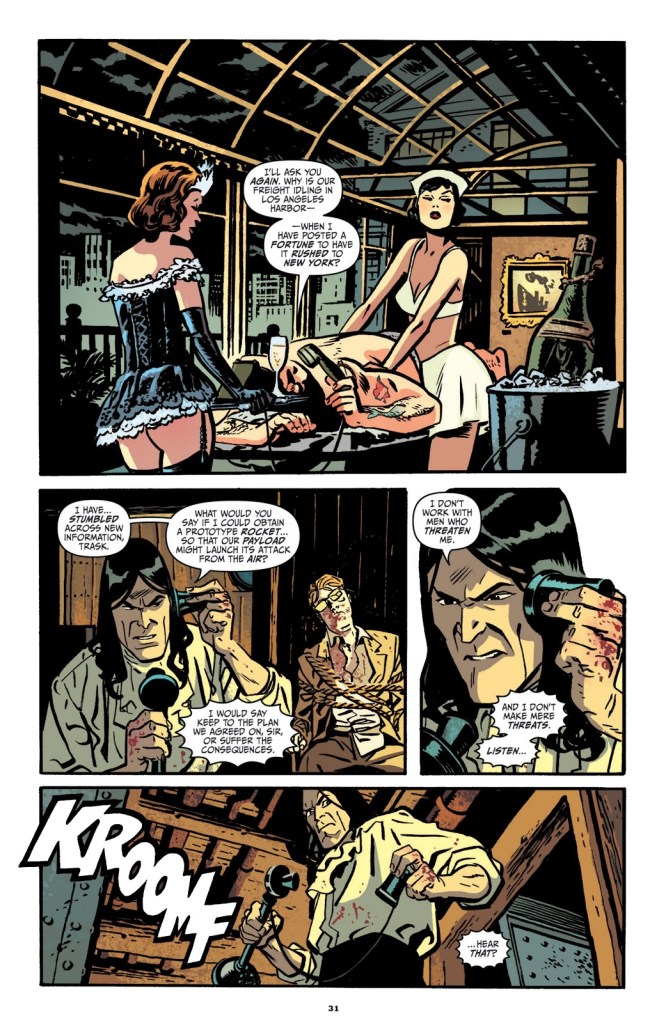
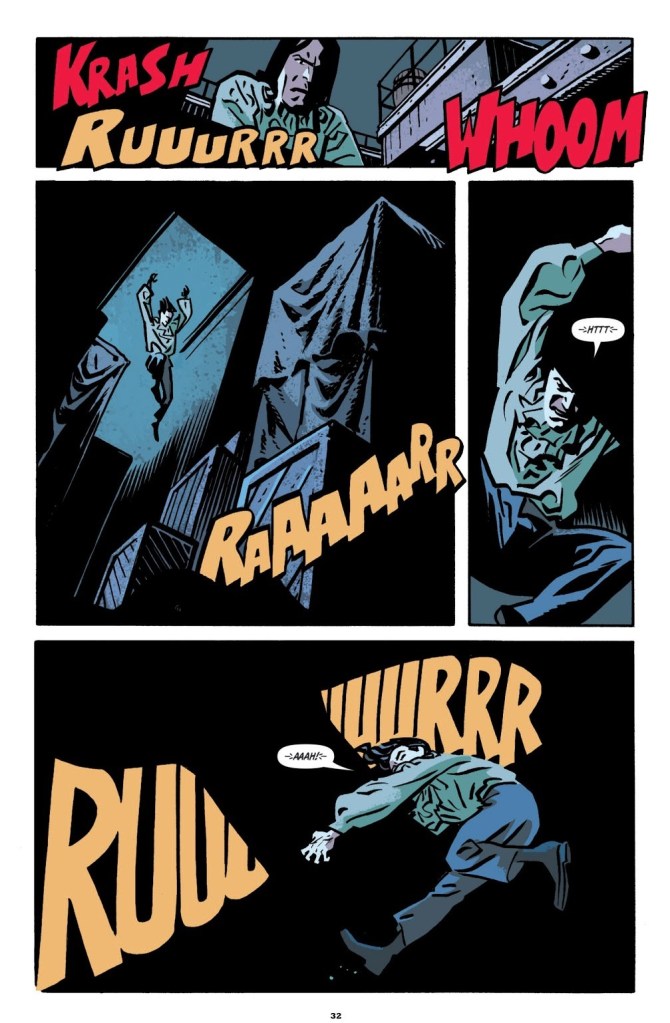
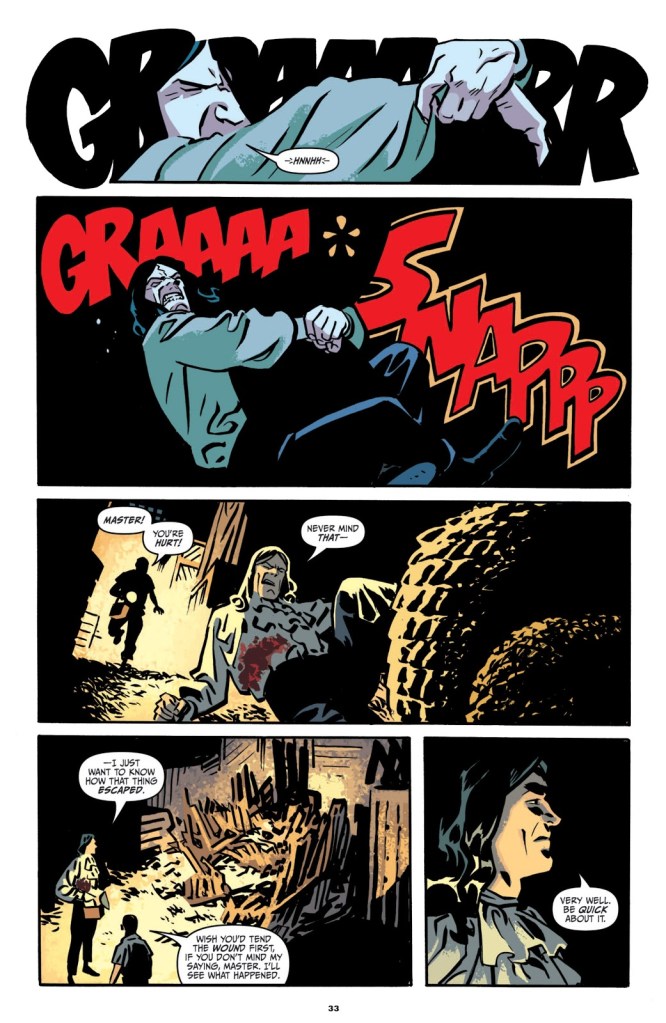
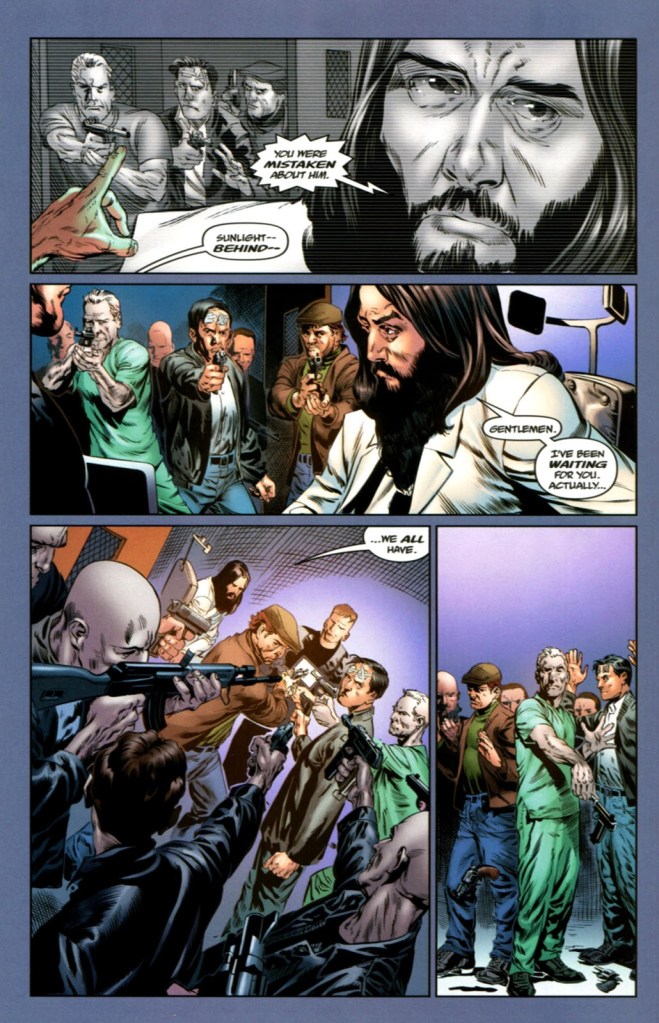
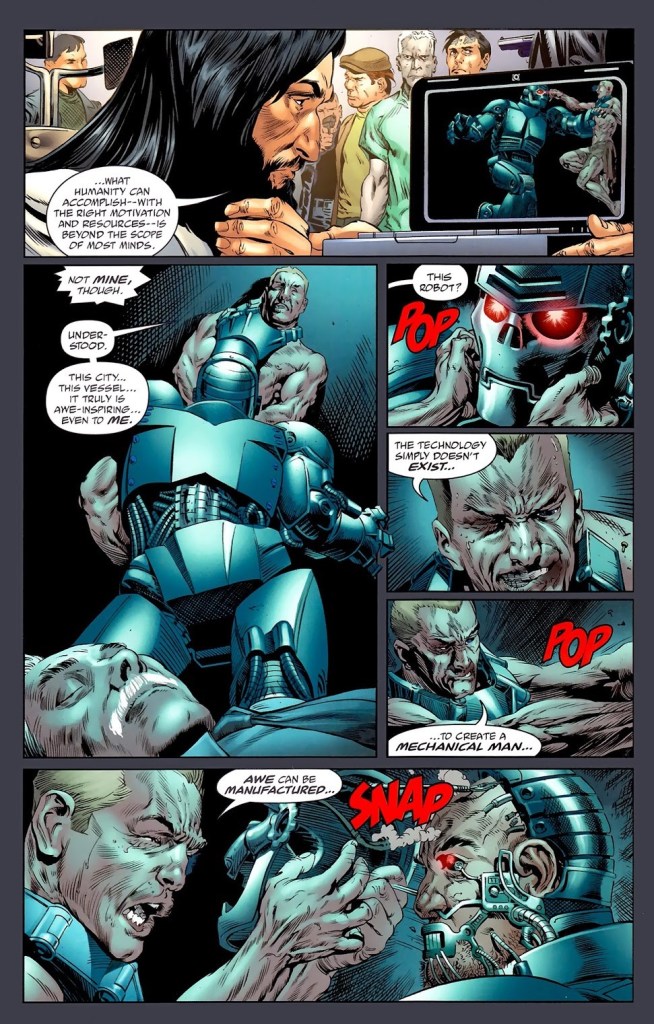
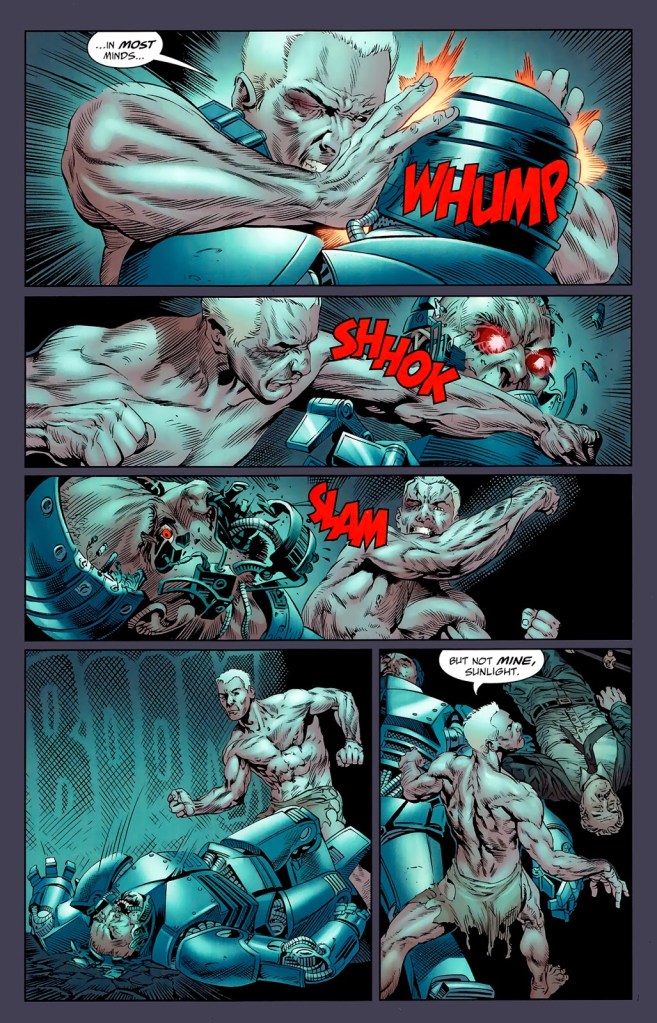
While conferring with a criminal ally, Sunlight hears horrific sounds from deeper in the ship, which he investigates. What ensues is a desperate, violent encounter in the dark hold, with something taken from Skull Island.
Sunlight prevails, but is not happy about the incident…nevertheless, he will shortly proceed with his intended acquisition of Doc Savage’s rocket pack from its current owner…the Rocketeer.
John Sunlight’s appearance in DC Comics’ First Wave event of 2010 was iconoclastic indeed. The whole series had lofty goals of redefining pulp and comic book heroes into a format that could stimulate interest among readers in the millennial world — in retrospect, it didn’t fully succeed in creating a revolution in heroic literature, but it gave it a hell of a try.
Sunlight himself bore enough resemblance to the classic pulp character to remain recognizable, but his portrayal in this series was also enigmatic in the extreme.
John Sunlight portrait by Rags Morales
As portrayed by author Brian Azzarello and artist Rags Morales, he was a menacing, eccentric intellectual, par excellence. But he appeared in the story so infrequently he seemed like a ghostly presence. Nevertheless, when he took center stage it was weirdly riveting. He did not appear in the second issue of the 6-issue limited series at all, and only on one page in the third issue. But what an appearance…
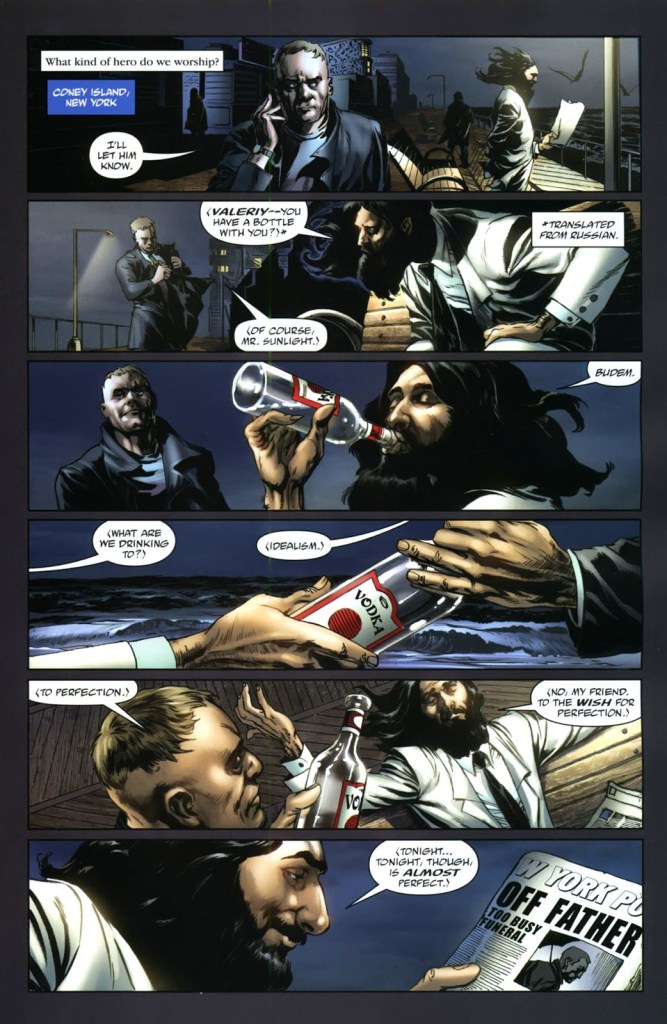
Sunlight was introduced hanging out on a park bench at Coney Island in the opening chapter of the story, seemingly inhabiting a psychological world of his own. In his single appearance in First Wave #3, he takes even that characterization up a notch, as without explanation, he strips off his clothes and leaps into the Coney Island surf, philosophizing about the nature of grand ambition.
This was both bizarre and brilliant…and had First Wave fully embraced this kind of quirky sophistication in its storytelling in anything like a consistent manner, it might really have shaken up the world of pulp storytelling.
However, it does pull back, mixing periodic innovation with relapses into pulp/comic book tropes. While Sunlight lurks somewhere in the background, the crowd of heroes in the story (including Doc Savage, Batman, The Avenger, the Blackhawks, The Spirit, and Rima the Jungle Girl) hurtle through a chaotic plot. The parade of story elements and landslide of characters chewed up a lot of space…though there would be a few notable pauses and digressions that elevated those characters at least briefly before succumbing to runaway-train styles of action.
Sunlight would not return until later in the series, still apparently the man in charge of every villainous twist and turn of the story. He appears on a video screen (like the portrait image above) giving orders to a much less interesting sub-villain, while conducting some distinctly horrible experiments of his own.
A number of the heroes — among them Richard Benson (The Avenger) and some of Doc’s aides — have meanwhile successfully tracked Sunlight to his clandestine medical facility, and crash his horrifying party, only to find they were expected.
With matters under control, Sunlight returns to his role as a video presence, shadowing Doc Savage by voice as Doc struggles against various pulpish menaces inside of a technological mini-city created by the story’s sub-villain.
The action (literally) swamps the story while Sunlight continues his shadowy background presence, culminating in a scene where the techno-city floods, with voice-over by Sunlight as he — pretty calmly — accepts the collapse of his plans, muses a little on lost opportunities, and proposes a toast to his now-dead underlings.
The action winding down, Sunlight — much to the shock of his prisoners — simply lets them go. Before departing, he muses a bit more on the nature of good and evil, right and wrong. But no more conflict is forthcoming. A rather remarkable conclusion to an often bombastic pulp/comic book narrative.
Sunlight’s powerful mystique had been captured in a truly unique manner. But he would not appear again in the individual First Wave stories that would follow this introductory tale. Given that those stories were wildly inconsistent as to quality, perhaps that’s just as well.
It was a tantalizing glimpse of what pulp villainy had the potential to evolve into. Mysterious, nuanced, sophisticated…and alas, ever so brief.
Next…an intriguing pastiche of John Sunlight in a series that also had a sneaky appearance of Doc, Monk and Ham in an earlier adventure…and a complete about-face as years pass, the Doc Savage story license shifts to another publishing company, and John Sunlight devolves to the closest he will ever come to a stereotypical comic book super-villain.
What follows is a review/discussion by three diverse authors…all enthusiastic creators and readers of pulp adventure. The three of us met in 2021 and immediately enjoyed one another’s company and writings to the degree that we joined in the tradition of author circles like the 1930’s Kalem Club (a literary group whose last names all began with K, L or M, and included H.P. Lovecraft) and the Inklings, the Oxford circle made up of J.R.R. Tolkien, C.S. Lewis and Charles Williams.
A brief introduction: Atom Mudman Bezecny is both an author and publisher, and created the Hero Saga, which has brought to life unique pastiches of classic — and some wonderfully obscure — pulp characters. R. Paul Sardanas is the co-creator (with artist Iason Ragnar Bellerophon) of the Doc Savage adult pastiche Talos Chronicle, and André Vathier is a French Canadian author who has written stories in both the Hero and Talos “universes”. Together we comprise the Conseil du Mal (or Council of Evil)…dedicated to wicked literary pleasures of all kinds!
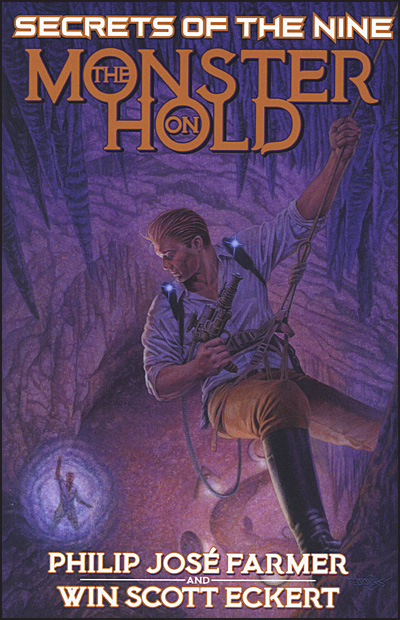
Cover of paperback edition by Doug Klauba
SARDANAS: Hi Atom, hi André…so we are here to chat together about the newly-released novel by Philip José Farmer and Win Scott Eckert, The Monster on Hold, published in 2021 by Meteor House. This book has a very unique provenance…being a continuation of a story cycle begun by Farmer with his 1969 novel A Feast Unknown and continued in his 1970 mirror-books (the same story told from two points of view) The Mad Goblin/Lord of the Trees. Farmer teased the continuation of the series at the World Fantasy Convention 1983, with a sample chapter…but did not complete the book in his lifetime. But almost four decades later, accomplished pulp author and Farmer collaborator Eckert brought the book to fruition.
Eckert has quite a challenge here, one that requires a very rich connection to Farmer’s thoughts and unique style. Making the creation of this book doubly ambitious is the fact that Farmer took the series on some intense course-changes while he was solely at the helm, from a sprawling, hammering pulp-pornographic narrative in AFU, to hard-edged but more conventional adventure in TMG/LOTT, to an abrupt turn into planned Lovecraftian-style themes wedded to a storyline from the original Doc Savage pulp magazine — in fact the pulp’s final issue in 1949, Up From Earth’s Center. In the over half-century since AFU was published, Farmer’s creation of whole tiers of interlinked fictonal character history has also been greatly developed and expanded, as the Wold Newton constellation of stories. Without too much in the way of spoilers, Eckert will also tie in events from Farmer’s authorized Doc Savage novel, the 1991 Escape From Loki…and more.
That’s a lot to weave together, in a story that runs for about 150 pages. I’m an older reader — I encountered AFU in 1973, and TMG/LOTT in the following year — so for me, it’s been a wait of 47 years to pick up the tale where it left off at the end of TMG/LOTT. What were my expectations? Well, I enjoyed the pairing of Farmer and Eckert in an earlier take on another branch of pulp pastiche, the Pat Wildman story The Evil in Pemberley House, so I had confidence that it would be adept storytelling. I was a little wary of the grafting of Lovecraftian elements into the Caliban story fabric (I am a huge devotee of Lovecraft, but his work, very dependent on slowly-building mood, scene, and lush description, seemed to pose numerous conceptual difficulties in finding a balance with an adventure narrative). I didn’t expect an almost-insanely powerful experience like that of AFU — Farmer himself had throttled back in his sequels — but I hoped for a deeper exploration into the character of Doc Caliban, whose depiction in the original novels, to my mind, left open potentially broad and fascinating avenues for development beyond cliches of pulp characterization.
So I opened to the first page of The Monster on Hold with excitement, with some reservations, but overall an open mind. And it begins with a bang:
The things flapped their leathery wings all around Doc Caliban’s head, pointed beaks packed with cutting teeth snapping at his exposed, bronzed cheeks, talons clawing and ripping the upper sleeves of his parka.
BEZECNY: When I first read those opening lines, I had chills. It was a strange feeling just because I told myself that it would be really cliche to get chills. But it was hard not to be excited and I know I’m not the only person who had that reaction. I knew that there were a lot of mysteries to be tackled here, and at the same time I knew that with Win at the helm everything would go down splendidly. So it was only natural to get really pumped up.
What’s funny to me is that I don’t think my anticipation about this book was the same as everyone else’s. I think that most fans of Secrets of the Nine are in it for Caliban and Grandrith and their battle against the titular cabal. I’ve always been hungry for The Monster on Hold because I wanted to see more of what Christopher Paul Carey has deemed the Farmerian monomyth. Both Carey and Eckert have exposed the threads that link together many of Farmer’s pulp adventures, and in doing so have exposed much about the slippery Baron whom Doc Savage first faced in Escape from Loki. The Baron has become one of my favorite pulp villains of all time, in all his guises, and I wanted to know everything about him. Then there are the connections made between certain happenings at the Earth’s polar wastes and a specimen of worm unknown to science…but I should stop there, much as I don’t want to. The wait has been on since 1983, but I’ve personally been waiting since 2007, when I first read Chris’ excellent article about the Farmerian monomyth, “The Green Eyes Have It–Or Are They Blue?”, which explores the many faces of Baron von Hessel.
In a lot of ways, The Monster in Hold is a tribute to Farmer’s long and varied career, containing shoutouts to stories from all throughout his life. I think it’s probably one of the best celebrations of Farmer that’s ever been. It’s a great Farmer story and it’s a great Win Eckert story. Both are astounding spinners of webs, and to get a web this intricate is a really great thing.
Even though I’m usually keen on the Nine books for the villains, I do care a lot about Caliban and Grandrith. This story really helped cement that, and it’s a testament to the power of both the storytellers that Caliban gets as humanized as he does here. This is especially important when considering the complexity of the source material. Both literally and non-literally, Doc Caliban and Lord Grandrith are also Doc Savage and Lord Greystoke, and their minds are so similar that the psychological portraits of the pair seen in the Nine books that we gain knowledge of the original pulp characters through their pastiches. A Feast Unknown expresses Farmer’s deep considerations about Tarzan’s psychology as defined by both reality and Burroughs’ books, and The Monster on Hold does the same thing for Doc Savage. This is about as close as we’ll ever get to looking into the mind of someone who was trained from birth to be a superman. The emotional heart of this book is, in my mind, one of the best things about it. Doc Caliban lives!
VATHIER: I’m pretty new here. What I mean is I read the original Secrets of the Nine trilogy back in 2016. I only had to wait 5 short years for The Monster on Hold release. The wait must have felt like an eternity for some fans. Also unlike my two friends here I have not read every Doc Savage and Tarzan novel. (I’m working on it.) Furthermore, I have not read the entirety of Wold Newton core books since most of them did not receive a French translation (personally it is more convenient to read in the language I dream in). I have read some of the articles on the Wold Newton Universe website. Those old HTML webpages are still accessible. Nevertheless, my knowledge is not as vast as that of Atom or R. Paul. My only apprehension when I opened the book is that it would contain references and winks at other books that I have not read, thus diminishing my experience of the book. Therefore, my perspective is as close as we are going to get to a new reader picking up The Monster on Hold without any prior knowledge. Without spoiling anything. Win Scott Eckert is very much a new-reader-friendly author. The way he weaves other stories or references made me want to read the other stories in a way that it will not feel like I am doing homework. Escape from Loki, The Evil in Pemberley House and some Lovecraft are on my reading list.
What I anticipated the most was Caliban meeting The Other! I’m a sucker for doppelgangers in fiction. Like a mirror, doppelgangers reveal. I was excited to see what the “other” would reveal about Caliban on a deeper level.
For me the book started with the prologue What Has Gone Beforeby Philip José Farmer. This is perfect for new readers. It tells you all you need to know. In addition, it is perfect for those of us who have not read or re-read the books recently.
Like The Mad Goblin it does not fool around…it starts right with a bang. The beautiful province of Alberta gets represented here. Most authors use the vague “Canadian north’’ But to know that the Nine does have bases in my backyard (from a Canadian perspective) is always exciting.
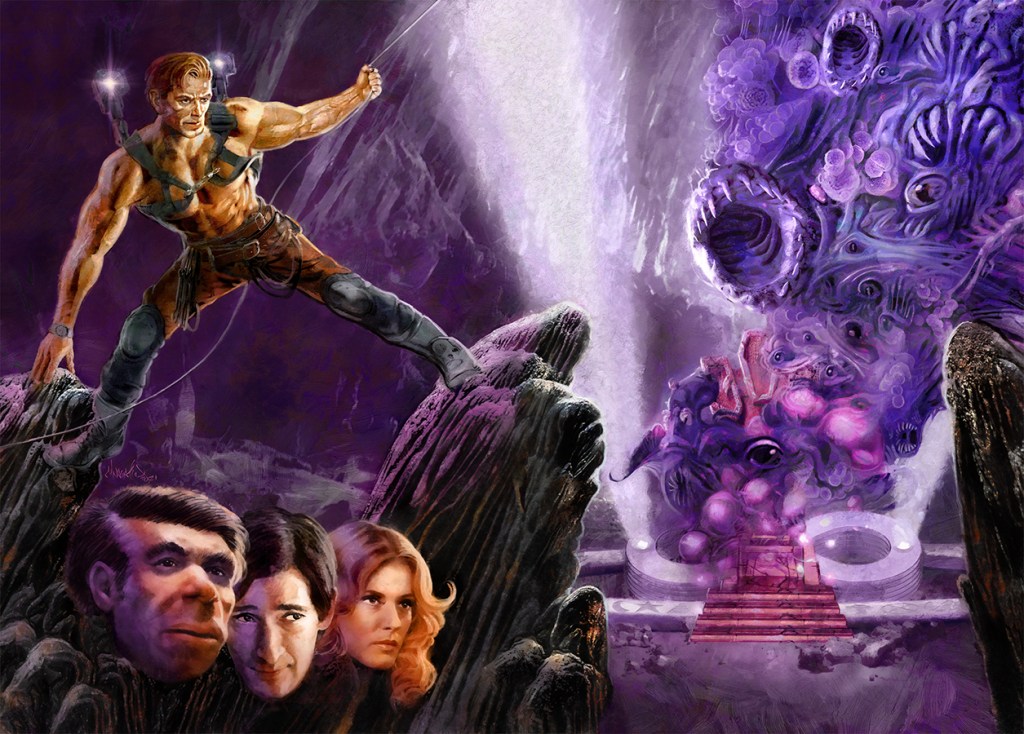
Hardcover edition cover by Mark Wheatley
SARDANAS: Both of you bring up points that I’d like riff from, as they echo my experience in reading this book. André, like you I was really fascinated to see how Doc Caliban’s inter-relationship with “The Other” would take shape. As you point out, the literary use of a doppelganger can open up very intense and compelling character insights, which was exactly what I hoped for most in this story. Given that Farmer, through his use of both Doc Caliban and James Wildman (across differing “alternate universe” structures) had already set the stage for some intriguing degrees of illuminating schizophrenia, the interplay between the two characters in a single story could get very interesting indeed.
It could also get extremely confusing if not handled adeptly. Thankfully, Eckert does handle it with a deft hand. The “Two Docs” experience periodic shifts in their perceptions (explained by the characters’ juxtaposition at a crossroads of dimensions) to where they see through one another’s eyes. To me this produced the effect of a very deeply layered gestalt character, who could embody multiple aspects of Farmer’s pastiche Docs. Much more on this later, as the story uses this device to very powerful effect during the descent into and conflicts within its version of “Hell”.
Atom, you touched on an aspect of The Monster on Hold that I agree with totally: a huge landscape of concepts from Farmer’s literary works are woven together here, and that to me became a strong part of the signature vibe of the book. Its action often feels kaleidoscopic, with intense scenes (like the book’s opening lines) tumbling around one another in a very dense storm of combined visceral action, esoteric digression, and shifting detail and mood. It offers up enough material for a thousand more pages of literary exploration as it careens through its own relatively short length.
Again, avoiding spoilers (as it is a strong opening sequence, and should be experienced raw), the first scene of the fight in Tilatoc of the Nine’s stronghold is a relentless trip into pulp action, with distinctly dizzying moments. It also, for fans (like me) of Trish Wilde, offers some of her best moments in the book. At the end of that sequence, which unfolds in a breathless rush, I had a distinct “What the hell just happened?” moment of epiphany – because it made me want to read on, read faster, read it all in a landslide. It raised a hundred deeply intriguing questions and did not make the mistake of offering convenient answers. Scene after scene in the book would do this, as I obsessively spun the kaleidoscope for another stained-glass view of its tantalizing facets.
BEZECNY: It definitely can’t be considered an empty book. Rather, it’s one of the most full books I’ve read in a while, but never in a way that’s overdone. It’s a very gracious serving of a novel.
Of these kaleidoscopic details, I really enjoyed what we learned about the underground world into which Doc Caliban descends; while a lot of the story is derived from preexisting fiction, including the Cthulhu Mythos, the unique environs of this horrific abyss come almost entirely from Farmer and Eckert’s imaginations. Farmer was of course a genius at imagining alien ecosystems, as seen in Ironcastle, The Wind Whales of Ishmael, and his various space adventure tales, and this world is one of his most grotesque. In many ways, this is a world where the most disturbing and forbidden things known to the human psyche are the facts of life. Creatures sustain themselves on excrement and slime, breeding joylessly in the stygian dark. Each of these beings has a form repellent to human senses. What we saw back in ’49 in Up from Earth’s Center was only the beginning. Hell goes far deeper than Doc ever knew, and it grows more hideously alien the farther one descends.
It is among these foul, semi-sentient abominations that we briefly run back into the psychosexual atmosphere of A Feast Unknown. The scene touches on the inherent psychosexuality of Lovecraft’s works as well. It’s through this briefly sexual encounter that we rub against Doc Caliban’s vulnerability in a very specific way–one which has personal resonance to me as a survivor of sexual assault. It’s a moment that would collapse in the hands of a lesser writer, as it deals with some of the most sensitive topics in the world. But instead of falling apart there’s an astonishing delicacy to things. It’s really impressive–New Pulp is a genre that is, in my opinion, frankly quite bad at handling the subject of sexual assault, which I will unrepentantly blame on cis male privilege. But it’s clear that this was written from a place of compassion and understanding, and I deeply appreciate that.
It’s not just that this book connects all these different Farmerian threads, it’s that everything is connected in service of the plot and the point. I’m sorry, I’ve been praising this book without restraint, but it really is one of those books that pleases me not only as a reader but as a writer as well.
Oh, and regarding Trish Wilde…she deserves her own book. She deserves her own series!
VATHIER: R. Paul, I agree with you. The opening scene is exhilarating. Eckert and Farmer do something very unique with the Tilatoc fortress. It could have easily been your generic snowy hideout with soldiers from the Nine on skis and Ski-doo (French Canadian word for snowmobile). Or lean on Tilatoc’s Native American origin for the depiction of the fortress. But since they do something different (I won’t say what ) I was at the edge of my seat. As a reader it’s fun to not know what’s around the next corner. After the opening sequence, I had to catch my breath.
Part II: The Guardian at the Threshold. Honestly, this part could have been an entire novel by itself. There is a lot in it. However, like Atom said it never feels overdone. I always wanted more. I think it’s best when the author leaves their readers wanting more instead of feeling stuffed or wanting less. Part II touches on Caliban’s trauma and his personal life on a level that we really have not seen since Feast. The introspective part is welcome after the opening. I know I sound vague but I just want new readers to experience it themselves. Also another reason why this is my favorite part is that we get to see Caliban’s relationship to the ‘’Other’. Not just from a narrative point of view but also because of its intertextuality. I like the message it says about pastiche work and its relationship to the “original”. Movie critic Ramona Curry said it best: “Parody deconstructs, pastiche reconstructs”. The essence of Doc and what made him great is alive and well in Caliban.
Does that make sense or I’m just sounding pretentious? hahahaha.
The scene set in Maine brought me back to when I first read Up from Earth’s Center. Little did we know Doc had just scratched the surface.
Yes more Trish Wilde stories! Also Lord Grandrith…there’s just so much that I want to read.
SARDANAS: Atom, I want to second your thoughts on the handling of sexual assault themes in pulp fiction – it’s important, I think, for pulp fiction to work with such themes, but as you say, all too often it is done in an exploitative manner, or in a cavalier style that ignores its intense psychological repercussions. There is a balance that can be struck within works of entertainment that allows a fast-paced pulp story to proceed, but also recognizes human dignity and vulnerability…it’s rarely attempted in a conscious and aware way, which permits the reader a sense of empathy with the fictional character, but empowers that reader to experience sensations of empathy from a place of safety and strength. Fitting, I think, for a heroic narrative to strive for that balance, and in the case of this book, I believe it strives successfully.
The Monster on Hold goes to very complex places psychologically, which I count among its greatest strengths. One of the factors that made the original novel in the series, A Feast Unknown, so compelling was not only its focus on intense themes of violence and sexuality, but its strong presentation of Lord Grandrith’s psyche. This was to a great degree missing from the next two stories in the series…so in essence, a nuanced look at the psyche of Doc Caliban had never been done. In an article I wrote exploring the characterization of Caliban, I felt that he was in many ways a cipher within the very series he was co-headlining. That is finally corrected with this story, which deepens and enriches his character greatly.
As you note in your last comment André, the second section of The Monster on Hold has enough material to be a novel (or multiple novels) in and of itself, and its primary strength is in the deepening of the joint perceptions of the “Two Docs”. They are similar but not identical, which, as the narrative shifts from one to the other, begins to present a unique depth of thought for a pulp character. The second Doc, “The Other”, is also referred to as “Lacewing”, which I admit I found distracting at first (though the origin of the name is clever).
This second section also involves a complex cast of secondary characters, including the gangster moll “Big-Eyes” (who plays a pivotal role in the development of Caliban’s darker sexuality); a villainess named Victoria; a pastiche of the odd villain, Mr. Wail, from the pulp story Up From Earth’s Center (here named Scott Free), and there are also nods to characters from Farmer’s WWI Doc novel Escape from Loki, and flashes of Jack the Ripper. Again, this is a lot to absorb, with each of those elements fascinating to a degree that would support multiple novels. To its credit the flow of the story does not lag (or go off the rails) as it presents all of this. As a reader I looked at this portion of the book as a map which offered a tour of strong components of the Caliban mythography, but not with the intent of digging too deep into them. The “digging deep”, almost literally, would follow as this story-map points the way toward a descent into Hell.
That journey down into the caverns (the outer chambers of which were experienced by Doc in Up From Earth’s Center), provide some of the strongest and most harrowing parts of The Monster on Hold’s narrative. This section includes the teaser from 1983 that Farmer had written, and Eckert in fleshing out the landscape of the underworld stays true to the tone of Farmer’s vision. Rather than a strictly Lovecraftian series of scenes and events, the monstrous entities encountered evoked, to my mind, a closer kinship to another early 20th century epic of horror and heroism, William Hope Hodgson’s The Night Land. In that story the protagonist (a far more heroic figure than any character from Lovecraft) crosses a dark land filled with monsters, and many of them remain total mysteries even after they are encountered. The same is true here, and it has a profound effect when balanced against the continued deeper unfolding of Doc’s psyche. He is, by the latter part of the descent, alone and isolated except for his connection to “The Other”, and as a reader I felt more and more connected emotionally to both Docs, as they offered a joint island of courage and resolve in circumstances all warped out of human understanding. There is a distinct feeling of immensity to the story at this point.
Wraparound art for hardcover edition by Mark Wheatley
BEZECNY: Again, I think that’s one of my favorite things about crossover fiction–you can bring together so many different threads and bind them together to obtain a sense of scale that non-crossover stories need thousands of pages to build. I mean, you still need a lot of buildup, but that buildup is often already part of the accreted mass of fiction that is the basis of your “limit” text. Marvelously, none of that is a shortcut to storytelling–you still need strong characterization, descriptions, pacing, etc. to make all of the disparate elements work together. And Monster on Hold of course has all of that in great quantities.
I’m sure future stories will emerge as a result of this book’s creative and critical success. It’s obviously not the last book of the series, and with the additional release of Frank Schildiner’s It’s Always Darkest, it’s clear that there is more to see of the Caliban/Grandrith universe beyond Caliban/Grandrith. Really, one the best things about crossover fiction is that there’s pretty much always room for some form of continuation, due to the webby connections binding together all of fictional history. Like I’ve said, in many ways I knew what to expect from this book. But that naturally meant that my favorite parts were the ones I completely failed to anticipate, which furthered the bigger story along. That’s not to say that when this book decides to throw us one from left field, it’s wild and nonsensical–if nothing else because I have to ask, what is nonsense in a world where all those different stories lean on and shadow over each other? If you let yourself become a spider on the web, you can anticipate any movement. Also, the paranoid patients are the calmest when the hospital’s burning. And she who flinches at shadows never gets hit. Or…something to that effect.
VATHIER: Well said Atom. What did you two think of the conclusion? Spoilers ahead YOU HAVE BEEN WARNED [Not the kind of spoiler that will give away the full conclusion, just one character’s presence in it]. I am very happy with the ending. It ended the XauXaz mythography nicely. Also The Wild Huntsman novella was a nice addition.
I will admit I did not get all the hints and references. I had to call Atom once or twice hahaha. That being said it did not take away from the reading experience. Now I need to read World of Tiers. Hunt the Avenger, Honey West, Image of the Beast, Blown and more.
I really loved the extra material. All the notes and letters by Phillip José Farmer. It’s a rare glimpse into the creative process of a writer we all admire. Also the original prose. In that regard I think it’s the most complete book when it comes to content. It’s like reading a criterion DVD. You have the foreword, main book, extra short story that adds to the experience and some behind the scenes.
This next bit I might be reading too much into it. But I like the subtext that every Doc Savage pastiche is valid in their own way because they all come from the source. They might be different from one another, but all retain that same spark.
BEZECNY: See, I feel like XauXaz is the ultimate villain of the Wold Newton saga, so I was pleased with this wrapup. Slowly, we’ve learned that XauXaz manipulated the Wold Newton event itself, on top of engineering the lives of Doc Savage, Tarzan, and others, and this book contains additional revelations about the Trickster God’s impact on history. In a sense every major event in the Wold Newton Universe, and the Grandrith/Caliban Universe, can be blamed on XauXaz. Of all the Nine, he is one of the few who actually comes close to being a god, and that fact is executed in a way that delighted me to no end.
The bonus features were marvelous. I really wish that more books had those sort of “making-of” sections. I love learning about drafting processes and so getting to see Farmer’s notes was splendid.
SARDANAS: I was at first of two minds about the appearance of XauXaz, but ultimately I feel it was the right choice. My concern was with the tonal shift it brought to the climactic scenes, but on reflection the book presented a number of such shifts, and they were all important to the bigger picture of which The Monster on Hold is just a part. The many bonus features (as well as some strong, evocative illustrations) do definitely deepen the experience of this book. There’s also a great introduction by Chuck Welch, editor of the iconic Bronze Gazette. Perhaps the book’s major achievement is the full transition of the Secrets of the Nine characters and plot threads into the complex tapestry that has been built from foundations laid down by Farmer of cross-connected heroic fiction. It walks a unique tightrope between that form of scholarly/literary work, some rousing action sequences, and psychological power. It’s ambitious storytelling, fascinating in and of itself, and also provides a pivot-point which can take this story continuity from its half-century old roots into a most intriguing future.
Front Matter Foreword by Chuck Welch What Has Gone Before by Philip José Farmer
The Novel Part I – Some Unspeakable Dweller (1977) Part II – The Guardian at the Threshold (1984) Part III – Down to Earth’s Centre (1984) Epilogue – After the Fire (1993)
Bonus Material The Wild Huntsman (bonus novella) by Win Scott Eckert A Tale of Two Universes by Win Scott Eckert Chronology of the Nine Universe by Win Scott Eckert Original Prose, Outline, and Notes by Philip José Farmer A Note from the Coauthor by Win Scott Eckert
Visit the Meteor House websitefor more information about this book and all of their publications.
Time is strange. It doesn’t feel as if almost 20 years passed after Millennium Productions’ fine Doc Savage comics story The Monarch of Armageddon, before the character of John Sunlight would appear anywhere again. And yet it was 2010 that DC Comics (who had held the comic book rights to produce Doc stories in the late 1980’s) once again acquired those rights.
DC had featured John Sunlight in a memorable story arc in the ’80’s, but opted not to pick up the threads of their own series, instead essentially ignoring its existence. They had ambitious plans this second time around, building an “alternate universe” which they called First Wave, which would re-conceptualize numerous characters from their own publishing history alongside pulp and other (sometimes rather obscure, sometimes major headliners) heroes.
There was some controversy about this right out of the gate…First Wave author Brian Azzarello, in an interview, discussed the whole project in terms that were a little less than reverential toward the original Doc Savage. While I believe not intentionally dismissive of the iconic pulps, comic iterations, and of older fans, some readers did interpret it that way. So the effort to update not only the characters and settings but the whole zeitgeist of the series into a millennial-friendly form seemed to have as many detractors as supporters.
I’m also an older, long-time fan of Doc Savage, so I had mixed feelings about this as well. Nevertheless, I found the ambitious concept intriguing…by 2010 the Doc story-franchise had been in existence for almost 80 years, and I felt there was merit in attempting to reach an audience of the present day by utilizing some of the sophistication that had crept, decade by decade, into the genre of heroic adventure since the days of the Depression, or even my own formative era as a reader, the 1960’s and 1970’s.
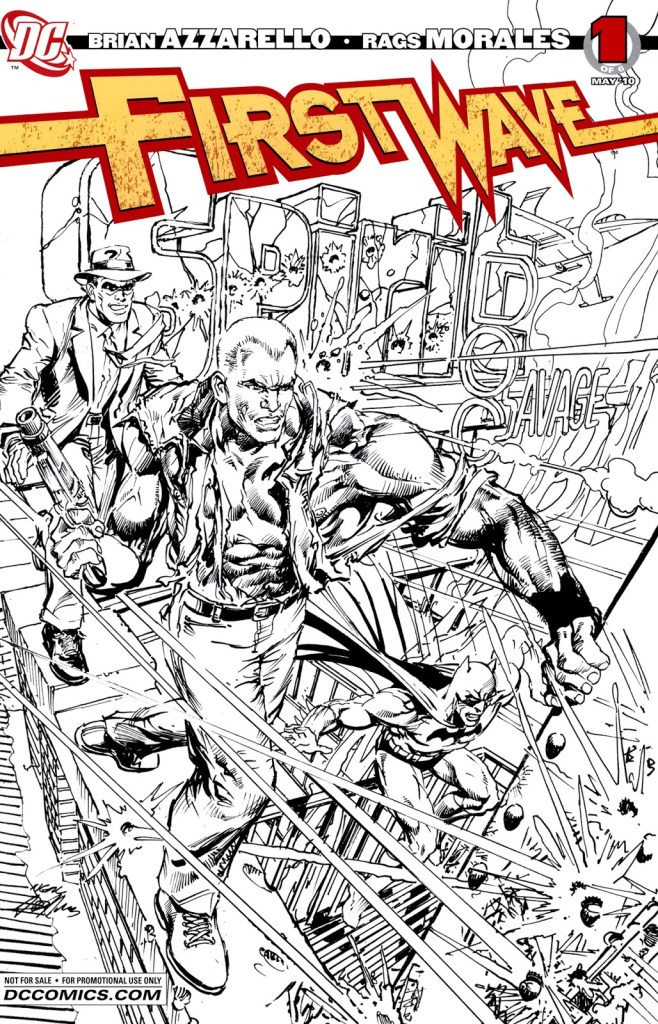
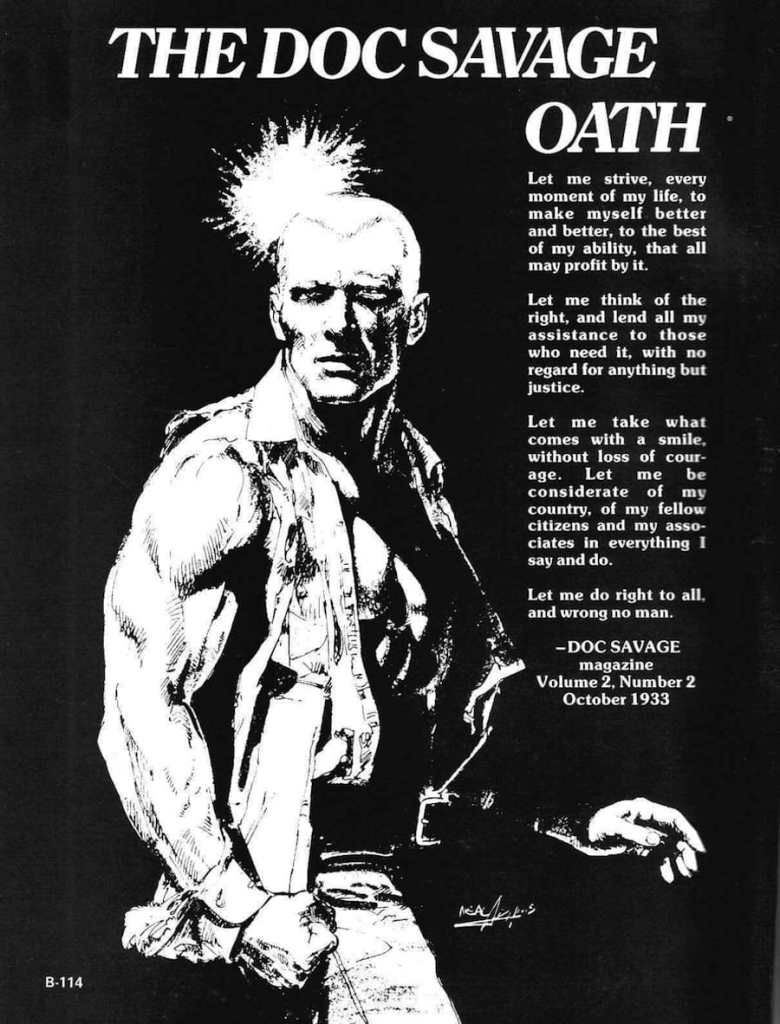
Interestingly, one of the new series’ alternate covers (the black and white image below was utilized as a promotion) was an homage to the past, showcasing new art by Neal Adams, who had done a wonderful rendition of Doc in a pinup-style page from the 1970’s Marvel Doc Savage magazine.
Here is that 70’s image…
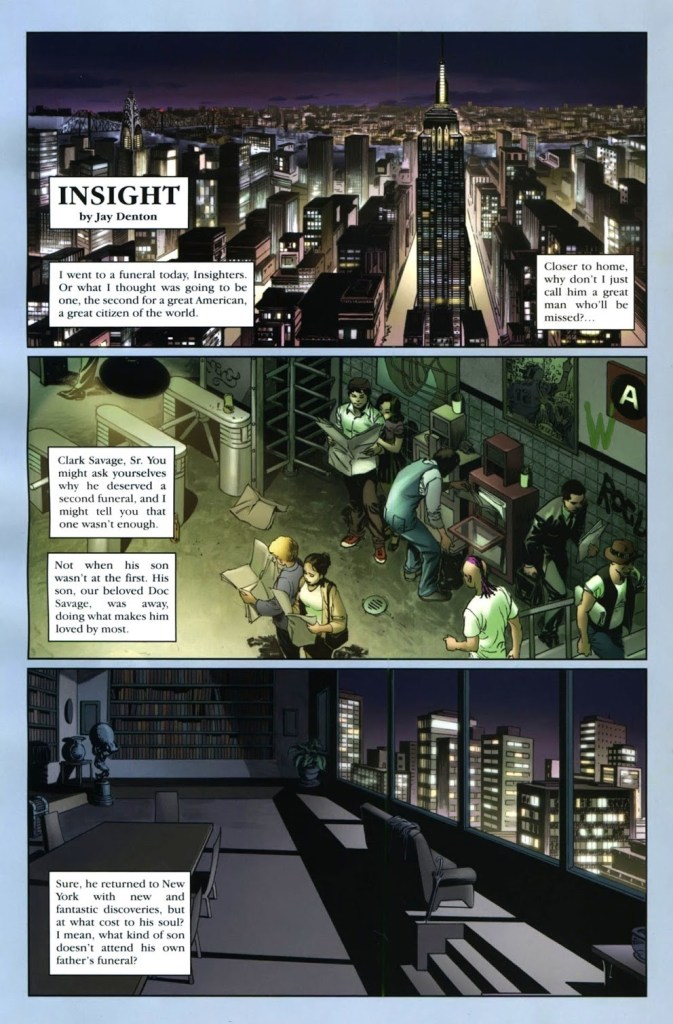
After that nod to the past, it was clear that the actual story was going to promptly abandon pretty much all previous continuity. Author Azzarello and artist Rags Morales presented a high-end, but very modern written and artistic style.
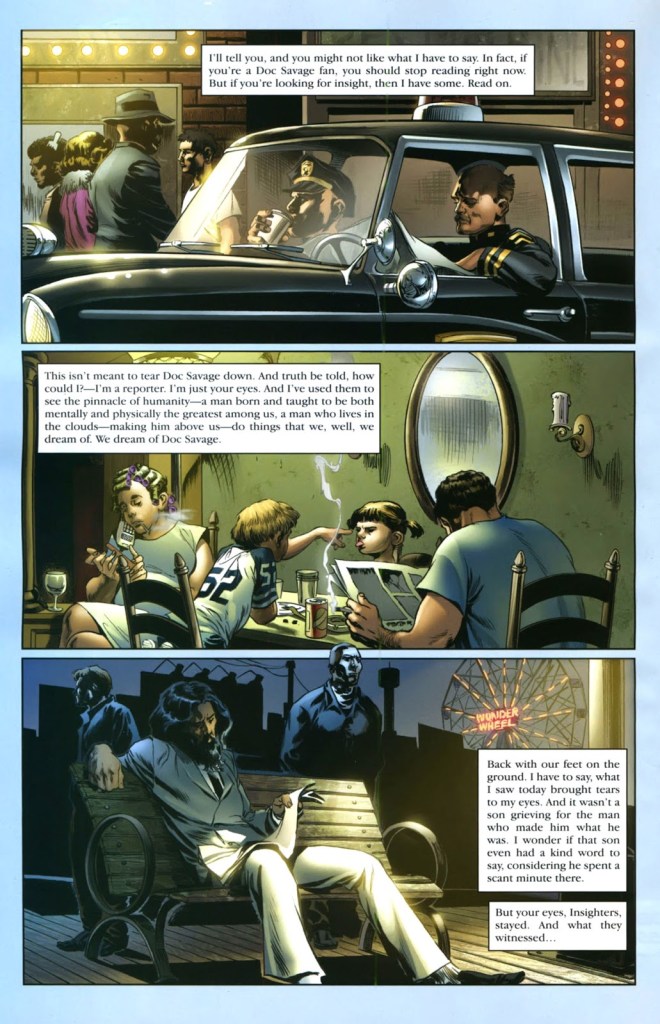
The following scene, which takes the form of a commentator’s view toward Doc Savage as a person and cultural icon, also transitions into our first look at the “millennial John Sunlight”. He is seen sitting on a bench at Coney Island, a strange figure in white business attire (essentially all white in color…an affectation of the original pulp Sunlight), speaking Russian (the original pulp Sunlight had Russian connections but was not himself a Russian) but with wild hair and bushy beard worthy of Rasputin. He acts alternately like a mastermind and a drunk.
This is the last we will of Sunlight in the first issue of the six-issue series. Intriguing, certainly. The dialogue is clearly geared toward more of an adult audience (rather than the often adolescent approach of the pulps and most of the comics from the 20th century). There is a feeling that the bones of Doc’s pulp world are being re-fleshed out…a feeling I found equally interesting and unsettling.
The other factor in First Wave that would strongly affect its appeal or lack thereof — depending on the reader’s personal perspective — was the mashup of disparate characters. In this series there would be quite a crowd, including altered versions of Batman, Will Eisner’s Spirit, the Blackhawks, and even Rima the Jungle Girl (who originally appeared in the early 20th century novel Green Mansions, as well as a relatively faithful-to-the-original comics series by DC in the 70’s). Mixing so many diverse characters into a single cohesive storyline would be very challenging.
Sunlight was certainly an antagonist of adequate stature to face a lineup like that, but it remained to be seen whether this whole re-imagining of classic adventure/entertainment was going to work.
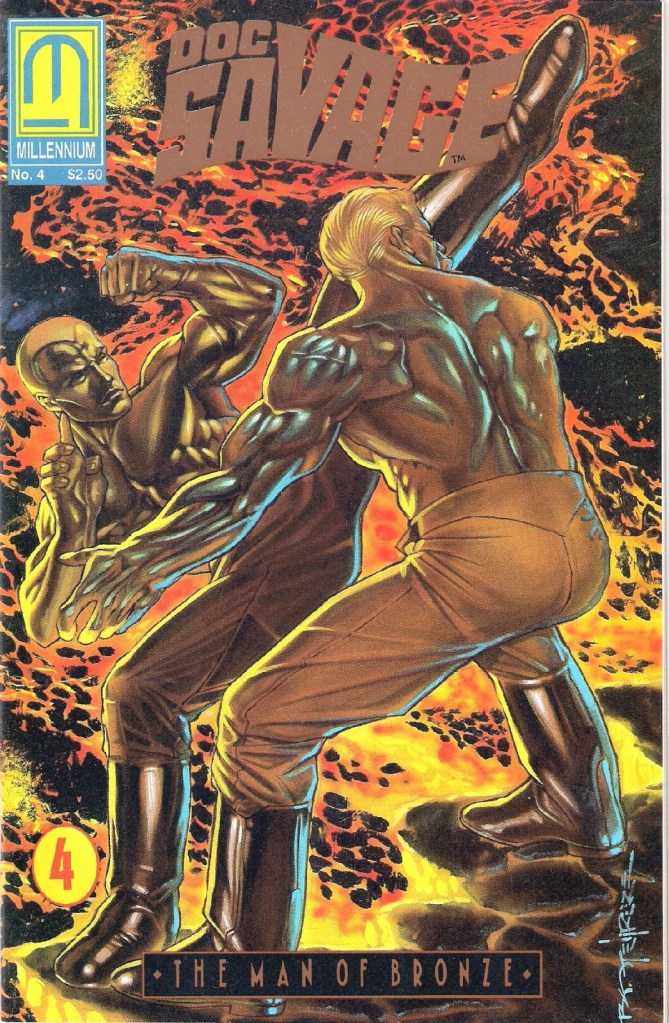
Thirty years ago, Millennium Productions’ comic book presentation of TheMonarch of Armageddon was coming to its climax. The final issue of the four-issue series had a dynamic cover by Brian Stelfreeze, depicting Doc fighting the ubermensch from the hidden civilization of Thule, Xaus.
The primary villain of the story, however, was John Sunlight. Across the previous three chapters of the story he had wreaked havoc in Doc Savage’s life, and after taking Pat Savage prisoner, had set out with the hulking Xaus to travel to the secret civilization of Thule. Sunlight’s plan was to utilize the martial Thulians as his personal strike force in a decisive step toward toppling world governments, which he then intended to mold into a unified global order.
Sunlight is next seen in the far north, along with Xaus (who does not appear to feel the cold). The story is by Mark Ellis, with art by Darryl Banks.
From his visual depiction in the above page, Sunlight seems surprised when Xaus confronts him about acts of treachery — throughout the story Sunlight has displayed a monomaniacal belief in his own control over everyone and everything, but below that surface, has shown cracks and fissures in his self-confidence. He shivers in the cold (where in the original Lester Dent novel Fortress of Solitude, he uses his personal force of will to at least feign being unaffected by an Arctic chill)…after his defeats in the two pulp novels, he seems to teeter on an edge of personal collapse, which he balances with seeming mastery and nonchalance toward risk and peril. It’s an intriguing extrapolation of his character from the novels.
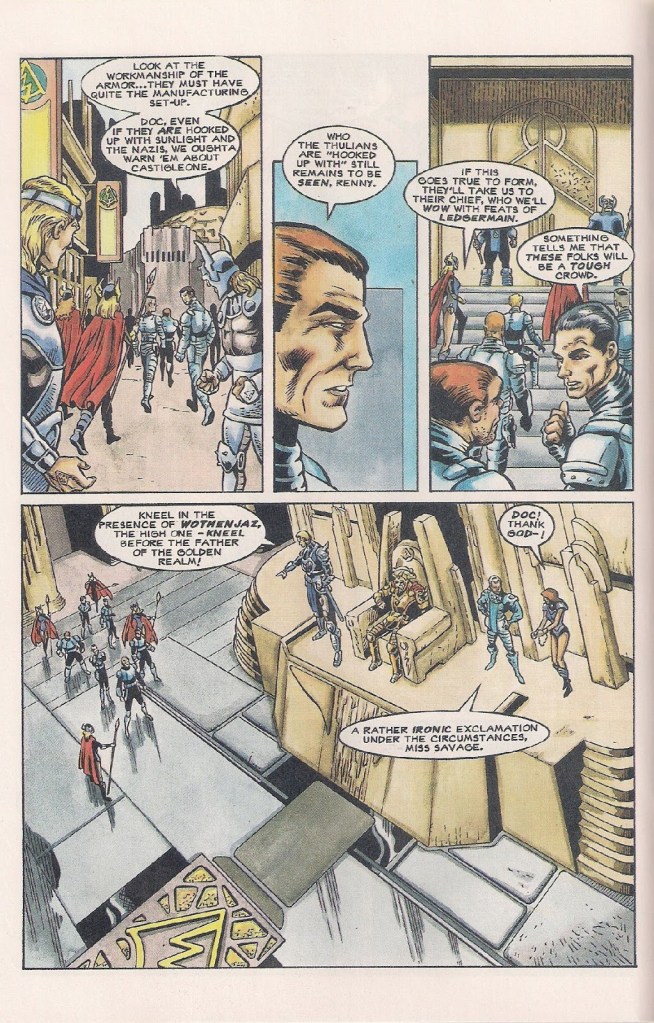
He is next seen within the framework of the fantastical ultra-Teutonic landscape of Thule, standing to one side of that hidden civilization’s ruler (who, though going along with Sunlight’s plans, does not seem particularly impressed by him, and who is certainly not in Sunlight’s thrall). Doc Savage and his aides have followed Sunlight’s trail to Thule, and the stage is set for their final confrontation.
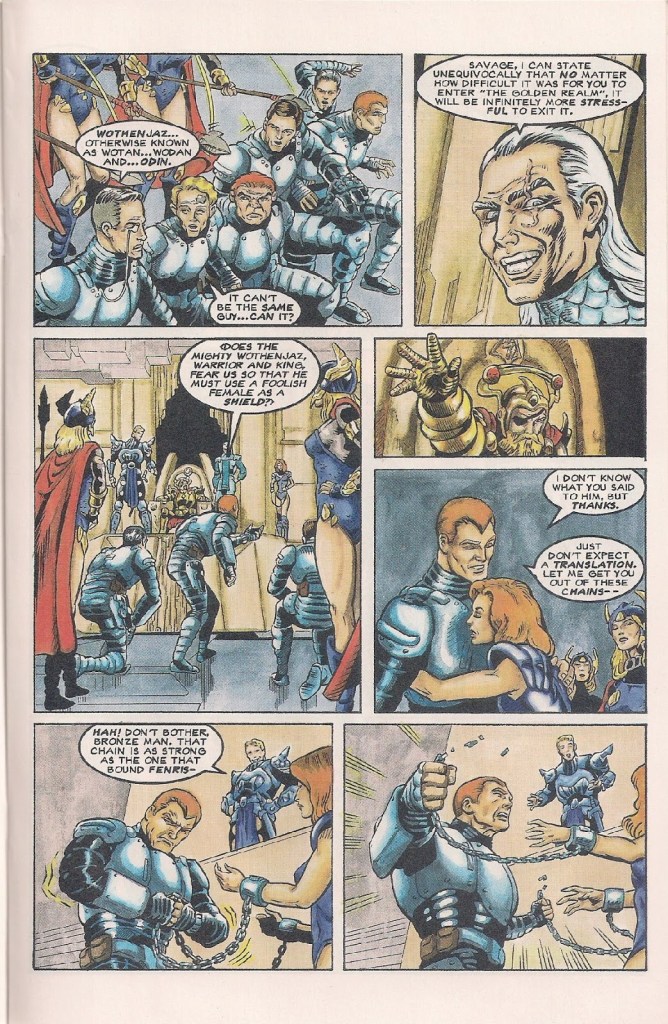
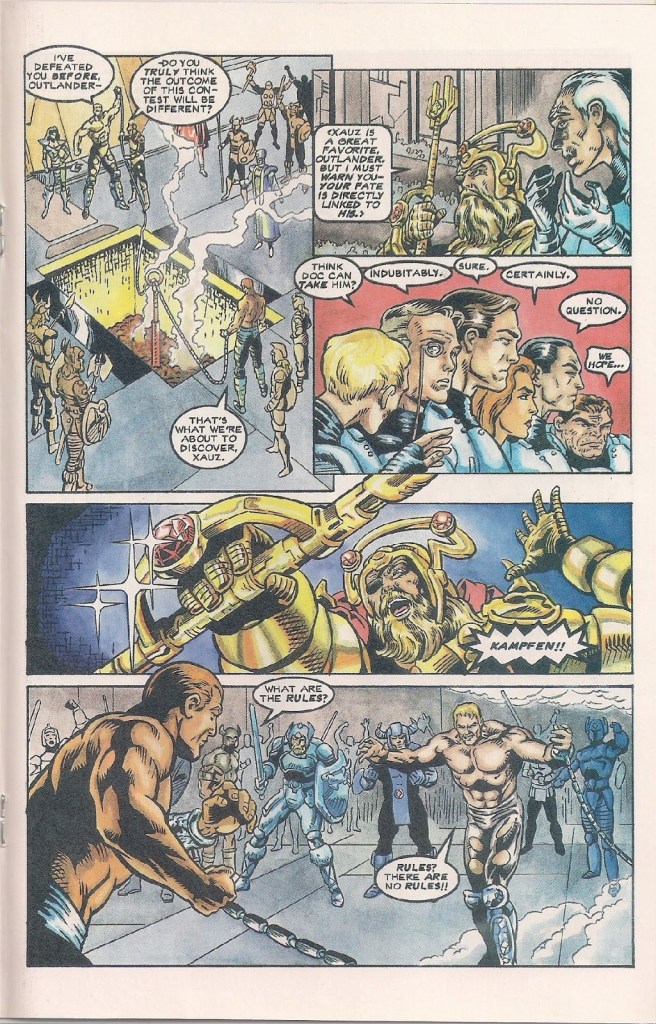
The Thulian leader listens to Doc’s denunciation of Sunlight, but decides that a contest of strength between champions is the way to settle it. When making this pronouncement, he tosses what is essentially a threat at Sunlight, whose demeanor once again cracks, as his whole plan now hinges on the outcome of a single fight.
The fight swings back and forth between the two combatants, with Sunlight’s self-control slipping away, as his composure erodes.
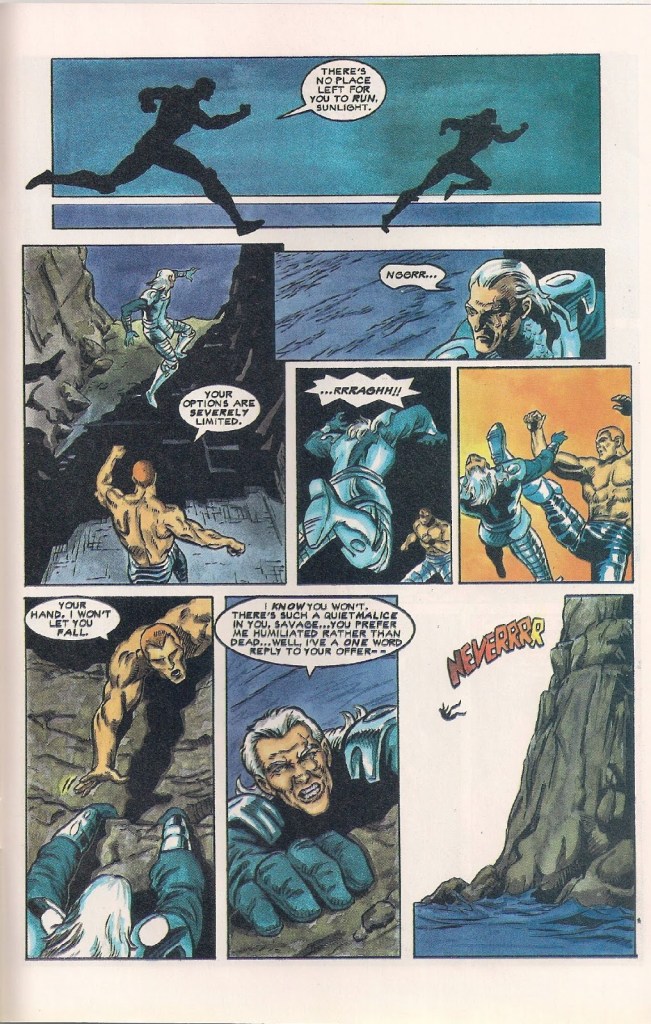
Doc is triumphant, but sudden chaos ensues with the arrival of gangsters who have also followed the trail to Thule, and who begin a wholesale slaughter. In the bloody carnage that follows, Sunlight breaks and runs for it.
The concept of a villain having been psychologically damaged by the intense trauma of his past defeats (which included physical maiming), is a subtlety rarely displayed in comic book (or for that matter, pulp) storytelling. But it’s a logical development of his character as presented in the two original novels, and a nuanced bit of writing from Monarch of Armageddon author Mark Ellis.
Cornered, Sunlight digs deep into more brutish instincts…growling as he hurls himself at Doc. This is also a trait described in the original novels, and astutely shown here at the climax. Beaten, Sunlight reverts to his sardonic, disdainful self, mocking Doc Savage before allowing himself to fall.
Dropping (presumably) to his death, his body is not actually found…which of course left the door open for another possible return. But Millennium’s stewardship of Doc Savage comic stories would not last for very long, as the story rights would shift yet again.
It was an interesting take on creating what I would consider a true sequel to novels from the Doc Savage canon. When I re-read the novels Fortress of Solitude and The Devil Genghis today, I always follow them up by reading The Monarch of Armageddon, which I found to be a very worthy extension of the two books into a trilogy.
Next…many years would pass between the early 90’s and John Sunlight’s next appearance, in which the effort to coherently tie in the character with his pulp origins will essentially be abandoned. Stay tuned for a look at DC Comics’ second version of this iconic character.
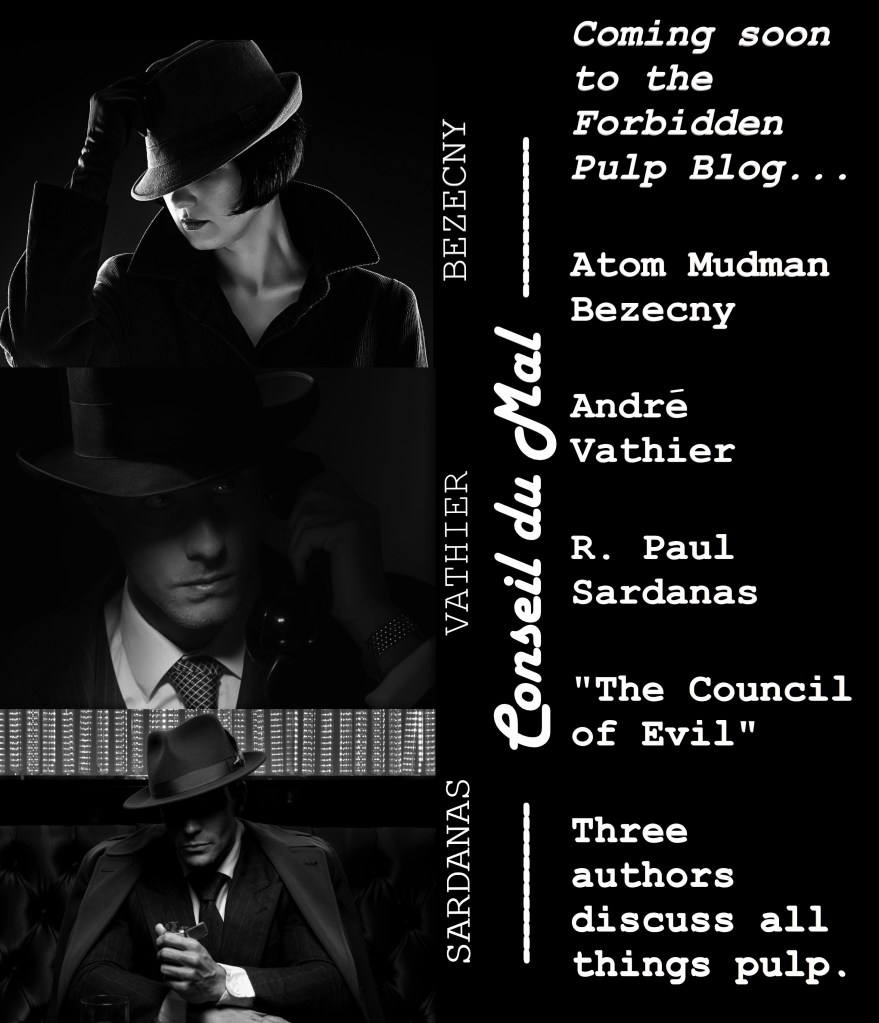
Brace yourselves, aficionados of pulp literature…three authors have joined together in a cabal to perpetrate all manner of literary wickedness and mayhem. Atom Mudman Bezecny, André Vathier, and R. Paul Sardanas will be wandering the twisting corridors and dark alleys of the world of pulp as Conseil du Mal.
A brief introduction: Atom Mudman Bezecny is both an author and publisher, and created the Hero Saga, which has brought to life unique pastiches of classic — and some wonderfully obscure — pulp characters. R. Paul Sardanas is the co-creator (with artist Iason Ragnar Bellerophon) of the Doc Savage adult pastiche Talos Chronicle, and André Vathier is a French Canadian author who has written stories in both the Hero and Talos “universes”.
In all seriousness, we’re not really all that sinister, and in fact hope through our discussions to help stimulate interest and support other creators in the genre of modern pulp. Look for us to appear soon here in Forbidden Pulp!
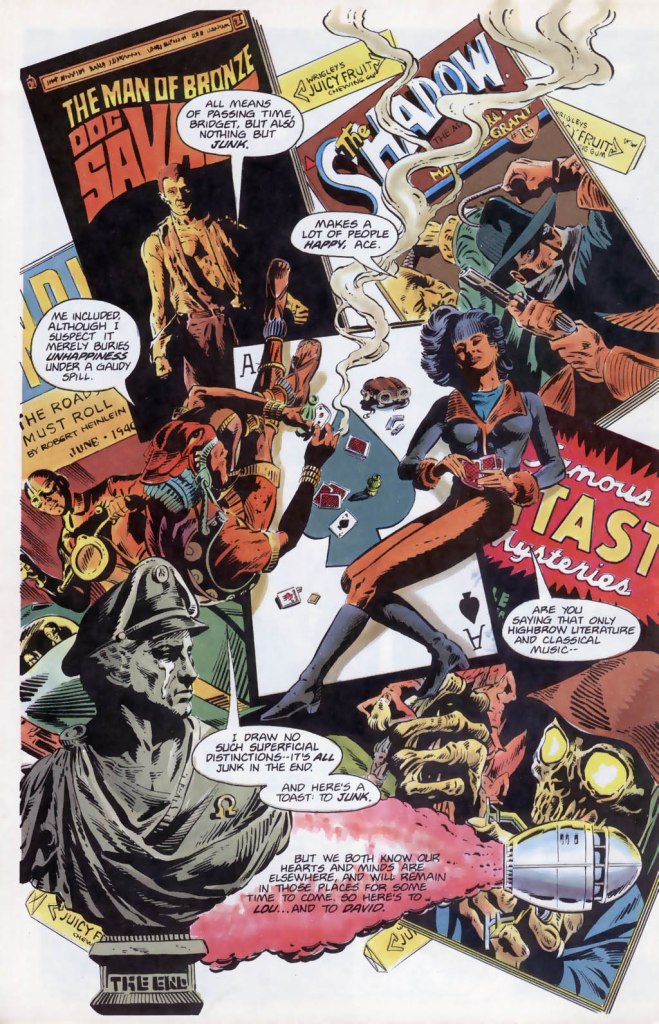
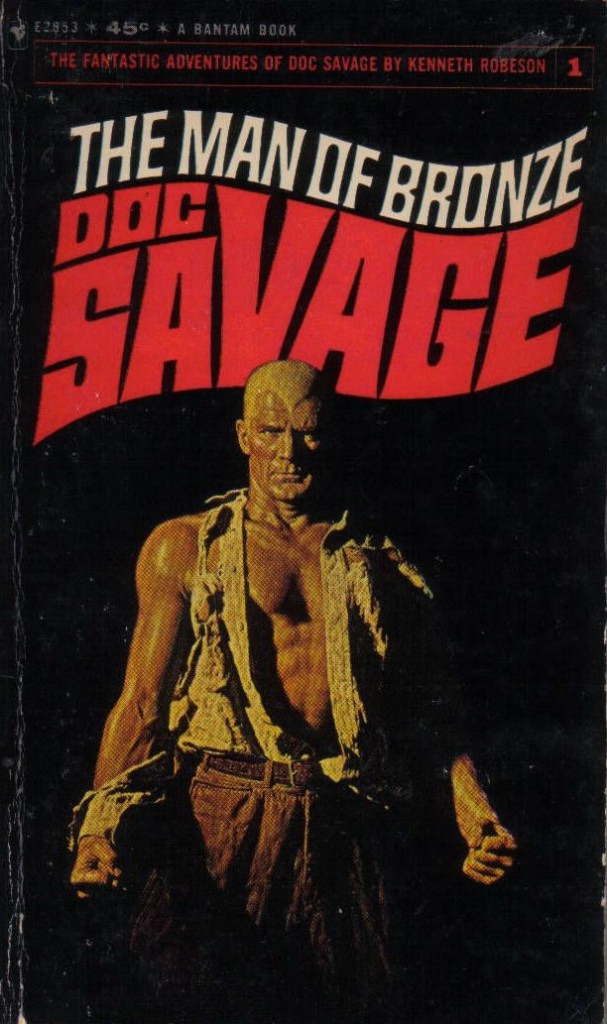
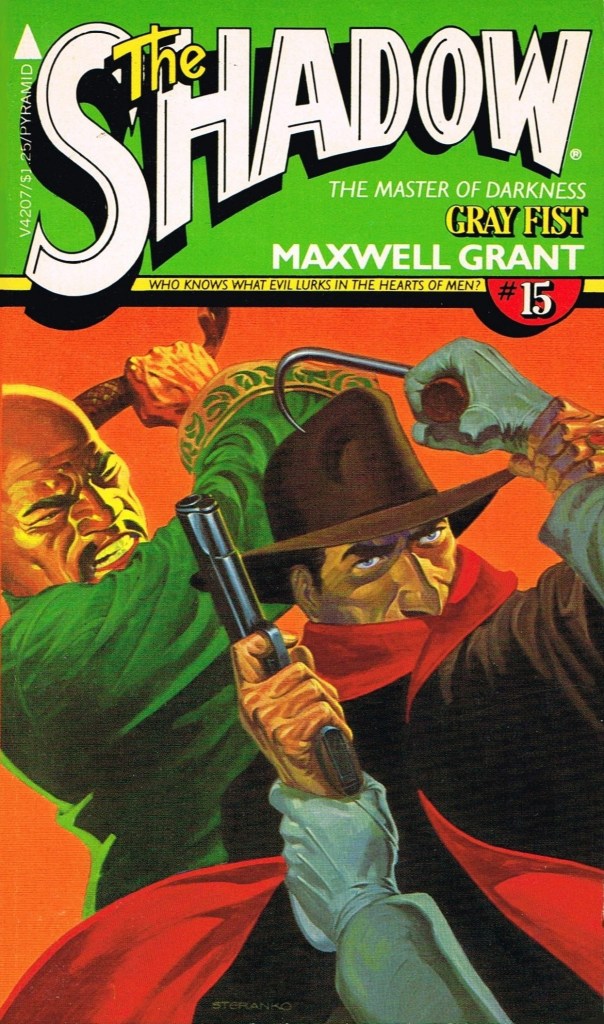
In a 1980’s comic book called Aztec Ace (written by Doug Moench, the author who also did the superb 70’s black and white Doc Savage magazine for Marvel — the paperback cover to The Man of Bronze, as well as a Shadow paperback cover are also prominently displayed below), there is a splash page in the story titled Bloody Pulp where the book’s main protagonists, Caza and Bridget, lounge around talking about the relative value of pulp and classical literature. A remarkably introspective musing about the pleasure and fulfillment to be found in all mediums of entertainment.
Aztec Ace, by Doug Moench and Dan Day
Caza: All means of passing time, Bridget, but also nothing but junk.
Bridget: Makes a lot of people happy, Ace.
Caza: Me included. Although I suspect it merely buries unhappiness under a gaudy spill.
Bridget: Are you saying that only highbrow literature and classical music…
Caza: I draw no such superficial distinctions. It’s all junk in the end. And here’s a toast: to junk.
In my own novel Towers, right at the center of the adult Doc Savage pastiche Talos Chronicle, an NYU professor named Anya Ksavierij comes at the same concept from a slightly different angle.
She took a cab to the fairgrounds. She admonished herself, not so much financiallyas philosophically, for the extravagance. She did not take cabs. She habitually used the subway. It was a great equalizer; hanging from a strap in a rattling car gave her a kind of pleasure her ex-husband had found so annoying…her love of communion in the masses. She perpetually wanted to know everyone’s story. Where did they work, where did they come from, what were there troubles, or wonder of wonders, were they happy? No trip underground lacked for – short or long – a spontaneous conversation.
Poor George…she haddriven him to distraction. He had loved to go out on anevening dressed to perfection. Clubbing, or to a show…only to have his wife strike up chats with doormen or waiters. Of course she should never have married him. She’d done it only in her agony of loneliness after Mama and Papa had passed away so close together, and George had been fully besotted with his “queenly Russian intellectual.”
Cabs…she actually smiled to herself remembering the last one they’d sharedtogether – to sign the divorce papers – and she had talked incessantly to the driver from the back seat. She’d wanted to know if his union was giving him a fair shake…and if the Shadow pulp magazine he picked up to read at red lights was a good issue. Did he ever find himself identifying with the Shadow’s cab-driving agent, Moe Shrevnitz?
She and George had proceeded to have a comical argument about her slum-taste in literature. She had Tolstoy and Chekhov on her bookshelf, why did she descend to reading such trash? But of course it was the entertainment of everyday people, and therefore noble.
She is on her way to the 1939 World’s Fair, where she will encounter the Talos avatars of Doc and Pat Savage, and she will die there. But in the moment above, she touches on the moments when we all, as people, approach a kind of common ground…an equality in our pleasures, despite our social status and personal histories.
My own literary path followed what might be considered a traditional arc…in which as a boy and young man I consumed mass quantities of pulp (books, comics, films), and then shifted to a more academic appreciation of the arts (classical literature, history, cinema and fine art). It then took a less traditional turn, as I carried those sensibilities right back into the world of pulp. Rather than making me snobbish or dismissive toward my earlier love of popular entertainment — thank God — it deepened that love.
Shakespeare was once considered trash…blatantly exploitative of an audience’s emotions, played out before an audience both aristocratic and common. The Roman poet Catullus wrote about his raw passions — a topic considered crude — at a time when society was struggling toward order and insight. That basic pattern is alive and well today. I have every expectation that the popular literature of the pulp era — in fact, of the whole 20th century and beyond, into today — will be the subject of scholarly appreciation and study for generations to come.
Every modern pulp writer, whether consciously or not, is tapping into uniquely powerful places in the human soul. Sometimes it is by crafting pure entertainment. The long runs of Doc Savage and The Shadow — referenced in the image above — are emblematic of that entertainment. Unpretentious, fast-paced adventure and mystery, with a broad sprinkling of good vs. evil values, though presented often as a framework for excursions into mayhem. Strangely wonderful in a way, that they could inspire musing of the type Caza and Bridget (the Aztec Ace comic characters) display — a leveling of all literature into a place where unhappiness can be banished. At least for a little while. And in reflection, can inspire the opposite of unhappiness: a kind of unfettered joy.
Here are the actual Doc and Shadow covers depicted above…the next time you pick up these books to read, put them on a shelf next to Shakespeare and Catullus (or your own preferred “classics”) when you are done. Stand back, take a look, and realize that every ivory tower has foundations at ground level…possibly even with a gutter nearby. They are not worlds apart, but supremely suited to complement and enhance one another.
In the last installment, we were halfway through Millennium Productions’ original comic story The Monarch of Armageddon, written by Mark Ellis and drawn by Darryl Banks. The tale featured John Sunlight as its prime antagonist, and took place as a direct sequel to the Lester Dent pulp Doc Savage novel, The Devil Genghis.
Across the first two issues of the four-issue story, Sunlight had recovered from his near-death at the conclusion of The Devil Genghis, and had launched a multi-leveled plot to advance his cause of uniting the world under a single government, while simultaneously destroying everything and everyone close to Doc Savage. His wide-ranging manipulations included turning the Mayan Princess Monja against Doc (briefly imprisoning him in the Valley of the Vanished), taking over the operations of a pre-WWII Nazi organization, and allying himself with an ubermensch from a mysterious hidden nation called Thule.
The story continued in Doc Savage: The Man of Bronze #3, which sported a dynamic cover featuring Doc and his cousin Pat, by Brian Stelfreeze.
Sunlight first appears in this part of the story as an assault is made on Doc’s skyscraper headquarters. Not all of Doc’s team are present (he himself is still en route back to New York after his imprisonment in Hidalgo)…but Johnny, Long Tom and Pat (along with a woman the Thulian strongman Xaus had attempted to kidnap) are discussing clues toward the existence of Thule. A group of fake cops attempt to attack them and are foiled by the Empire State HQ’s defensive gimmicks, only to be followed by a second wave of attackers, who detonate explosives that knock the defenders flat.
Sunlight and Xaus then arrive, and things go further downhill.
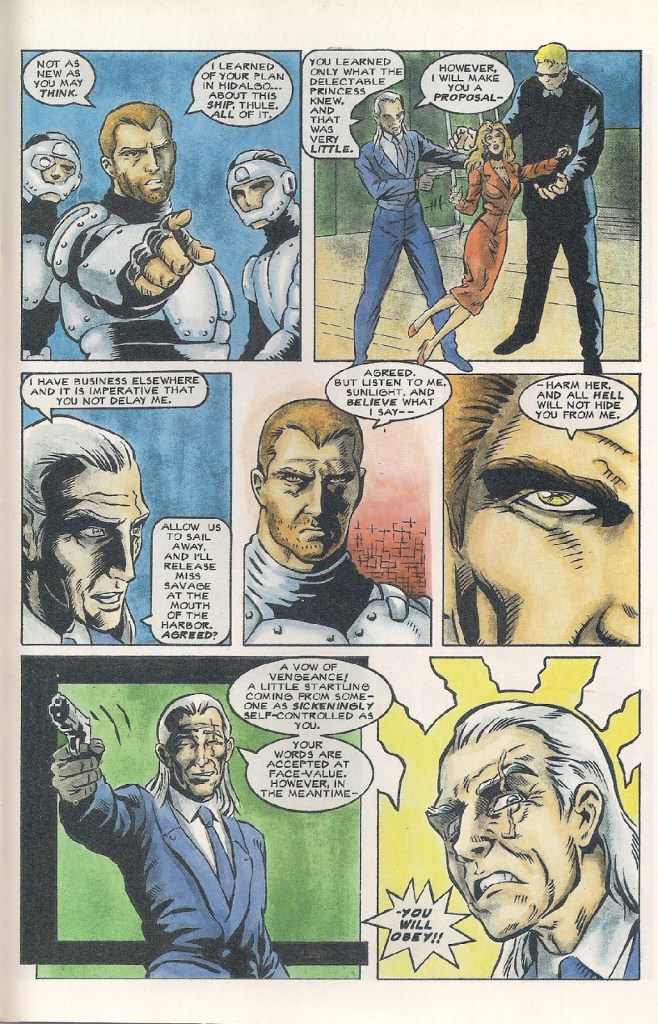
This time the kidnapping is successful, and Sunlight also takes Pat, leaving behind the stunned Johnny and Long Tom. In the street below as they depart, Sunlight receives a message from Hidalgo, stating that Doc Savage is dead (Doc had faked his death as a means to escape). Interestingly, Sunlight seems distraught that his great enemy has seemingly met his end.
Taking the captive Pat to his yacht Thunderbolt, Sunlight muses on his relationship with Doc, and then taunts Pat (quite unwise…even tied up, Pat remains a hellion to the core).
In a rage over Pat’s defiance, Sunlight is surprised by the arrival of Doc himself (wearing diving gear similar to the outfit he sported on the cover of the pulp magazine Repel). A pitched battle erupts, in which Pat gets loose and initiates even more mayhem…but is ultimately put down by Sunlight himself. This brings the fight to a standstill, and Sunlight escapes with his captives.
Sunlight reneges on his promise to release Pat, instead tossing the body of the other kidnapped woman overboard from his escape craft — as insinuated in the pages above, she had been murdered after being questioned by the hulking Xaus.
So the stage is set for the climax…in which Doc will follow Sunlight to the semi-mythical country of Thule, and his final confrontation with his archenemy.
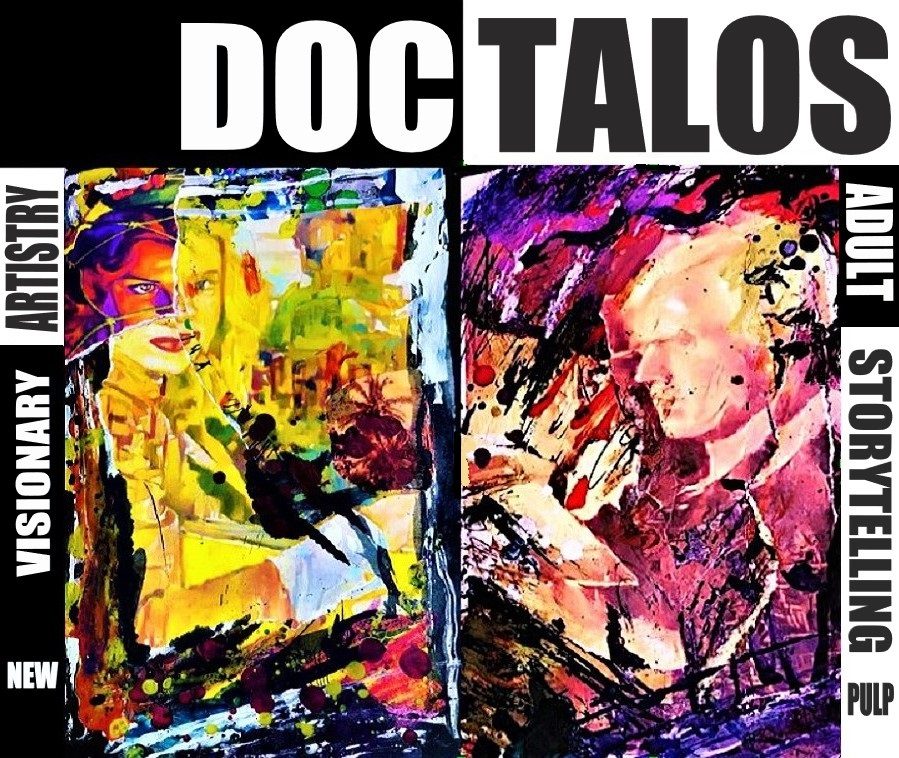
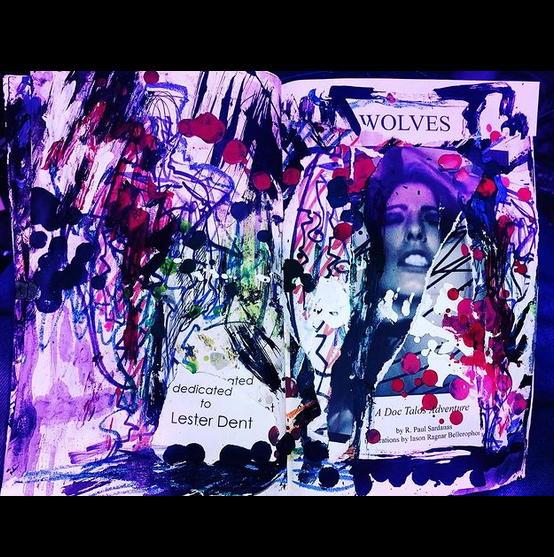
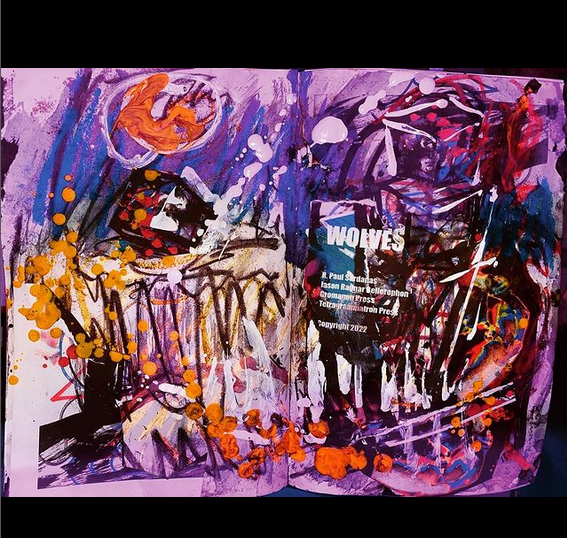
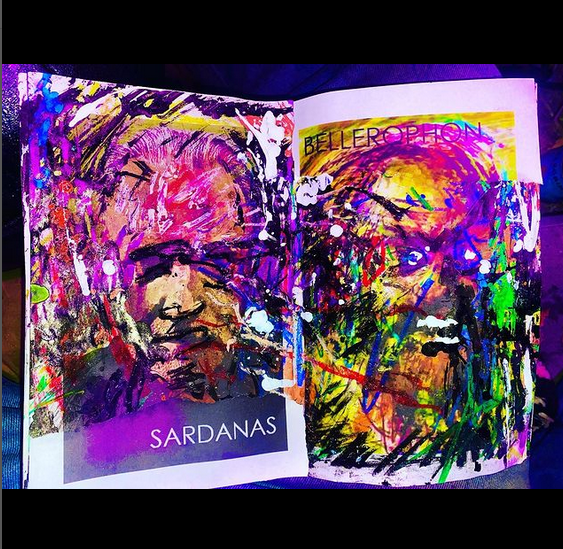
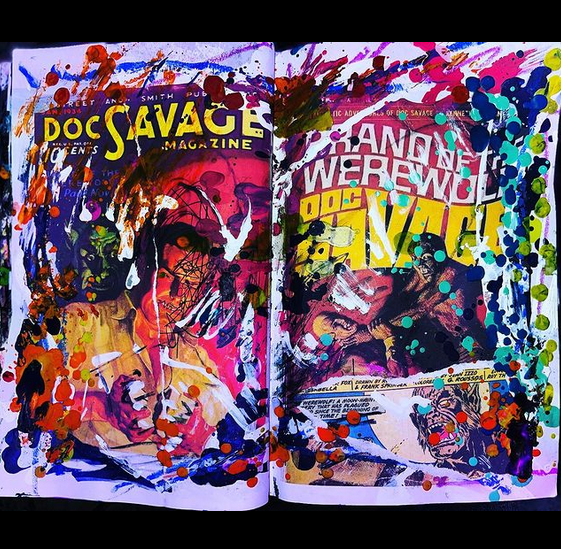
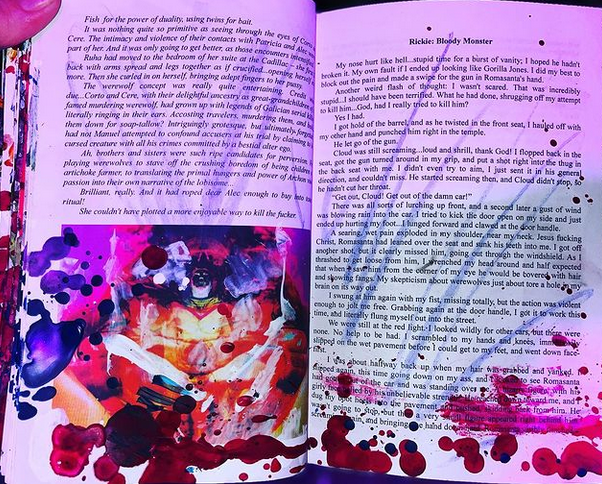
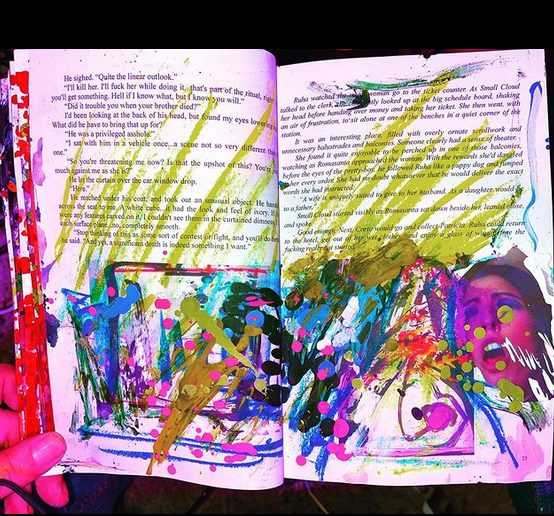
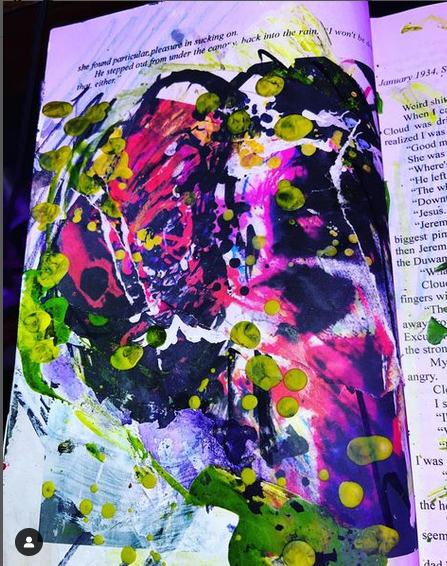
The new Doc Talos novel Wolves, based on the classic Doc Savage adventure Brand of the Werewolf, is due for release in March as a Clear Text paperback with full color painted illustrations by Iason Ragnar Bellerophon. For those new to the Doc Talos experience, the books are also published in what we call Special Art Editions, where the artist goes wild, repainting the original art in dramatic fashion, spilling even onto the pages of story text. All six of the core Doc Talos novels have been produced with both a Clear Text and Special Art edition.
While final edits and corrections are being done on the Clear Text Wolves, Iason is at work on the unleashed art. With the fiercely atavistic theme of the novel, this is nothing short of inspired, primal madness…
The result is unchained pulp-visionary chaos of the highest order. Here is a sneak preview of Iason Ragnar Bellerophon’s upcoming Doc Talos Wolves extravaganza.
In the previous article, I began a look back at the 1991-92 Millennium Productions depiction of Doc’s ultimate enemy, John Sunlight.
John Sunlight by Darryl Banks
Written by Mark Ellis and drawn by Darryl Banks, Sunlight was the antagonist in an ambitious, complex story called The Monarch of Armageddon. It was a direct sequel to the 1938 pulp novel The Devil Genghis. In the first issue, it was explained how Sunlight survived apparent death at the end of the Lester Dent-authored novel, and set into motion a plot by the arch-villain to dismantle or destroy everything cherished by the Man of Bronze.
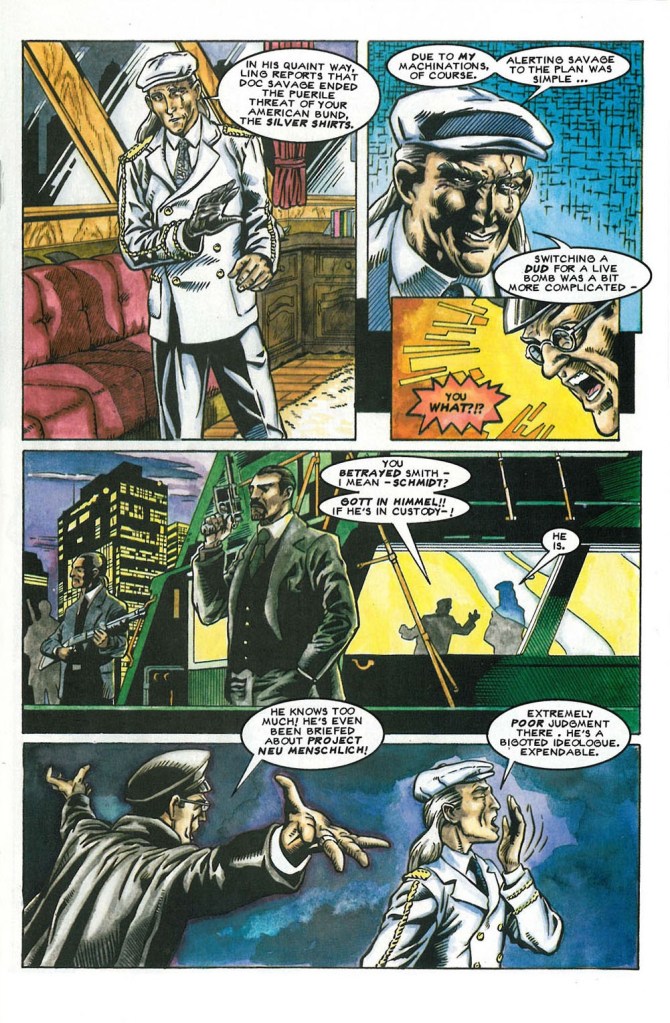
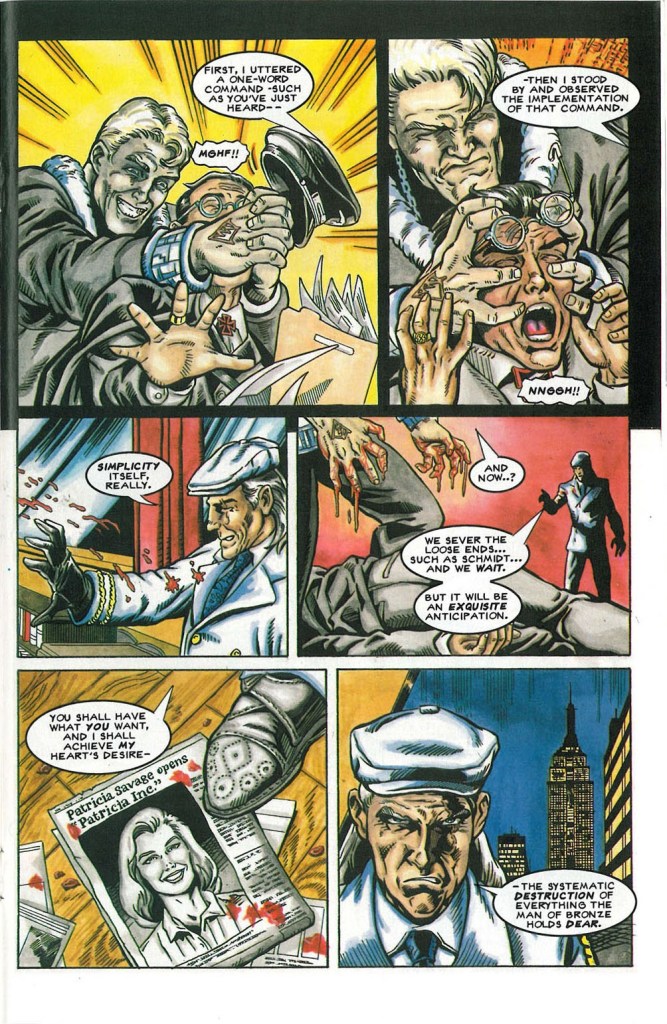
The story continues on a mysterious yacht called Thunderbolt, where the scope of that plot begins to unfold. Sunlight, returned to western civilization, has become involved in Nazi operations (pre-WWII) to disrupt the United States. However, Sunlight actually has very little interest in that goal — as is rapidly shown, he has maneuvered, manipulated, betrayed and murdered just about everyone in the Nazi network.
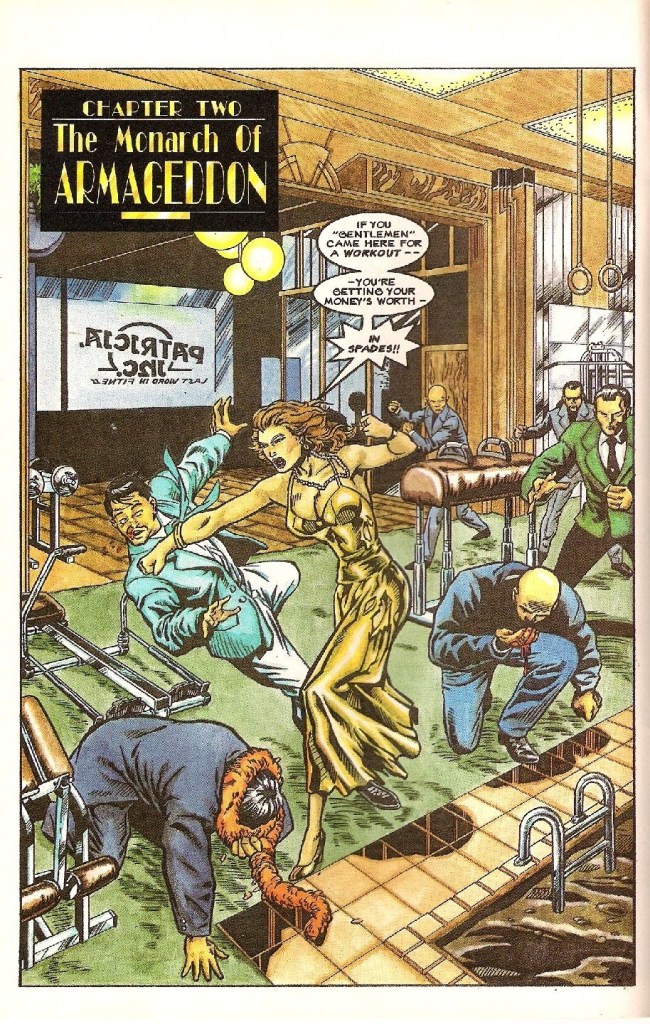
The bloodstained newspaper article at the end of this sequence shows that his next target is none other than Pat Savage. A wild sequence follows, in which Sunlight himself does not appear, but he sends minions to Pat’s salon in Manhattan to attack her. In classic Pat style, she shows she is no easy victim.
Nevertheless she is severely outnumbered and about to be overpowered, when Monk and Ham arrive, and between the three of them, they put the assailants to rout. But Sunlight is far from done menacing Pat and Doc’s aides.
However, for the present the chastened assailants return to report their failure to Sunlight. In a technique right out of the original pulp novel, Sunlight has his failed underlings put in a lightless room, and promises to go to there after a suitable amount of time has passed and “talk to them”. This is not a metaphor…Sunlight actually does bend people to his will by isolation and the power of his voice and personality.
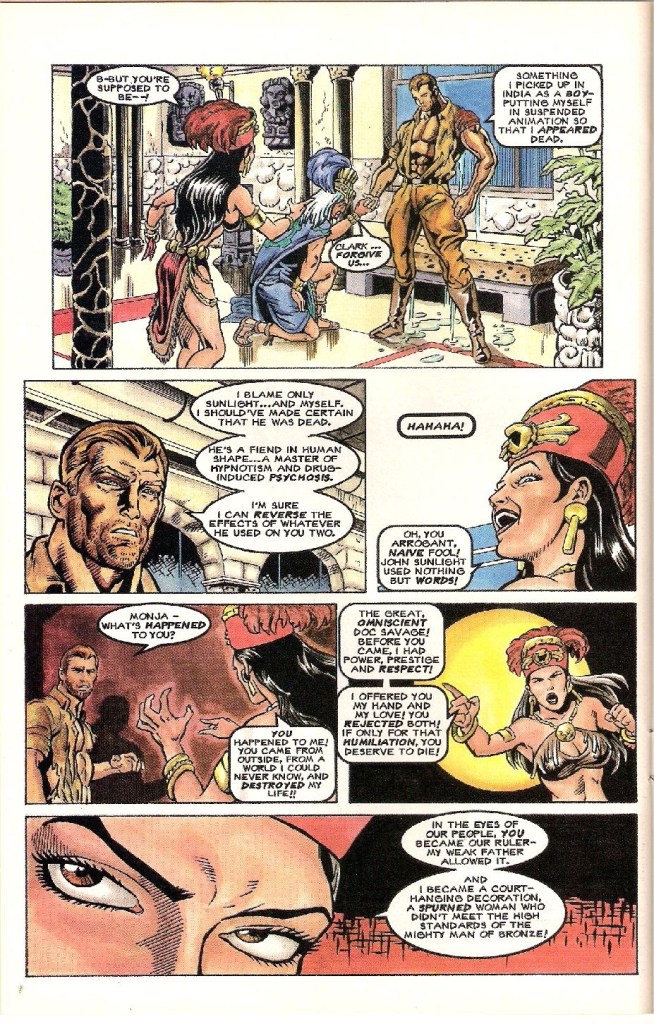
Doc in the meantime, unaware of Sunlight’s machinations, has decided to take a peaceful sojourn in the Central American Valley of the Vanished. He arrives to anything but a peaceful welcome — he is attacked and imprisoned, and then tortured by none other than the character most often linked to Doc Savage as a romantic interest: the Mayan Princess Monja.
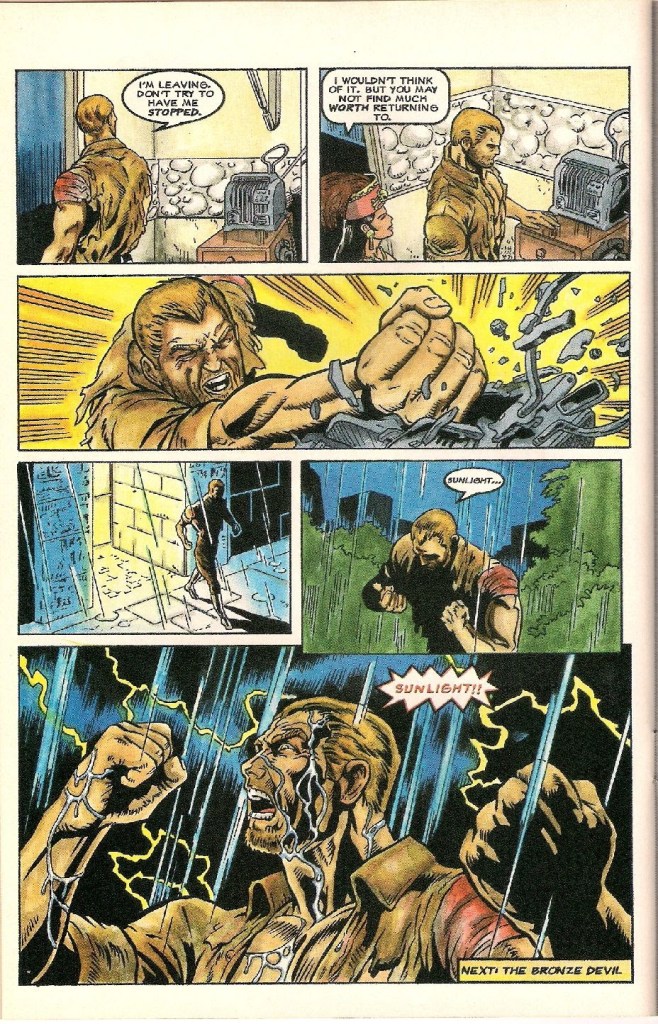
Feigning his own death, Doc gets free, and discovers that John Sunlight has been to the Valley before him. Sunlight has used his persuasive powers to turn Monja against Doc. It’s an emotionally harrowing scene, as Monja’s steadfast devotion to Doc has been cruelly undermined — fueled by Doc’s own repeated (if well-intentioned and respectful) spurnings of the Mayan princess.
Hints are given about Sunlight’s even more devastating plans to come, and the chapter ends with Doc so distressed he displays rage — Sunlight has delivered some vicious blows, with worse to come.























 Doc Talos