2024 Rickie Talos Calendar

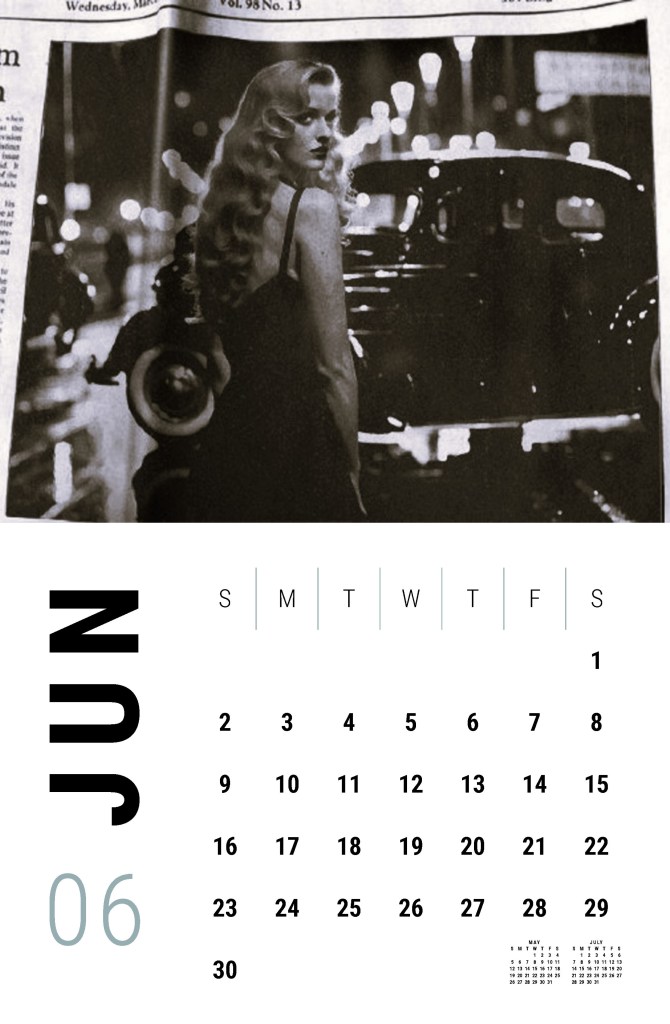
She is without doubt the poster woman of the Doc Talos world…at turns dynamic, tough, elegant, brilliant and fierce. This is Rickie Talos.

Pastiche of the classic pulp character Pat Savage, Rickie is “Pat Unleashed”. Scroll down to view page after page of the Talos woman of bronze for each month of 2024.

The Rickie Talos calendar, done with a sleek Deco and Noir style, is 11 x 17 when open, printed on 100lb quality stock in glossy full color, with a metal coil binding. It is $18 (plus $5 shipping in the US — International shipping will be quoted upon order). To get yours, drop a line to taloschronicle@gmail.com, and we’ll get back to you promptly with all the ordering details.

About time for some stories about the aides! Partial preview of Doc Talos Magazine #3

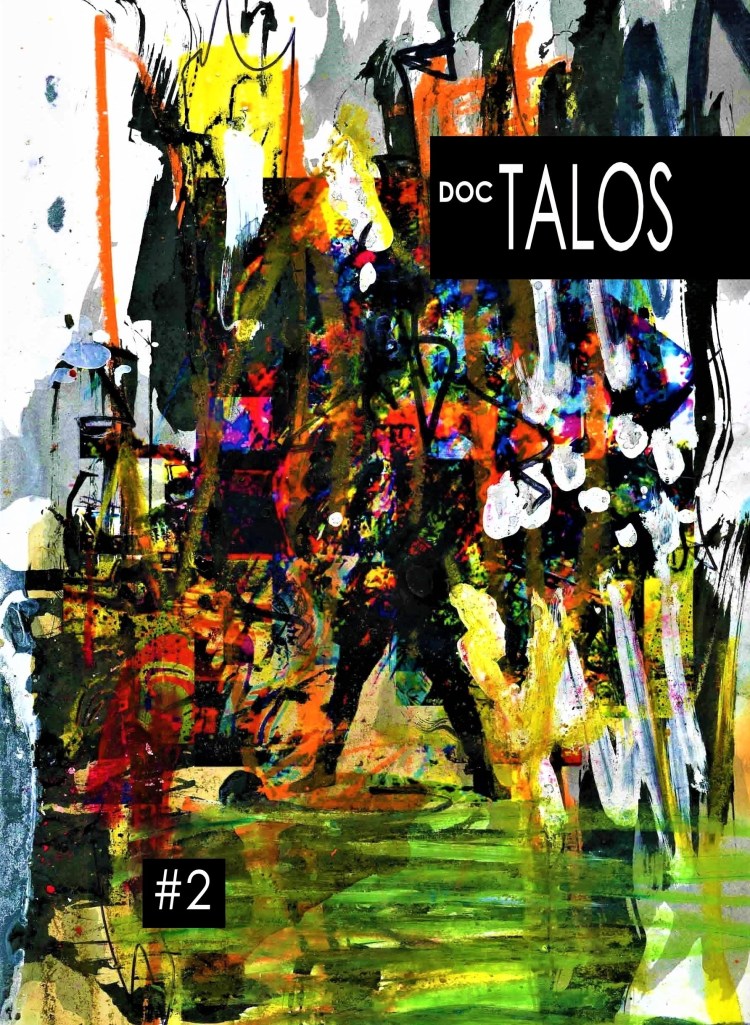
With Doc Talos Magazine #2 complete and in the DT website bookstore, time to roll right into finishing DTM #3. This issue, among other adventures, swings the spotlight onto stories of some of Doc’s illustrious aides. Andy Kingman, John Renner, and Bill Johnson (pastiches of Monk Mayfair, Renny Renwick, and Johnny Littlejohn).

Andy stars in “Mad Eyes Donovan and the Wolf in Ape’s Clothing” by Brooklyn Wright (portrait of Andy below by Iason Ragnar Bellerophon)…which tells the tale of a pulp story conference of the wildest kind — appropriate, given that it’s with Lawrence Donovan.

Renner (in polar gear below — illustration by RPS) is featured in Glen Held’s “Halt!”, a masterful riff on John Campbell’s “Who Goes There?”

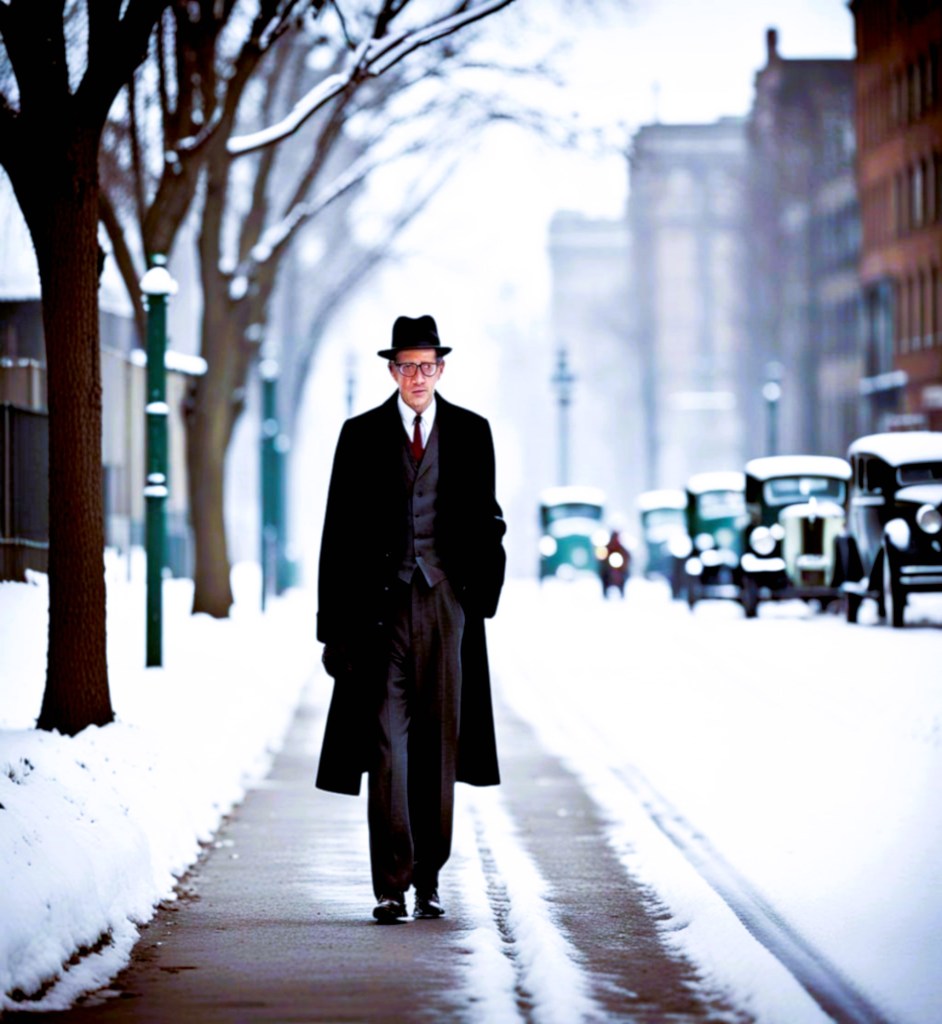
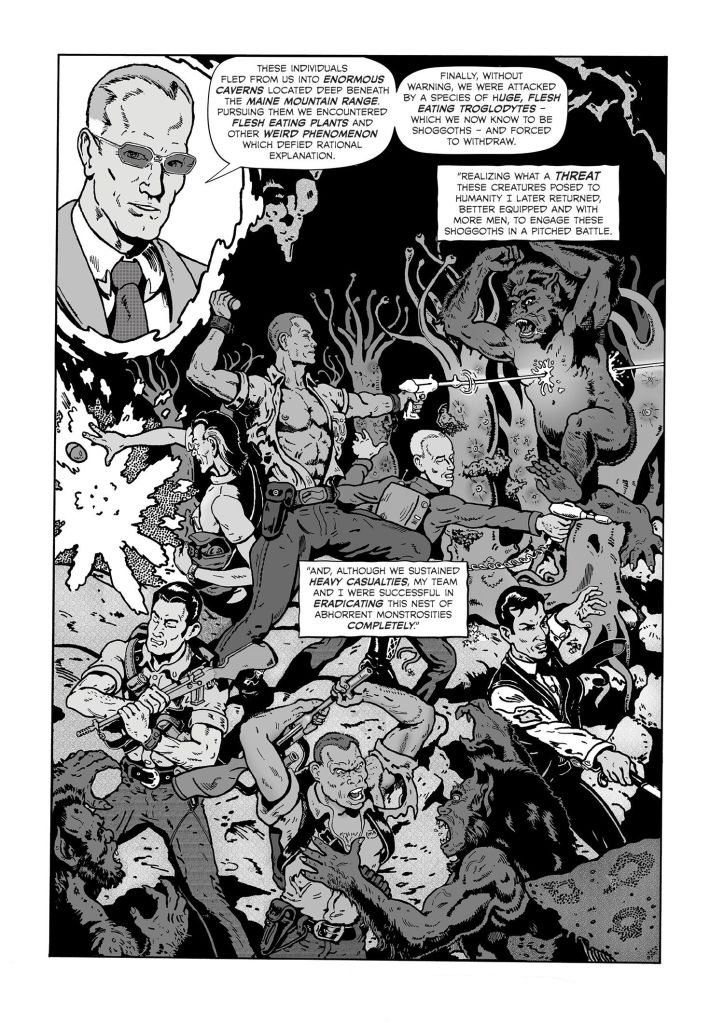
And Bill (walking the streets of Cambridge, where the story begins) is front and center in Part 1 of “Madness”, a complete re-imagine of Lovecraft’s “At the Mountains of Madness”, by RPS.

It’s going to be an exciting issue…coming in December!

Atom Mudman Bezecny’s “The Dark Ones”

If you are so great, then prove it, naked and afraid! If you are so superior, then face life anew, in a new era! To say only the strong survive is your way, but where is the glory of one who never strives to battle their worst demons? Where is the splendor of one who cannot question himself in the dark? – Lutum Hominus, 13th Century Monk

They are called the Dark Ones, the Lords of Antiquity, the Children of Kwo, the Overmasters, the Night Walkers, and most simply, the Gods of Earth. We know them by the black spires that rise from every horizon. We know them by the red sky and the salted earth, and by the second moon which has graced our skies. We know them by the lamentations of our neighbors, which are always in our ears. We know them, perhaps better than we know ourselves.

Why we had the misfortune to be chosen by them, we know not. When we will be free of them, we know not. But we leave scripture, so that one day, perhaps, we will reclaim our chance to step into the great unknown, and touch the stars above.

AACDEGOS V

Two hundred years before the Fall, the Cult of the Union lost the legendary community spirit for which it was renowned and named. Centuries of complex, ritualized emotional interdependence among its members suddenly dissolved when the Cult unanimously voted to begin developing a mutant-weapon for a series of intense mystical conflicts which were believed to erupt in the coming centuries. These conflicts, which were predicted to ultimately result in humanity’s evolution into a spacefaring species in an “Age of Aquarius” event, were difficult to discern even among the most experienced Augurs, and a great ambiguity hung over the proceedings. For the first time in 300 years, a serious disagreement broke out among the members—the argument concerned what sort of mutant-weapon should be crafted for these eventual wars. Some believed that the weapon should be bred hard and rigid, like bronze, able to withstand the bitterness of war through a tough exterior and a bright and masterfully rational mind. Others believed that the weapon should be fluid, protean, capable of adaptation in the face of adversity and open to the potential benefits of chaos. The arguments unexpectedly spiraled out of control, leading to a schism which resulted in the collapse of the Cult of the Union and the creation of the Order of the Aurics (named for their dark, gold-flecked robes) and the Morphic Apostasy (whose symbol was the amoeba).

The Order of the Aurics settled in England in order to distance themselves from the Apostates in America. Here, by invoking the spirits of Degos’lortha, the Brass Eidolon, they spawned the first incarnation of the Eidolon’s child, Aacdegos. Born from the womb of a willing priestess, Aacdegos was a demigod, and so he could not be easily controlled—for many years of his life, especially his adolescence, he tried to return to his father’s realm of Lorthavannia, only to be contained by the amulets and salt-circles of his breeders. In time, he learned to accept his captivity, and when he was old enough he performed his sacred duty, joining with a priest of the Order and impregnating him with the child of a half-god.

The descendants of Aacdegos I grew easier to control with each generation. Their mystical talents ebbed with each generation as well, but the Order was blessed with many gifts while the magic lasted. These gifts proved useful in their increasing skirmishes with the Morphic Apostasy, whom they began to believe would be their primary foe in the upcoming wars.

When a new Aacdegos was born, the life of the previous holder of that name came to an end. He did not die, but went into the world of the spirits, where he rested for but a few moments before passing into the body of his son. His old flesh vanished and he was born into a cut of fresh bronze.

Eventually, the Order produced Aacdegos IV, who was raised by one of the Order’s Inner Circle, a member of the English aristocracy. In order to conceal his connection to Aacdegos, the nobleman in question employed the young man as his secretary. Unfortunately, Aacdegos’ new self proved to be surprisingly rebellious, and he kidnapped his adoptive father’s young son, holding him to ransom in hopes of bringing his masters under his yoke. Aacdegos was eventually exposed as the kidnapper by a London detective, Skeylukkaz Helma, and his assistant Dr. Walda, who were members of a cult distinct from and older than the Cult of the Union and its two primary splinters. To escape justice, or death at Helma’s hands, Aacdegos fled to Australia. Here, he took a human wife, and journeyed with her aboard the sailing ship Hunter’s Belt to the Ocean of Ichor which rings Ma’at, the primary continent and Crown Island of Lorthavannia. On those stinking, churning waves, the wife of the fourth Aacdegos perished as a new form of life ate and clawed its way out of her womb. Before he faded away, Aacdegos glimpsed the face of his new self, whose eye sockets burned with two gold-flecked stars, a fulfillment of the prophecies of old. Even as a child was that face inhuman—in it was nearly a century of learning refined by hammer-hard force into a being of meticulous logic. That starry-eyed child grew up alone on the Hunter’s Belt, under his father-ancestor’s tapestry of foul and distant stars, which whispered to him as he slumbered in his cot.

When he walked among the world of humans, delivered by his ancestor’s fell angels, he swayed men to his cause. He built a personal army of those who were soul-joined to him, becoming his human familiars, recipients of his passions and displeasures. These he refined as he himself had been refined. In this time he also won consorts among Earth’s women, but they failed to satisfy him, and so he pulled from his own stone-hard flesh his rib, and from it grew a golden-eyed woman who stood tall and strong. Though this being was effectively his daughter, his sister, or at best, a kind of cousin, she became his bride, and their matings, held in the high lofts of Lorthavannia, were the sort of perverse thing to drive a witness to them mad.

Like the others of his kind, Aacdegos glutted himself upon the spilled blood of war, and so became bloated and strange in the wake of the Fall.

AFTER THE FALL: Aacdegos is the reason why our mates are chosen for us, and why the meat we eat comes from the children who are born imperfect. Those who worship him, such as the New Auric Order, the Templars of Science, and the Sons of Ham, believe that he is guiding us towards genetic and philosophical perfection, by killing off all that which is like his age-old rival, Aeeeghnrt. For most, this hardly justifies the millions who have died in his temples receiving his “Cure,” which removes from those few who survive both criminal tendencies and free will.

He has bred with Aanrtz, Adehhost’w-Deehiprst, and even the hated Aeeeghnrt, with whom he mated when their hatred could not be expressed by mere fighting. With Aarntz he has fathered Deraat, the hulking God of Incest; with Adehhost’w-Deehiprst, D’chaose, who is called Pandemonium’s Herald; and with Aeeeghnrt, Gd’eaagn, the GOD OF ALL THAT IS AND EVER WILL BE.

AANRTZ

The Ocean of Ichor bridges the world of Lorthavannia to that of Lewkidos, where even gods fear to tread. Lewkidos has no ruler, but it serves its own purposes—some of which are still cryptic, even to the wisest Sages.

On Earth, long ago, a husband and his pregnant wife were guests aboard the leisure ship, sailing the blue Atlantic and enjoying the peacefulness around them. The First Mate stepped out onto the deck and saluted his Captain. Then, he made a quiet prayer to Ippigo, the Poison Animal God, and calmly slashed the Captain’s throat. As the man and his wife screamed before the horrible sight, the Mate seized the wheel and a great storm brewed, which, under the Mate’s command, carried them into darkness onto the oozing green of the Ocean of Ichor. Here, he set to sailing west for distant lands.

Upon recovering from the shock of the ordeal, the terrified crew mutinied to try to bring their vessel back to Earth where it belonged. But as they neared the shores of Lewkidos—which the Mate called home—they began to turn on each other, peeling flesh from each other’s bones with naught but their bare fingernails. The man, Johann, and his wife, Lady Alicia, decided to take their chances with the ooze, and upon jumping overboard they tried to swim to land. Maybe they didn’t choose it—maybe it was just blind panic, a panic so terrible it made them forget even their unborn child.

The “swim” through the awful slime was far worse than they could have imagined. The stench was beyond nauseating, and their clothing was no defense against it. It clung to their skin, freezing their flesh pale until it was like that of corpses. Small claws and the lips of eyeless fishes nibbled at their limbs. When at last they emerged and stepped on the cracked stone beachhead of Lewkidos, Lady Alicia knew that the ichor had found its way inside her, and her child was likely dead—or worse. Somehow, her senses told her that her baby still lived. But she nearly hated such a prospect, for what the slime must have done to the growing fetus.

A bitter, acidic wind blew from the east, the aged remnants of a time-old barrier meant to keep Lewkidos contained. Millennia ago this wind was like a hurricane, and it blew a sour rain that burned the flesh of even the hardiest species. Now it was just enough to force mortal humans into the flesh-jungles for shelter, even if it did not stop the Great Beasts from emerging.

In the jungles of Lewkidos there is no light. The sunlight ceases to exist there, being swallowed by the devourer-leaves of the upper treeline. Though their eyes eventually developed to cope with the darkness, Johann and his wife were left almost totally blind for the meager remainder of their lives. Their ears became their only defense, for there were things in the jungle waiting for them, things which were like nothing on Earth and had none of the kindness of any Earth creature. Somehow, through the merit of a stone spear, the pair survived long enough for the Lady Alicia to give birth. As pain ravaged her starving body, she was thankful she could not see her child, for as it moved down inside her she could feel it had too many limbs and that its skin was rough and hairy. In time, Aanrtz would discard this form for something more like his parents, but when he was born, he squalled with a voice more like that of a broken toad than any human child.

For the first time in what felt like lifetimes, Johann saw light. A pale gray light came from the newborn’s eyes, which glared at him unblinking from the first moment of its birth.

Months passed. Johann buried his wife, and he fought hard when the Grey Ghouls came for his son. But all men die, and Aanrtz, named for the first “word” he spoke, probably belonged among those bony, cadaver-cold forest folk anyway.

The Grey Ghouls, the ghosts of the forest, raised him in all their practices—they taught him to howl at the unseen moons of Lewkidos, who they knew only by their celestial stink; they taught him what the hunger-wasp knows, and what the fanged listonfish sees. They gave him all of their rituals and baptisms, and they brought him before the lovely and terrible Pale Priestess who dwells in her golden city, built by the pseudohuman shadows who now linger beast-like in its darkened corners.

Now Lewkidos is no longer unknown; we are not safe from the knowledge of it. When the Fall came, people remembered Lewkidos, and it became part of the Earth. It erased the countries of living, thriving people, and in their place were planted the seeds of greed, colonialism, and destruction. Many powerful men were driven mad, and fled into the jungles of the newfound land, in hopes of becoming masters of the people and treasures there. But instead, Aanrtz was waiting for them, and he fed upon those who fell into his snares.

AFTER THE FALL: Lewkidos spread over much of the Earth, infecting and tainting it, but Aarntz left its flesh-jungles long ago. He has since begun living among men, watching us and testing us, baiting us. He whispers in the ears of Generals and Kings, telling them to steal and kill and rape and desecrate. They go to lands in his name and make slaves of the people, and through his incantations he makes them believe they are free. When they resist this impulse they are killed or made into objects. He is hailed as a hero of myth and a symbol of glory and male strength, and his face adorns many statues and reliefs.

He has mated with Adehhost’w-Deehiprst and Aeeeghnrt, and with Aacdegos, as mentioned above. With Adehhost’w-Deehiprst, he has sired Drotha, the Night Stalker, and with Aeeeghnrt, he has parented Aeneth, the Grey Seductress.

ADEHHOST’W-DEEHIPRST

Sometimes called the Twin-Who-Is-One, Adehhost’w-Deehiprst’s origins were murky for the majority of his existence, and they remain murky still. The pieces only started to fall into place when it was confirmed that he was first sighted at a village bazaar on the slope of Mt. Arra in the Nameless Nation, a diplomatic neutral zone established at an inconstant, ever-shifting location in the Southern hemisphere in the wake of the Konshalin Wars. Historical records indicate that his appearance coincided with the efforts of a local occultist group, the Unnameable Veil, to harvest the remnant emotional negativity of the Wars to create a tulpa that would do their bidding. The Veil was made up of wealthy white men who had come to the Nameless Nation and adopted rituals which they believed were representative of the “primitive” people of the region. In truth, they had made up these rituals from their racist stereotypes; but all rituals are made up, and so they were able to find real power in them so long as they gave strength to them, and ignorance can create its own strength. As they gained power from their magic, they attempted to exoticize themselves, taking the bastardized trappings of a dozen cultures and grotesquely syncretizing them into an unrecognizable mess. They insulted nearly all the oppressed peoples of the world in their attempts to make themselves an alien peril on Earth.

Their tulpa experiments involved an effort to call forth spirits from what they called the Abominable Emptiness—a well of misery that was an incarnation of all of humanity’s base instincts and vulgar inadequacies. They opened a gate, but they did so incorrectly. The breach entered our world explosively, destroying the Unnameable Veil’s stolen temple and causing a fire which nearly burned down the forests of Mt. Arra, until a rainstorm intervened. A stranger clad in black walked down the mountain as the rains came down; a single remaining priest, whose name was Raymond Ginger but who had styled himself Raji, walked with him, held in thrall.

Adehhost’w-Deehiprst lives in eternal pain, for he is two tulpas bound into one. He tugs at himself, gnaws at himself, and his thoughts betray him constantly. He is as a man with two heads, and he has endured this for so long that he has become pitiless, even to himself. He no longer laments his pain; he laughs as it. And he laughs as he takes the lives of others. He spared that bazaar in the Nameless Nation—he spared all those he met as he made his way to New York. But once he had established his nest in New York, using a whispering, shapeless bhoot called B’rr’b’nk to recruit an army of agents, then his true self emerged. He kills all he finds, good and evil and neutral alike, save for those he has deemed loyal to him. To avoid killing exhausts him; the journey to the home of his spider’s-lair nearly killed him, for he could not kill those who were transporting him to the destined place.

He kills and kills and kills, sometimes with the enslaved Raji by his side—sometimes a beautiful, unsmiling woman. With guns, kukris, and his naked hands, he kills. And as he kills, he screams in pain.

Only it emerges from his lips as a cruel and mocking laugh.

AFTER THE FALL:

HAHAHAHAHAHAHAHAHAHAHAHAHAHAHAHAHAHAHAHAHAHAHAHAHAHAHAHAHAHAHAHHHAHAHAHAHAHAHAHAHAHAHAHAHAHAHAHAHAHAHAHAHAHAHAHAHAHAHAHAHAHA! HAHA! HAHAHAHAHAHAHAHAHAHAHAHAHAHAHAHAHAHHHAHAHAHAHAHAHAHAHAHAHAHAHAHAHAHAHAHAHAHAHAHAHAHAHAHAHAHAHAHAHAHAHAHAHAHAHAHAHAHAHAHAHAHAHAHAHAHAHAHAHAHAHA! HAHAHAHAHAHAHAHAHAHAHAHAHAHAHAHAHAHAHAHAHAHAHAHAHAHAHAHAHAHAHAHHAHHHHHHHHHHHHHHHHHHHHAHAHAHAHAHAHAHAHAHAHAHAHAHAHAHAHAHAHAHAHAHAHAHAHAHAHAHAHAHAHAHAHAHAHAHAHAHAHAHAHAHAHAHAHAHAHAHAHAHAHAHAHAHAHAHAHAHAHAHAHAHAHAHAHAHAHAHAHAHAHAHAHAHAHAHAHAHAHAHAHAHAHAHAHAHA

AEEEGHNRT V

For all of their hatred of each other, the Order of the Aurics and the Morphic Apostasy performed their rituals and developed their mutant-weapons in almost perfect parallel with each other. Indeed, their symmetry was so perfect that it almost certainly could not happen without some sort of occult superstructure guiding their actions. It seems that the Cult of the Union, in truth, remained unified when it broke in two—it fell divided, but not wholly sundered. Each of its halves represented opposing future potentialities, not only for the Cult’s future, but for the future of the world at large. These potentialities, contradictory though they were, were part of the Union which had made the Cult so strong to begin with.

During its peak, the Cult of the Union derived its power not merely from the mystically-woven friendships among its members, but from the antitheses which emerged from those friendships. The Cult was made of those who would not be friends in any other life. Sometimes there are people who are destined to never be friends, only tolerant acquaintances. Experience is a hard thing to share in a life that is mortally short. But the Cult made them friends, and joined their contrary experiences. The prophecy of the coming wars only served to realize a conflict which had been buried the whole time; yet, it had been that very conflict which had allowed the Cult to thrive. The tensions between the two factions within the Cult joined with the rituals of Unification to create the miracle of compromise. And it was the kind of golden compromise that discards bias, bigotry, selfishness, and shortsightedness, rather than yielding to them. That compromise was destroyed and lost to the world when the Union Cult fell.

The High Council of the Morphic Apostasy somehow became aware of the paradoxical symmetry that bound them to their enemies around the same time that they were raising Aeeeghnrt II. By then it was too late for the two cults to form back into one; even if they wanted to end their fight, the curses they had cast on each other’s members would destroy them if they tried to come together again. It was also too late to abandon their experiments, for Aeeeghnrt was now a parallel to Aacdegos, and they would be joined together until fully realized in their fifth incarnation. Aeeeghnrt was the son of Ghnrt’thogos, the Froth Toad, who is considered by most to be Degos’lortha’s grim nemesis. Aeeeghnrt’s soul developed on the plane of Thogos’akma, the Froth Toad’s domain, where the night-lilies sing an eerie and seductive song, and the pond waters sparkle with fae-light.

The Apostasy decided that paradox could be the secret to dominating the Auric Order. Soon they desired to infuse the raw power of paradox itself into Aeeeghnrt. For this they rejected Ghnrt’thogos, and all other aspects of their child’s origin. They would force their experiment to merge with something he was not; they would force him to become what he was not. They reached out to the Abominable Emptiness, probing as deep as they could into it, until they found its meta-structure, the true embodiment of emptiness: the Mauvalla, the purple heart of Nothing itself. The cult bid Aeeeghnrt II to walk into the violet contradiction, to un-be, to undo all he was.

Aeeeghnrt II walked in, and he walked out again. But he did not come out the same.

Aeeeghnrt was born in the form of a handsome Black child with piercing dark blue eyes. Now, his skin and hair were stripped of their color, though his African-seeming features remained. His dark blue eyes now shined pale, and the smile which had often gifted his lips was now permanently gone.

Aeeeghnrt hated his fellow Apostates then—but his face would not twist to show his rage. For his face was frozen by all he had seen and done in the eternities he spent within that awful place.

He continued to live among them. He allowed himself to be married to a woman, who would bear what would be his next self. When she began to give birth, he slowly began to fade away, as he and Aacdegos both did when their newborn incarnation emerged.

But as the priestess gave birth, she felt her pain release suddenly, and all her muscles relaxed. It was the last thing she ever felt—a brief bliss.

To the observing doctors, it seemed as though she had birthed…nothing. But the child had been born. He was born a living virus, an invisible shape with no true form. He surged into his mother’s cells, replacing all of them in a single instant. She perished, and he, in her shape, took her place.

There was great confusion, and the priestess, whose womb was as one who had never been pregnant, was taken away for questioning. Her questioners never left the interview room. But a man who looked like one of them walked out, adjusting a necktie which was in truth made of skin.

Aeeeghnrt III was his own master, and when he spawned, he did so by himself, splitting into two. The new, superior Aeeeghnrt IV devoured his predecessor, taking his strength as he did so. Such would be his own fate, he knew, when Aeeeghnrt V was at last born.

A madman named Rex Blessed, a patient at St. Bemliko’s Psychiatric Hospital (sometimes called the “Nightmare Castle”), became Aeeeeghnrt’s permanent form. A lifetime of devotion to the gods of Lorthavannia, Thogos’akam, Lmnr’rrr, and other unholy lands rewarded him at last. Since then, with Blessed’s face, Aeeeghnrt V has walked the Earth, long desiring dominance over his parallel counterpart—and the rest of the world.

AFTER THE FALL: Ever since the Dark Ones caused the Fall, and grew vast and different, Aeeeghnrt has fought an increasingly losing battle against his rival, Aacdegos. His sigils and formalities are more complex than those of Aacdegos, and so they are not so readily embraced. Those who devote themselves to him gain more might than those of Aacdegos, some even becoming talented shapeshifters—but his worshippers are infected with a curse which slowly transforms them into the cephalopodic “Voidminders,” which are incapable of thinking.

Nevertheless, he has mated with Aacdegos, as well as with Aanrtz, and with Adehhost’w-Deehiprst, producing the Lord of Dark Places, Adgn-hotet. Adgn-hotet is currently the only spawn of the Dark Ones to take a mate, having married Hs’Tod Dei, Lady Noxebrae, the self-bred offspring of Adehhost’w-Deehiprst. Their child, Asgodht, waits patiently until the day he can force his uncle G’deeagn into one of his thousand mouths.
Pre-order sale for Doc Talos “Stains”

The second Doc Talos Mythos book (Talos tales written by authors other than series creators R. Paul Sardanas and Iason Ragnar Bellerophon) is available at a pre-release discount!

STAINS by Atom Mudman Bezecny with full color illustrations by R. Paul Sardanas, 92 pages, paperback. EXPLICIT CONTENT — FOR ADULTS ONLY

In a bold fusion of the Talos mythos and pulp horror, Atom Mudman Bezecny presents a harrowing, unforgettable story of a family corrupted and destroyed under the influence of the Gnostic Archon Archdemoness, Ruha.

Across a span of decades, an eerie psychological mirror-image of the events of The Talos Chronicle comes into focus. But when applied to common people rather than heroic superlatives, the occult techniques of transformation and apotheosis infect and corrode the minds of all those who become involved, with consequences that become the stuff of nightmare.
PREORDER SALE UNTIL SEPTEMBER 15, 2023 — PAPERBACK: $11.00 plus shipping — PDF DOWNLOAD: $5.00

Please email taloschronicle@gmail.com if you are interested in pre-ordering Stains. We will get back to you promptly with the details for acquiring this book. This novella will retail for $16.00 plus shipping for the paperback, and $7.00 for the PDF download after September 15th.

Stains is a foray into pulp horror that will rock you to your core.

“Wild Life” and the continuing Doc Brazen saga

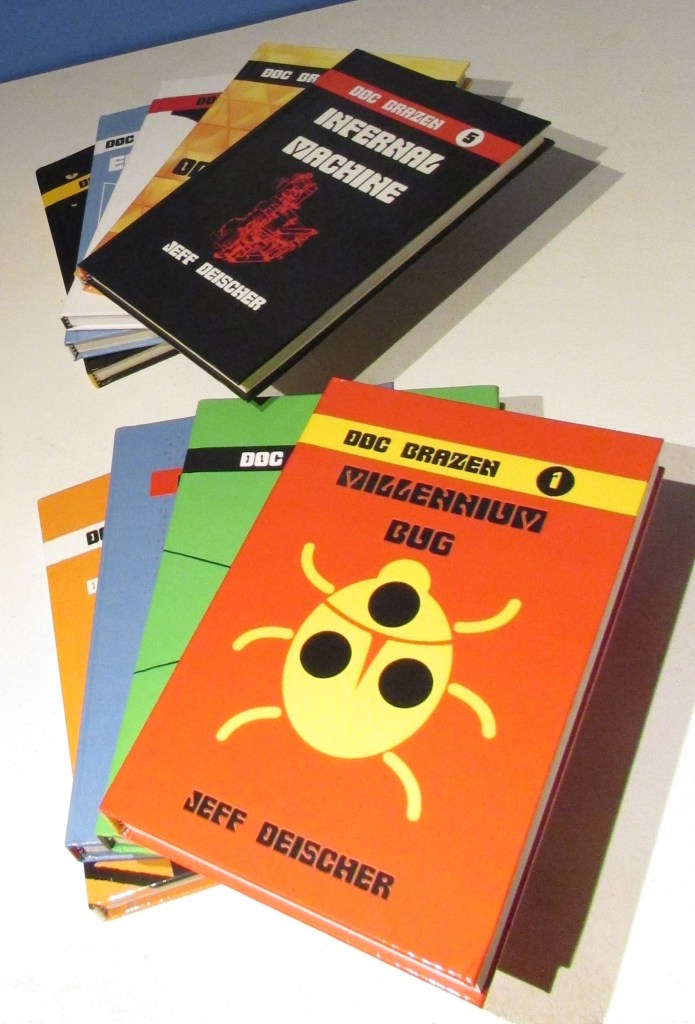
I recently had the opportunity, and was delighted to provide, an Introduction to the newest Doc Brazen book, which is #9 in the series.

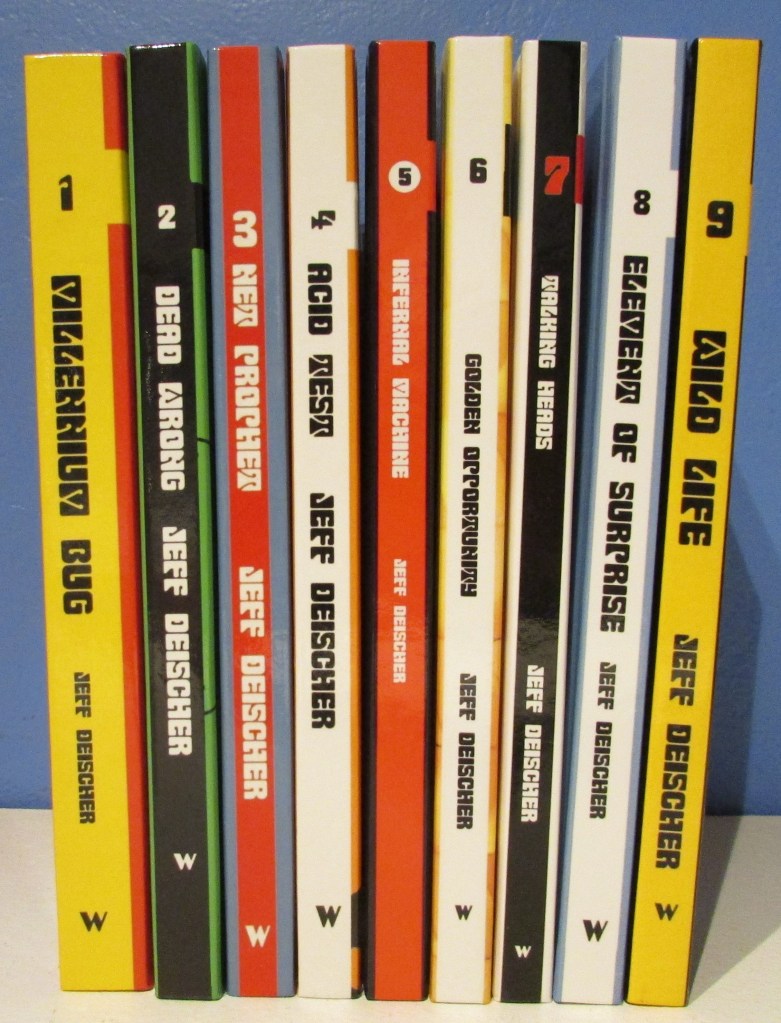
The Doc Brazen collection

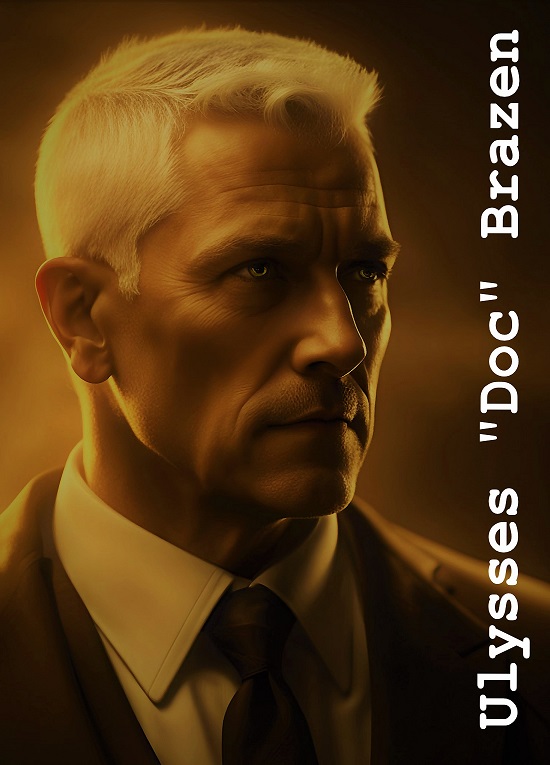
Many more Brazen books (all by author Jeff Deischer) are to come, but seeing these nine together gives them the weight of a developing epic, which is a remarkable accomplishment. Ulysses Brazen is a pastiche of the classic pulp character Doc Savage, and the stories present him as an older man, at right around the turn of the 21st Century. For fans of the original Doc, it’s a splendid opportunity to see the themes and legacy of this iconic character carried forward to the near-present.

Doc Brazen portrait by R. Paul Sardanas

Credibly aged, he is still a powerful, charismatic figure, and the adventures of this series both honor and more deeply develop the history of the original Doc. All of the books are available on Amazon, and can be explored at this link:

The Doc Brazen Collection (and other novels)

Here is the Introduction to Wild Life.

Popular literature – pulp literature in particular – feels as if it has reached a crossroads here in the 2020’s. One of many that have been passed across the decades. The character of Doc Savage stands out particularly in this regard; he debuted in 1933, ninety years ago. Through the Great Depression the Doc Savage pulp magazine was a flagship of heroic fiction, and Doc himself was a cultural icon. He embodied many things emblematic of that place in history…hope in a time of deprivation perhaps above all, with the resounding answer to hard times being drive, intelligence and compassion. Powerful underpinning to an adventure series.

World War II was a time of great change in the pulp zeitgeist, and Doc Savage reflected that. Less an “angel of technopolis” who could right great wrongs through personal, individual agency, he became part of a national effort to bring the massive destruction of that conflict to an end.

After the war, the immense upheavals seemed to have tired the world out to a degree, and once again Doc Savage evolved, the stories becoming smaller, the characters and themes more grounded in a landscape quite a bit less Promethean.

Then the pulps ended…and when the Doc Savage stories began their second renaissance in 1964, there was a mingling of nostalgia and a feeling that the world of thirty years prior had an appeal based on the very clarity of good and evil, right and wrong that was becoming more blurred all the time in everyday life.

After their heyday in the Sixties, the Doc Savage paperbacks began a long, slow decline in popularity…the reprint series sputtering at times, until it lurched, a bit unsteadily, to completion of the reprint run. For another couple of decades, new stories appeared in the form of books inspired and informed by the unpublished ideas of primary pulp author Lester Dent. But no real effort was made (outside of a number of wildly inconsistent comic book series) to actually continue the stories beyond 1949.

More decades…filled with what seemed to me a constant yearning to re-live the spirit and adventure of the past tales. But that environment of running in place while looking backward can only go on for so long, before it becomes tired.

And that is sad.

The pulps as a whole still hang on in persistent nostalgia as that second generation of readers hits its own retirement age…but the crossroads mentioned earlier no longer feels like something in the distance. It’s right here, beneath our feet.

Exacerbating this, the copyright owners of the original Doc character feel as if they have become something of a blind monolith, clinging to memories of big profits from the glory years, but completely lacking in emotional investment in the ideals and characters that generated so much loyalty and enthusiasm across the better part of a century. Last year saw a “revival” of the series by those copyright owners, which to me, succeeded only in hammering home the point that the corporate mindset is now set in stone. The new “Doc Savage” exists in name only, jammed into a generic 21st century thriller that could easily change the name of all its characters and have nothing to do with the rich legacy of what had come before.

That’s also sad. So many of us find ourselves emotionally invested in the dreams inspired by fictional characters we come to love.

However, there is solace. Standing there at the crossroads with us are Jeff Deischer and Doc Brazen.

This book, Wild Life, brings to the fore many of the best qualities of the Doc Brazen series. One thing that Lester Dent excelled at, was precipitating unique and colorful antagonists and supporting characters into vivid life. They provided a counterpoint to the series’ continuing cast, helping every new adventure to feel fresh. Wild Life spotlights a diverse group of scientists entangled in a deadly mystery, and it’s a treat to watch each move in and out of the spotlight – some to become victims, others under suspicion. And another hallmark of the original pulp stories was the theme of superstitions or “weird science” given a credible feel, which this story also achieves adeptly. And though I won’t provide a spoiler, a deceptive teaser used in what are now iconic images from both the pulp and paperback series is finally brought to fruition, in one of the most stirring fight scenes I’ve had the pleasure to read.

As this series continues, building and building in book after book, it welds itself over the fractured gap that opened in 1949, crossing the succeeding decades into the world of today. Deischer clearly loves every link of the long literary chain that brought “Doc” into our cultural consciousness. He deftly weaves history from the pulp era into every story, without it becoming an exercise in repetition or those hungry twinges of sadness mentioned before, when something much-loved begins to fade. In his milieu of the end of the 20th century, Ulysses Brazen, Jr. feels fully alive, with fifty years of personal history and growth since the last pulp tale incorporated into his persona. Of course it is pastiche, as the names and settings of the original are stubbornly clung to by entities that no longer truly care. But this is indeed Doc…so much so that when I revisit those originals now, I find myself doing a mental swap of Savage into Brazen, Hidalgo into Coronado.

And so the melancholy of losing a fictional companion in the adventure of life fades.

The hope that Doc embodied – the inspiration that we can, if we care, make a difference – is a quality as much needed today as it was in the dark years of the Depression, when he was born.

I’m grateful that he’s still here, in each new book from Jeff Deischer’s pen.

The Sensual Poetry of “A Feast Unknown”

Poetry is probably not the first word that springs to mind for most people when considering Philip José Farmer’s powerful, enduring novel A Feast Unknown. And yet, the title itself is from a poem. Not all editions have it, but most show this stanza from the poem Evolution before the story begins (the following passage and analysis revisited from an earlier Forbidden Pulp blog entry).

The poet, May Swenson, though not widely known today, was in fact a very influential creator in her day. The eminent critic Harold Bloom considered her one of the most important and original poets of the 20th century. Born in 1913, she was a contemporary of Farmer – he might well have witnessed the whole of her literary career.

Here is the full text of the poem:

Evolution

by May Swenson

the stone
would like to be
Alive like me

the rooted tree
longs to be Free

the mute beast
envies my fate
Articulate

on this ball
half dark
half light
i walk Upright
i lie Prone
within the night

beautiful each Shape
to see
wonderful each Thing
to name
here a stone
there a tree
here a river
there a Flame

marvelous to Stroke
the patient beasts
within their yoke

how i Yearn
for the lion
in his den
though he spurn
the touch of men

the longing
that i know
is the Stone also
it must be

the same that rises
in the Tree
the longing
in the Lion’s call
speaks for all

o to Endure
like the stone
sufficient
to itself alone

or Reincarnate
like the tree
be born each spring
to greenery

or like the lion
without law
to roam the Wild
on velvet paw

but if walking i meet
a Creature like me
on the street
two-legged
with human face
to recognize
is to embrace

wonders pale
beauties dim
during my delight
with Him

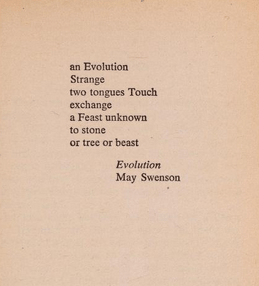
an Evolution
strange
two tongues Touch
exchange
a Feast unknown
to stone
or tree or beast

Fascinating to consider the poem’s themes of all things, even the inanimate, yearning for life. Its metaphors include the lion (and Grandrith would, notably, wrestle and kill a lion in the narrative), and stones hungering to speak (bringing to mind intense images from the final Doc Savage novel, Up From Earth’s Center). The question of what any creature might be willing to do in order to achieve life (or extended life, in the narrative of A Feast Unknown), also echoes strongly through the book.

But it’s not just the title and its provenance that echoes with poetry in the book. I’ve long considered Farmer, either consciously or by unconscious inspiration utilizes poetic language in a powerful way. Poetry often stirs emotion, and even a spiritual response, not directly, but with oblique imagery, which prompts a reader to a strong reaction though a sometimes unexpected, even mysterious beauty. Much adventure fiction is devoid of this kind of deeper layer within its narrative, but A Feast Unknown is filled with it.

Consider this passage from the beginning of the novel — the prelude to an exceedingly violent military attack on Grandrith. One theme of A Feast Unknown, at the time considered a frankly pornographic novel (it is, but it is also much more) is an exploration of qualities of violence within the passions of the human sexual drive. This passage utilizes a mixture of explicit description, stream of consciousness thought, and metaphor, creating a uniquely visceral reading experience.

The sun was no longer an old lion. It was the red eye of Death, the drunken always-dry sot who had thirsted for me for almost 80 years.

Now the red eye was bisected by my penis, which reared with a piss hard-on. I was lying on my back, naked, and the scarlet ball climbed up the shaft and was on its way to being balanced atop it.

From some distance, there was a click.

The sky ripped as if it were rotten old cloth.

The sun was on top of the head of my penis, seeming almost to spurt out.

I knew what the ripping sound was the moment I heard it, and I knew what the click had been.

As if it were red seed, the sun burst open from my penis. It disappeared in smoke. The walls flew apart as if they had become a flock of cranes disturbed by an eagle. The smoke poured into me and filled me to the backs of my eyeballs. The noise was squeezed out of me.

I was turned inside out like a glove. I was a tuning fork trying to find the correct resonance.

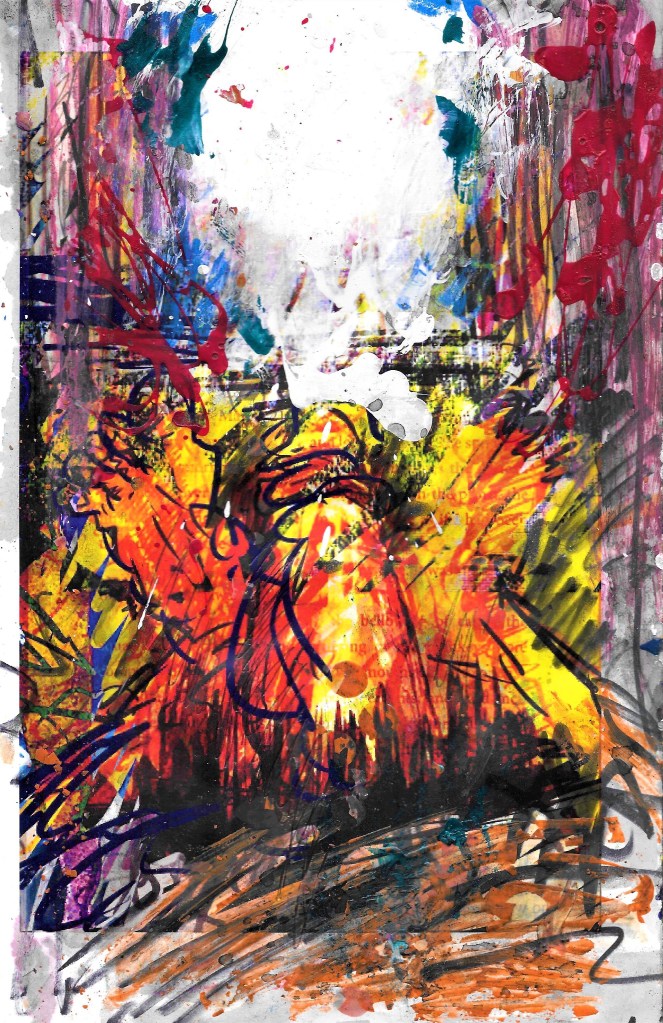
Painted scene by Iason Ragnar Bellerophon

A remarkable evocation of the male climax, using nature imagery, spiritual life/death allusions, wrapped in a hard-edged adventure narrative. Erotic writing (much less the more derogatory and dismissive term pornography) had never quite looked or felt like this before. Even the short sentence breaks used by Farmer evoke stanzas of a poem.

This type of style suffuses the novel, raising it to a dynamic artistic level. Later in the book, an erotic scene between Grandrith and Trish Wilde (a pastiche of Pat Savage) presents a much more ecstatic bonding:

I came several minutes after entry. Instead of withdrawing, I remained on top of her and left the semi-hard cock in her. She began to squeeze on it with her sphincter, which was powerful, and seemingly, tireless. It was like a weak but loving fist sending telegraphic messages. My peter swelled up again, and I began going back and forth with her legs over my shoulders and my hands around her hips and under her thighs so that the tips of my fingers caressed the edges of her labia. The second orgasm did not arrive until quite a few minutes later. I almost passed out from the intensity; I saw great red flowers shooting up from green stalks, exploding in scarlet, and collapsing.

Another poetic technique is being used here…notice that instead of the stanza-like breaks of the previous passage, a continuous unbroken narrative is presented. This begins with prosaic (even clinical) language, which in the end suddenly pivots into fierce, even hallucinatory imagery. This is an adept use of the methodology of blank verse, which often grounds the reader firmly and then abruptly tips or propels them into intense sensation.

Painted image by Iason Ragnar Bellerophon

A Feast Unknown is often cited as a landmark in shifting heroic literature from highly sanitized narratives to a place where storytelling can include powerful human drives, needs and obsessions. But as a work of sensual literature, it also provides a superb example of how poetry can enhance and elevate an entire genre.

Doc Talos Magazine #1 is on the metaphorical spin rack!

Doc Talos Magazine takes the concept of the Hero Pulp into a world of infinite possibility. It is specifically designed to hit hard…to offer stories and art for a mature, sophisticated audience…stories without boundaries.

An outgrowth of the Doc Talos series of books, which have boldly fused fine art and ivory tower literary skill with raw pulp energy, the magazine is a venue for mavericks and outlaws of the creative world — creators with a serious voice, that may be too dangerous for the more mainstream editors and publishers in even today’s landscape of entertainment. Rule breakers of form and content…fierce innovators of mind, body and soul.

Series creators R. Paul Sardanas and Iason Ragnar Bellerophon are joined by authors and artists Fugazi, John Gallagher, Don Murphy and Leslie Payton in the presentation of tales from the Doc Talos mythos.

Advance reviews:

“I love when the desperados, the badasses, of creativity put something out there to shake things up. Doc Talos Magazine is one holy helluva shakeup.”

“I’m a firm believer in using literature as a very literal FORCE for good, and so it’s very exciting to see a whole magazine built around Weltanschauungbackpfeifengesicht as well. Cheers to you…”

“I’ve been a fan of the Doc Talos stories since shortly after they started coming out, and am impressed, and somewhat in awe, of how the series consistently pushes, no, EXPLODES the boundaries of both story-telling and art.”

“This is the bloody, sexy pulps in the hands of some of the wildest, wickedest…and wisest people on the planet. What a ride…”

Contents:

Introduction by R. Paul Sardanas

The Shy Man by Leslie Payton – in 1919 New York, James Talos experiences his first night of intimacy.

Midnight in the House of Endings by R. Paul Sardanas/artwork by Fugazi – in Victorian London, a misogynistic doctor finds himself at the mercy of women he has preyed upon.

Man of Tomorrow by Don Murphy/artwork by Iason Ragnar Bellerophon – at the 1939 World’s Fair, James Talos encounters a very different “Maximus”.

Love-talk of the White Apes by R. Paul Sardanas/artwork by Iason Ragnar Bellerophon – during a spirited bout of lovemaking between John Grersoun and Rickie Talos (pastiches of Tarzan and Pat Savage), she demands to hear some poetry, and he obliges — in the language of the apes.

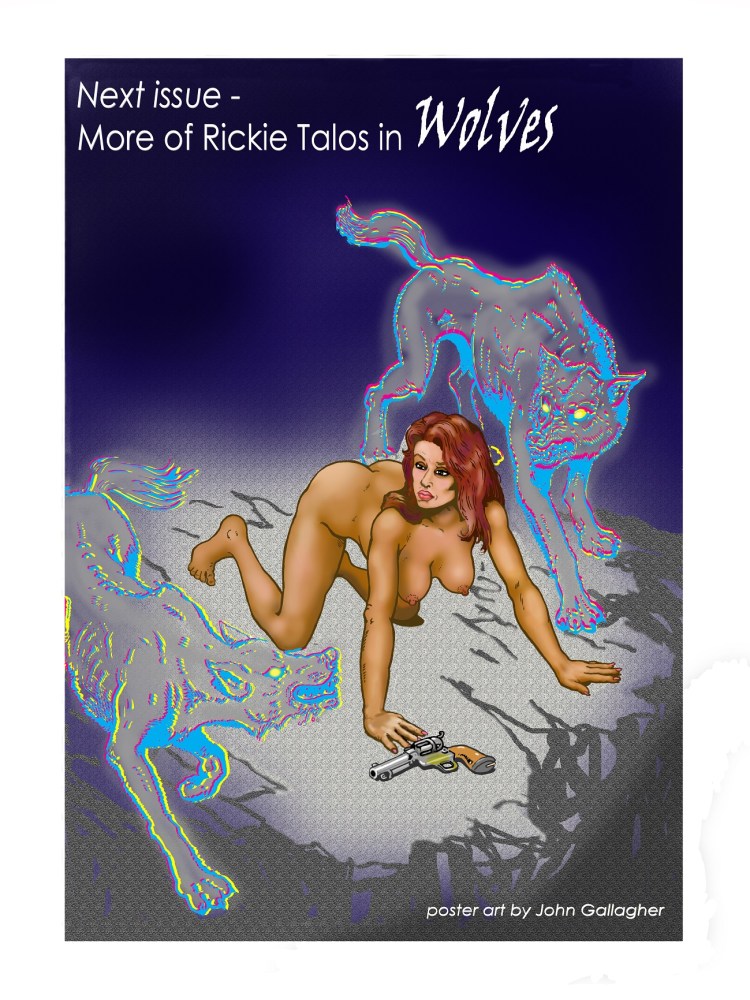
Wolves, Part 1 by R. Paul Sardanas/artwork by Iason Ragnar Bellerophon – first of a four-part serialization of the pastiche novel based on the classic pulp Brand of the Werewolf.

Rickie Talos Wolves Poster by John Gallagher

Pinups by Fugazi, Iason Ragnar Bellerophon & R. Paul Sardanas

Men Who Smile Know More – cartoons and humor

The Observation Deck – correspondence and commentary by fans, friends, and creators.

Pulp Community Bookstore – special section showcasing creations from around the pulp community.

________

DOC TALOS MAGAZINE

Issue #1 – July/Aug 2023 – front and back cover art by Iason Ragnar Bellerophon – 64 pages. Bi-monthly. Adult material — for mature audiences only. Printed magazine: $19.00 plus shipping – PDF download: $5.00

It’s a bold, oversize, square-bound magazine printed on the highest quality stock…a new pulp unlike anything seen in the genre before.

DTM #1 can be ordered direct from the publisher. To inquire about or to order this issue, please send an email to: taloschronicle@gmail.com. We’ll get back to you promptly with easy payment and delivery/download options.

And stay tuned for Doc Talos Magazine #2…coming in October!

Re-Introducing Artist John Gallagher

As we get ready to release Doc Talos Magazine #1, it’s a great opportunity to spotlight the return of artist John Gallagher to the creative world. Cartoonist, comics creator, designer…John had taken a hiatus from his art for a time, but is now back and doing some remarkable work.

John came into the circle of Doc Talos creators as a fan, and proposed a unique project: he had done a graphic novel based on Doc Savage characters, but of course that Doc is a copyrighted property, and so the Conde Nast-owned names could not be used for the story. Having acquired a copy of the huge Doc Talos Omnibus #1, John found a new “Doc” being produced in a modern, adult style. He approached me with the idea of using the Talos-world version of the characters to complete his graphic novel.

While the story doesn’t dovetail perfectly with Doc Talos canon, there is a meta-layer of “fictional” stories within the Talos framework of tales, and slipping the graphic novel into that layer fit very well indeed. So permission granted, John is in the process of editing the graphic novel to become Talos-themed.

In the meantime, we began discussing the opportunities for John’s work to begin appearing in the new Doc Talos Magazine. One of the features of DTM is a series of serializations of Doc Talos novels, the first being the Brand of the Werewolf pastiche, Wolves.

John came up with a dynamic Rickie Talos poster, which made a perfect teaser for the next installment of the serial.

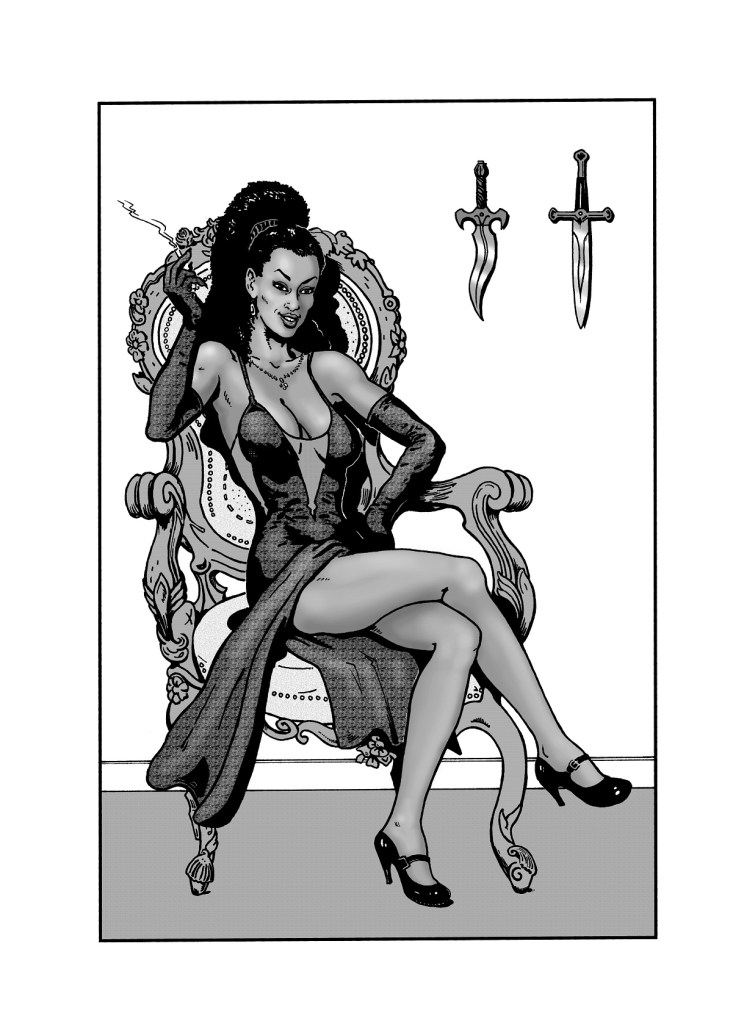
Next up, Doc Talos Magazine #2 will feature an interview with film star/Archon Archdemoness Damaris Emem AKA Ruha…and John produced a splendid portrait of the charismatic femme fatale.

It’s a thrill to have John doing work in the Doc Talos universe. Much more to come!

Now that John is back at work creating art, he is actively looking to expand his client base. If you have a project you might like to discuss working with him on, he can be reached directly at this email address: john.gallagher17@gmail.com

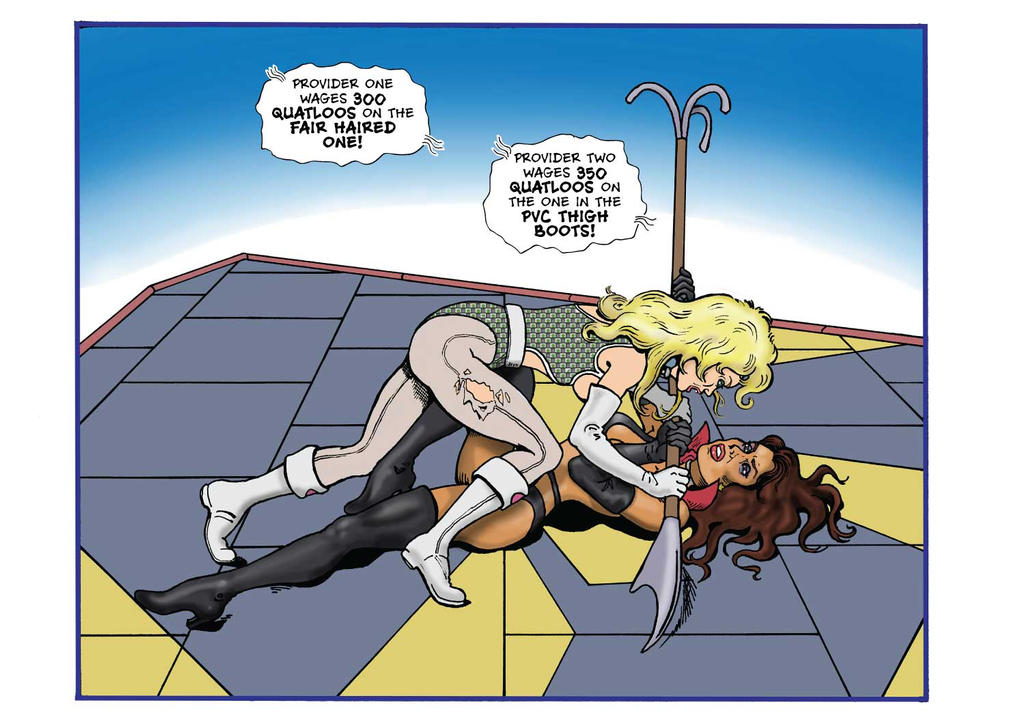
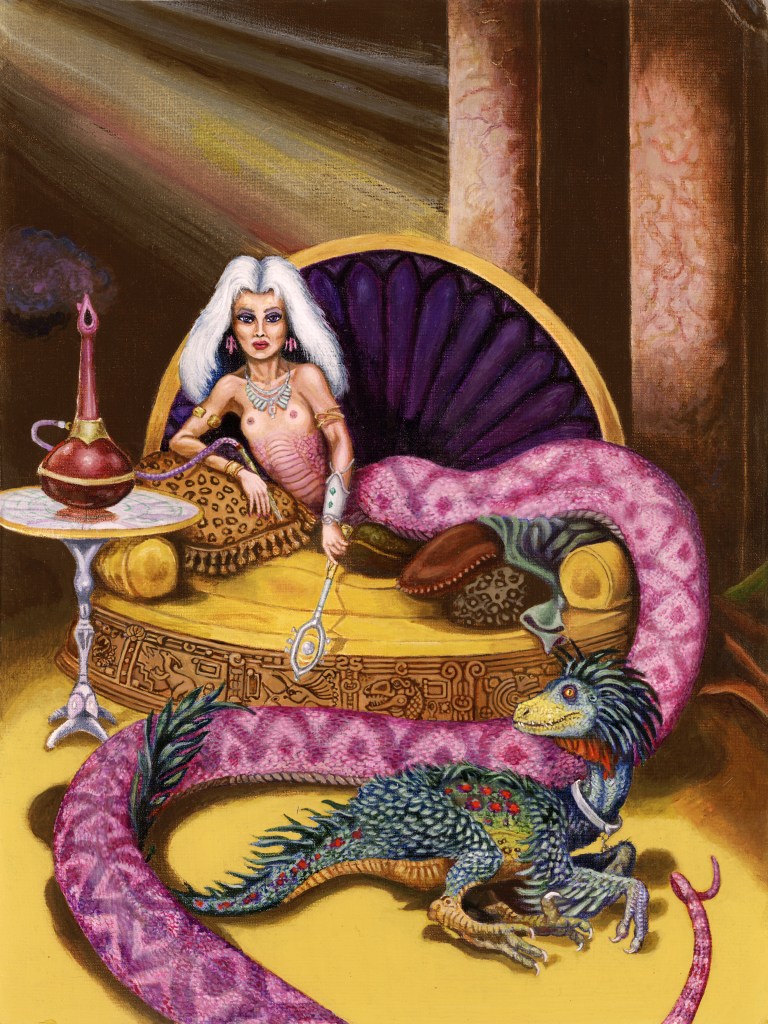
John’s return to the world of pulp art is cause for celebration! His creations are fun, fierce and exciting, and he is a pro’s pro…a real pleasure to work with. Here are some more samples of his work, featuring pulp classic/adventure/horror/fantasy themes.

Again, feel free to reach out to John at: john.gallagher17@gmail.com

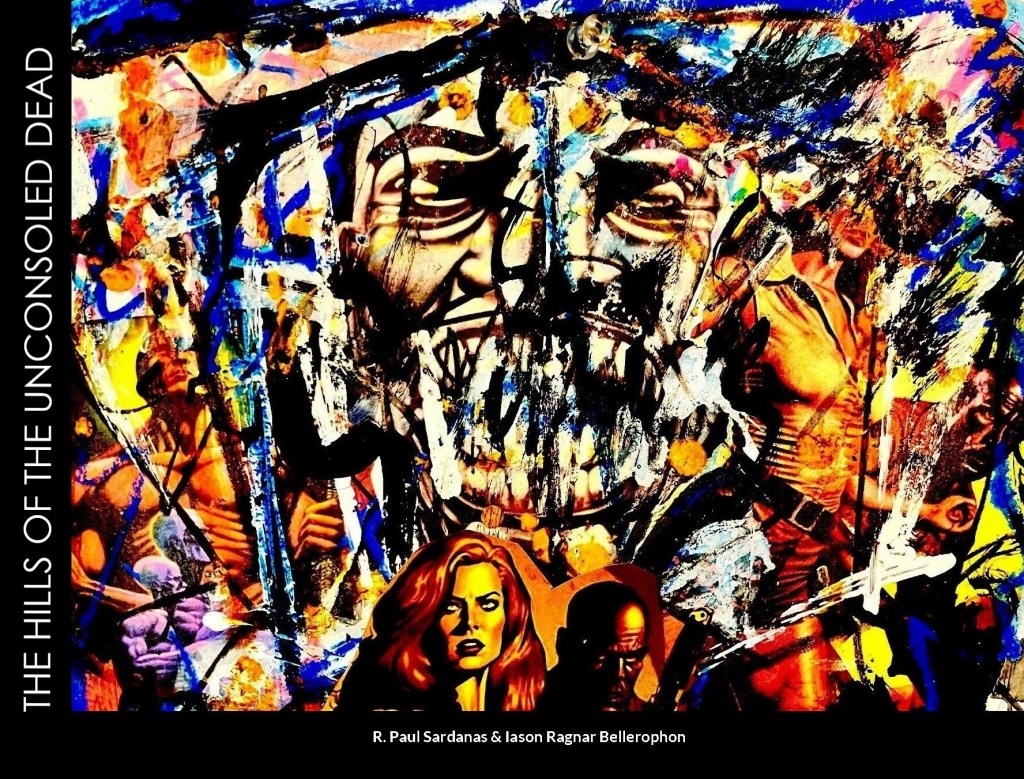
Preorder sale for Doc Talos #17, “The Hills of the Unconsoled Dead”

The seventeenth Doc Talos book is now available for preorder!

Here is how it begins…

_______________________________

The twigs which N’Longa flung into the fire broke and crackled. The unleaping flames lighted the countenances of the two men. N’Longa, voodoo man of the Slave Coast, was very old. His wizened and gnarled frame was stooped and brittle, his face creased by hundreds of wrinkles. The red firelight glinted on the human finger-bones which composed his necklace.

The other was named Miles Harmon. He was tall and broad-shouldered; his eyes closed…lost in thought, sleep, or death. The surrounding night, kept only marginally at bay by the fire, played redly on the lines of his face, which held a trace of anguish.

“You come again, brother,” droned the fetish-man. “Many moons burn and die since we make blood-palaver.”

Manhattan, 2025

“Hey Miles.”

“Rickie girl…hey, it’s great to see you.”

“Right back atcha. Though it feels a little weird…”

“Why, because I’m dead?”

“Well…”

“Don’t sweat it. I’m grateful you still think of me, all these years later. It’s…consoling.”

“Shit…this wasn’t supposed to make me all emotional.”

“Maybe it’s selfish, but I’m glad you are. We didn’t have much time. To really be friends.”

“I wish it had been different. Ironic I guess…you were the one who thought I was dead back in ’68.”

“Made me want to kill someone, to be honest.”

“Wow.”

“So when you’re ready, how about we get going on that consolation.”

Doc, in typical style, was ahead of the curve on Virtual Reality tech. I didn’t have to put any kind of goofy rig on my head, or heavy, obscuring shades over my eyes. Just a little jack that affixed to my temple, which ran on a thin cable down to the USB port of my laptop, which in turn was running the program. I’d fed Miles’ bio into it, enhanced by dictating some of my personal remembrances. Then, goddamn…when I closed my eyes, he was standing right there, on what looked like the African veldt.

Africa, because that was not only where Miles had died, but I had also fed one of my favorite pulp stories, Howard’s The Hills of the Dead, into the program.

Doc, giving the VR toy to me for my birthday, had said just to have fun with it. It was an earlier model of a system he was busy expanding on and enhancing. Enhancing this? Good lord…I could feel the heat of the African sun, and Miles was not just repeating lines, but actually interacting with me. Given other stuff I was hoping to experience during the VR trip, this could get damn addictive.

What I hadn’t expected, was for Miles to be self-aware about his death. Even though I had included that in his bio information, I had thought the program would just re-create him close to what he had been in 1968…but like a character in a story.

Doc had told me one aspect of this early iteration of his programming that he didn’t care for was that it behaved at times in an unpredictable manner. He preferred things to be in control. He certainly knew me well…having passed it along to me with the knowledge of how much I liked things out of control.

_______________________________

This is a unique book in the Doc Talos library. A gorgeous, 9 x 7 landscape-format hardcover, with art reproduced on the highest quality paper stock. A “deluxe short story”, channeling classic pulp, daring eros and modern high literature as it weaves together themes pioneered by creators as diverse as Robert E. Howard, Philip José Farmer, and Kazuo Ishiguro.

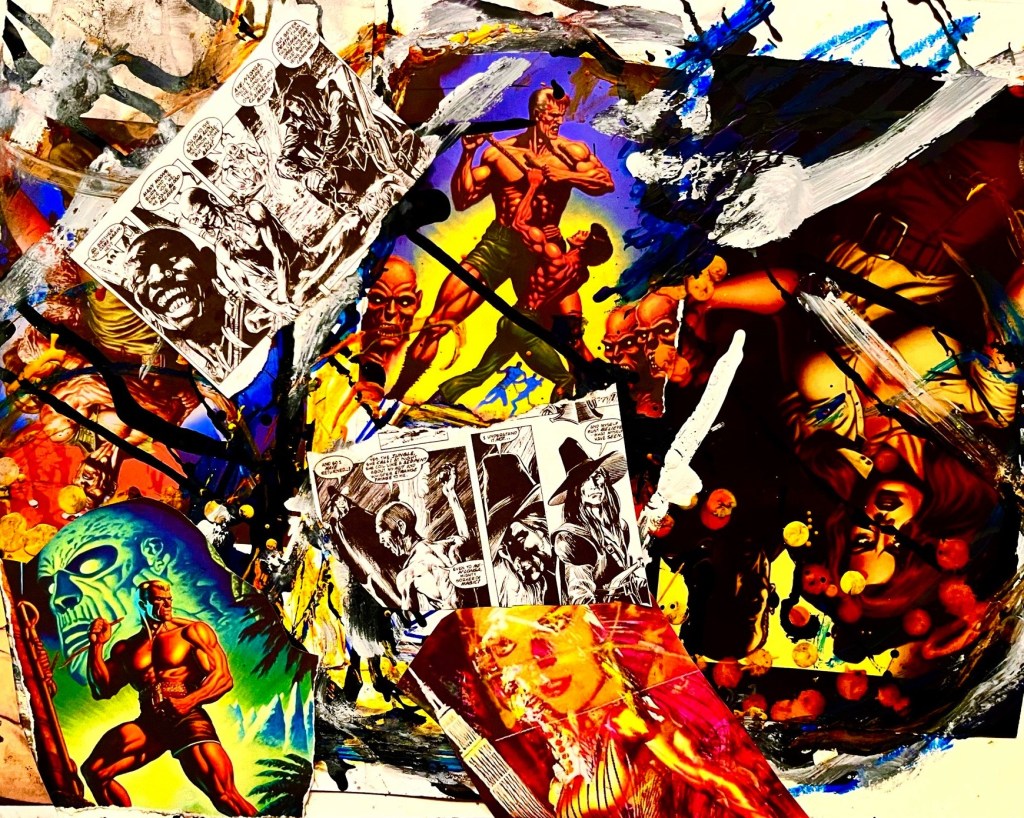
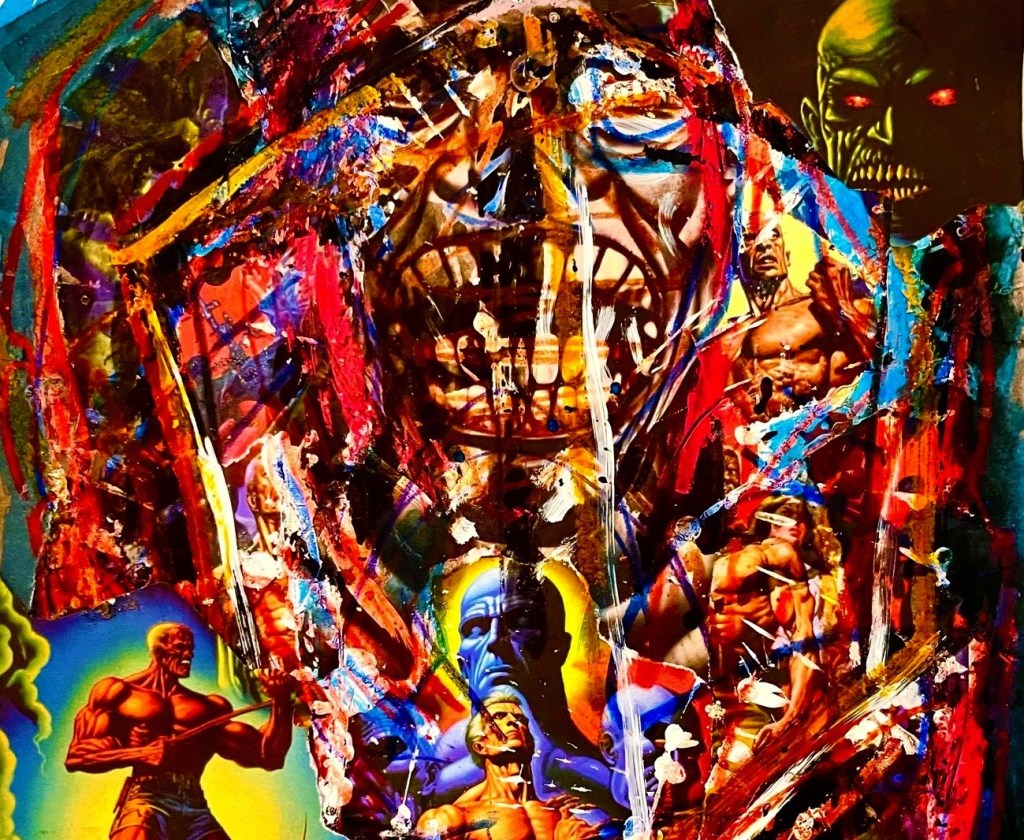
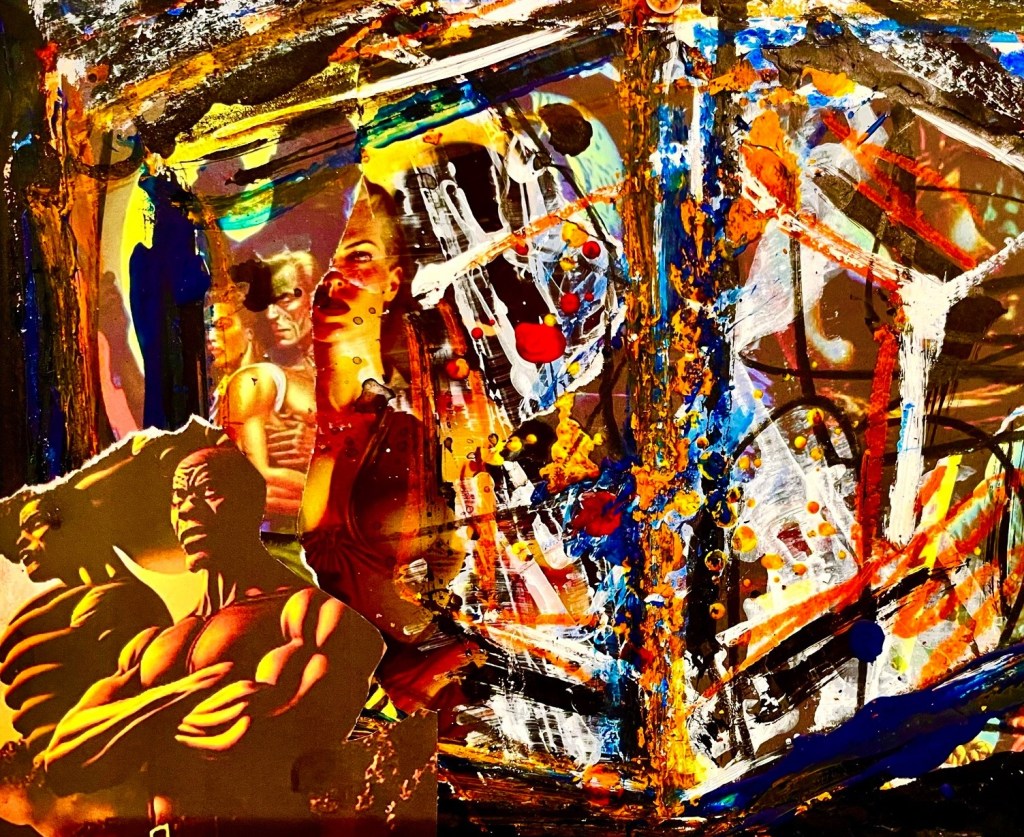
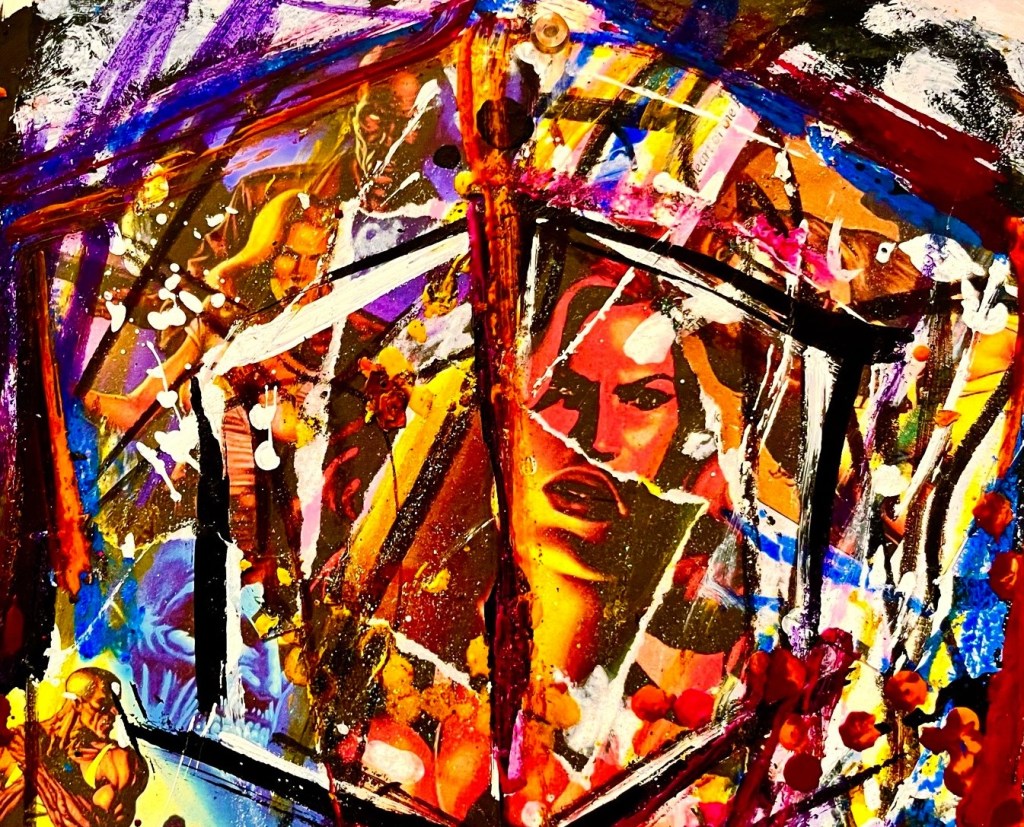
The artwork too is something new and special — sprawling, powerful collages by Iason Ragnar Bellerophon, which viscerally transport the reader into this hybrid world of storytelling.

Set in close to the present day, Rickie Talos receives a birthday gift from James Talos: a virtual reality program of unprecedented sophistication. She uses it to immerse herself into the story of one of her favorite pulp tales, Robert E. Howard’s The Hills of the Dead. For her companion in the experience, she chooses a man she had liked and admired, but who had died in Africa fifty years earlier.

Expecting it to be an intense, violent, sexual game, it quickly becomes far more, as the presence of the dead all around her ratchets Rickie’s own emotions, compulsions and desires to a fever pitch.

Will anyone leave the hills of the dead alive?

At full price, The Hills of the Unconsoled Dead will retail for $35. During the presale period which ends August 15th, it is available for $27.50 plus shipping. US purchasers will receive a copy signed by author R. Paul Sardanas.

If you have questions or are interested in purchasing the book, please send an email inquiry here: taloschronicle@gmail.com. We will get right back to you with details of how to acquire the book using PayPal, check or money order.

Travel with Rickie Talos to an Africa that is both nightmare and fever-dream. It will be an unforgettable experience.

Preorder sale for Doc Talos #16, “Yesterday”

The sixteenth Doc Talos book is now available for preorder!

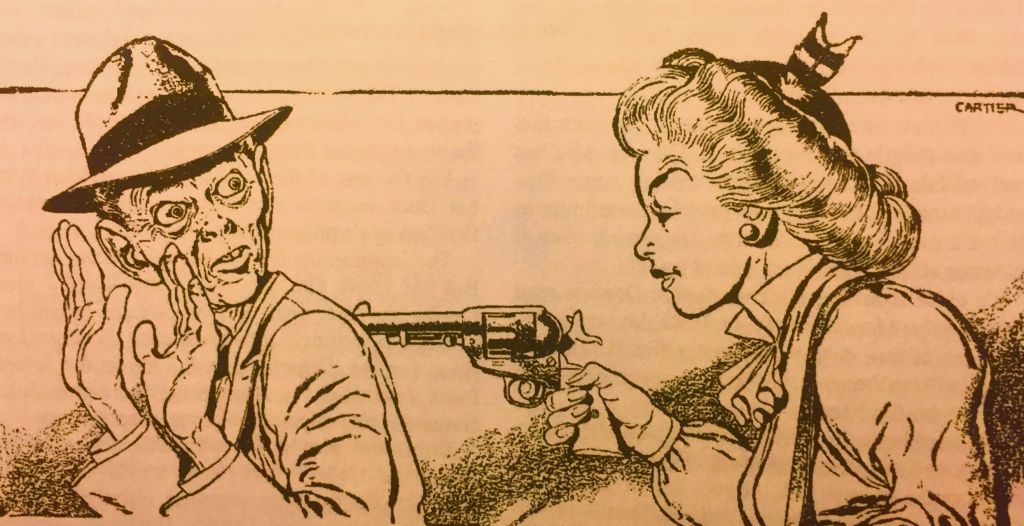
For those with long memories and a deep love of the character Pat Savage, one of the great treats of the original pulp run of Doc Savage magazine was the Jan-Feb 1948 issue featuring Pat, in a story called “I Died Yesterday”.

It is the only pulp story narrated by Pat herself, and she is, without a doubt, magnificent. But it’s a more world-weary magnificence…gone is the somewhat adolescent young woman who loves adventure; Pat has evolved into a character of considerable substance. A businesswoman in her thirties, she is still a hellraiser, but also perceptive and introspective. This personal growth, however, does not prevent her getting into no end of hair-raising trouble.

Illustration by Edd Cartier for “I Died Yesterday”

I reviewed the original pulp back in 2021, in a Forbidden Pulp blog post HERE.

One thing I note is that the story itself, aside from the delight of Pat’s narration, is pretty lightweight. There is an eco-terrorism plot that is not tremendously compelling…a character named Lucia who has occult leanings none of which lead to much.

So when the time came to re-imagine “I Died Yesterday” for the Doc Talos series, I narrowed and intensified that focus, placing Rickie, the Talos pastiche of Pat, right into a maelstrom of nonstop mayhem.

An erudite (if somewhat unhinged) occult scholar comes to the conclusion that Rickie embodies a goddess-figure from his beliefs…a “Scarlet Woman”. Almost immediately violence breaks out as the scholar (based on author Robert Graves) is attacked, and Rickie is targeted by the Church of Thelema (which was established by the deeply notorious Aleister Crowley). Crowley died in 1947, the year before the events of this tale, but Thelemic belief is being kept alive and well by his protégé Leah Hardwicke, who does not take kindly to Rickie’s arrival in the occultist landscape.

Rickie herself, completely uninterested in the occult, has no idea why these “loonies” have targeted her. In typical Rickie-style, she plunges into the mystery head on, and amid fierce outbursts of violence and eroticism, will find herself much changed.

Yesterday, by R. Paul Sardanas, is illustrated by dozens of eye-popping full color paintings by fine artist Iason Ragnar Bellerophon.

The book also includes a short story set in 1918 somewhat wryly depicting an encounter between Crowley and the head of the Gnostic Archons, the “archdemoness” Ruha…and wraps up with an in-depth look at the esoteric Gnostic Mass (all decorated with more stunning Bellerophon paintings.)

Yesterday will retail for $30 upon release July 15th, but readers preordering before that date can receive the book for $20, plus $5 US Postage (international postage will be calculated for you if applicable before purchase).

If you are interested in preordering Yesterday, or simply have questions about it or any Doc Talos book, please send an email to taloschronicle@gmail.com with your inquiry.

As it did in 1948 with Pat Savage, a wild ride awaits you in 2023 with the incomparable Rickie Talos!